
Colombia Calls on the U.S. to Legalize Cannabis Exports
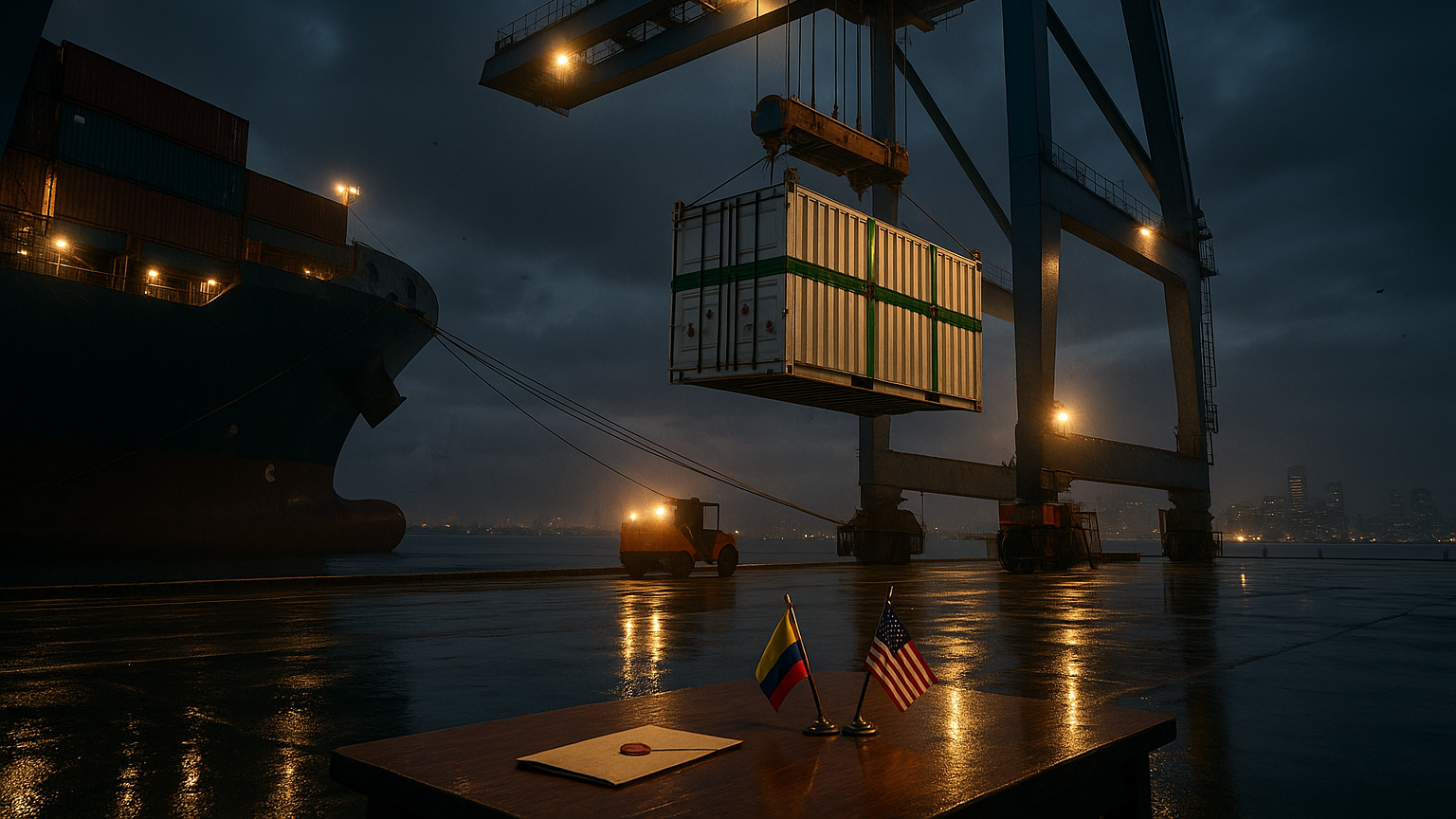
Shipping container lifted by port crane at dusk with U.S. and Colombian flags on a desk, symbolizing Colombia’s call for U.S. cannabis export legalization.
On October 28, Colombian President Gustavo Petro publicly called on former U.S. President Donald Trump to “legalize the export of cannabis.” The statement, made during a diplomatic exchange, underscores how international politics and U.S. cannabis policy are becoming increasingly intertwined — and how global leaders are positioning their nations ahead of potential U.S. federal reform.

Petro’s comments may have been pointed, but they reflect a broader truth: the global cannabis market is no longer waiting for the United States to catch up. Nations across Latin America, Europe, and Africa are building frameworks for cultivation, export, and medical production — while the U.S. remains gridlocked between federal prohibition and state-level legalization.
If your business is preparing to expand or partner internationally, now’s the time to assess your compliance and risk exposure. Start with our quick Cannashield intake form to strengthen your foundation for global opportunities.
Colombia’s Play: Building a Global Cannabis Trade
Colombia has been steadily positioning itself as a leader in legal cannabis cultivation and export since medical legalization in 2016. The country’s tropical climate, agricultural infrastructure, and competitive production costs make it an ideal hub for global cannabis supply — especially as nations like Germany and Australia move toward broader legalization and import-friendly policies.

President Petro’s statement was more than political posturing; it was a reminder of Colombia’s readiness to capitalize on global demand. He framed cannabis reform not only as an economic opportunity but also as a post-prohibition strategy for Latin America — one that replaces the failed “War on Drugs” with legitimate international commerce.

If the United States were to legalize cannabis exports or imports, even partially, it could open the door to a multi-billion-dollar trade network — benefiting nations that have already invested in compliant cultivation and pharmaceutical-grade production.

However, until federal reform occurs, U.S. businesses remain locked out of international trade. That means foreign producers, including those in Colombia, Canada, and Israel, continue to shape the early contours of global cannabis commerce.
The U.S. Stalemate and Its Global Ripple Effect
While cannabis reform in the U.S. has gained momentum at the state level, federal policy remains largely unchanged. Cannabis is still classified as a Schedule I substance, preventing interstate commerce and international trade.

This stagnation has created a paradox: American companies dominate the branding, technology, and investment side of the industry, but can’t compete globally due to export restrictions. Meanwhile, countries like Colombia, Portugal, and South Africa are building regulatory models designed to attract international investors and establish themselves as primary exporters.

The result is a slow but undeniable shift in global influence. The longer the U.S. delays comprehensive reform, the more ground it risks losing in a market projected to exceed $100 billion globally by 2030.
Thinking about positioning your business for global growth or investment? Complete our Cannashield questionnaire to ensure your compliance and insurance strategies are ready for expansion.
Why Colombia’s Appeal Matters
Petro’s public call to Trump may have seemed unusual, but it was symbolic of a larger diplomatic strategy. Colombia, once synonymous with illicit trade, is now advocating for legal global cannabis commerce. By urging U.S. policymakers to engage, Petro highlighted how international allies see American policy not as a barrier — but as a potential gateway to a more balanced global system.

If the U.S. eventually embraces legalization at the federal level, Colombia could be among the first partners to formalize trade agreements. For both countries, the benefits would be substantial:

•   Economic growth through agricultural export and job creation.
•   Diversification of international trade beyond traditional commodities.
•   Improved relations between hemispheric partners, built on regulated commerce rather than enforcement.

It’s also a signal that cannabis has become a diplomatic talking point, not just an economic one. Nations are using the topic to redefine their international image and policy priorities — positioning cannabis as a legitimate tool for development, sustainability, and social reform.
A Glimpse Into the Future of Global Cannabis
The global cannabis industry is maturing fast. As more countries legalize cultivation and trade, the conversation is shifting from legalization to global standardization. That means harmonizing safety protocols, testing methods, labeling requirements, and insurance coverage for international transactions.

For U.S. operators, this is both a challenge and an opportunity. The companies that begin preparing now — by documenting compliance, insuring assets, and building international partnerships — will be best positioned when U.S. law finally allows cross-border activity.

Meanwhile, countries like Colombia will continue to lead the way, proving that cannabis can be a legitimate export commodity when managed under transparent and well-regulated systems.
Global expansion starts with risk management. Fill out our Cannashield intake form to protect your business as cannabis becomes an international industry.
Conclusion
Colombia’s call for the U.S. to legalize cannabis exports is more than a diplomatic moment — it’s a sign of where the global market is headed. As international trade frameworks take shape, nations are using cannabis policy as a means of economic strategy and global positioning.

For the U.S., the message is clear: global cannabis reform isn’t waiting for federal legalization. It’s already underway, and American businesses need to prepare for their role in it.

At Cannashield, we help cannabis operators navigate risk, compliance, and insurance in both domestic and international contexts — because the next frontier of cannabis isn’t just national, it’s global.
Complete our full intake form here to safeguard your business, align with international standards, and be ready for the future of global cannabis trade.
Read the full article here →