

Missouri Tightens Cannabis Microbusiness Licensing Oversight
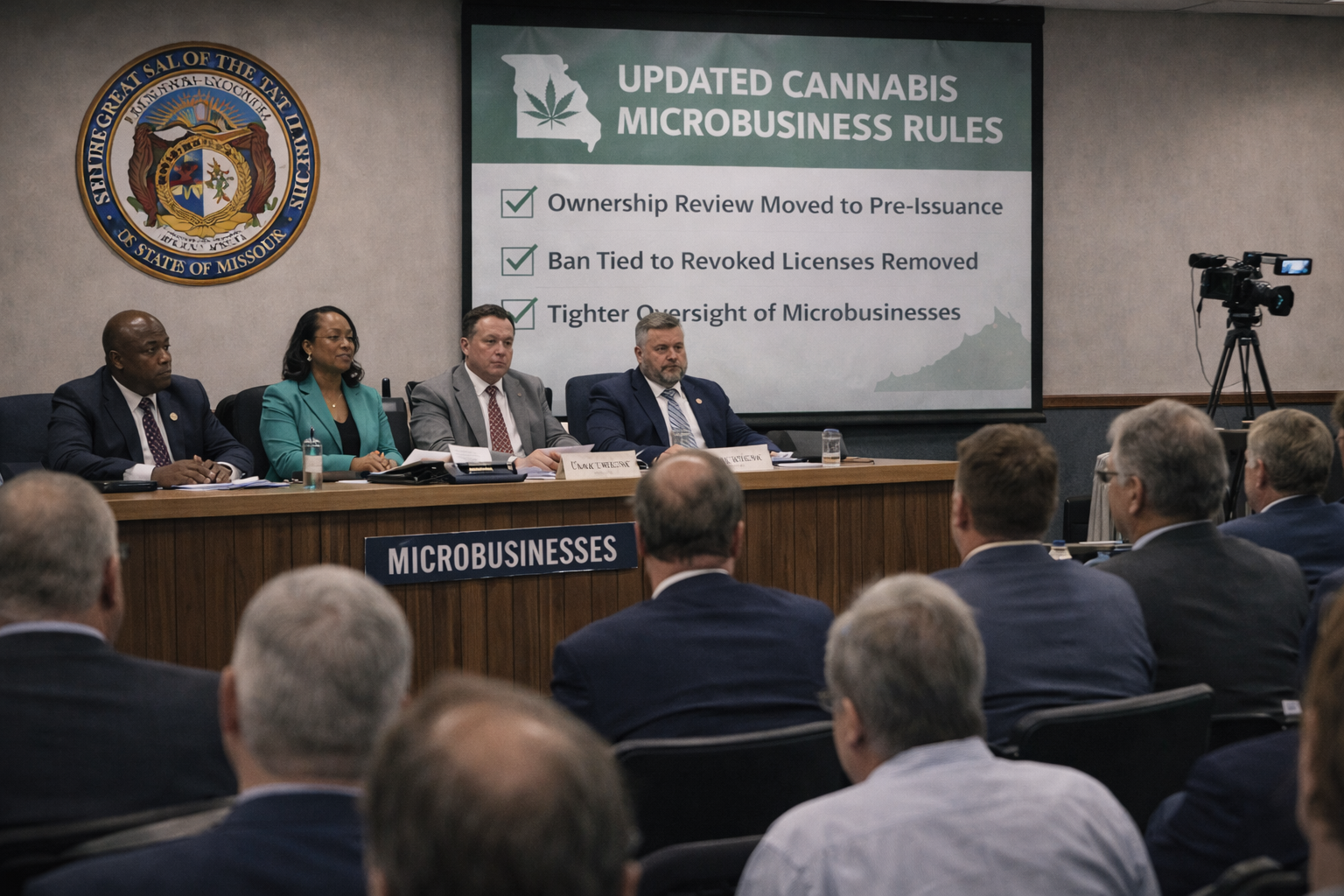
Committee discussion of Missouri microbusiness cannabis rule changes focused on ownership review and oversight
Missouri cannabis microbusiness licensing rules are getting tighter after a legislative rules panel approved updates meant to reduce abuse in the microbusiness program, which was created to expand opportunity for people and communities harmed by the war on drugs.
Quick facts
• The Joint Committee on Administrative Rules approved changes that move ownership review to before a microbusiness license is issued
• Lawmakers removed a proposed ban that would have blocked people tied to denied or revoked microbusiness applications from holding interests in future microbusinesses
• Reporting says 105 microbusiness licenses have been issued so far and 35 have been revoked, with the Missouri Constitution requiring a minimum of 144 licenses
• Proposed rule language also strengthens ownership and control expectations, including designated contact requirements and a clearer definition of majority owned and operated
Why Missouri Is Tightening Oversight Now
The microbusiness program is supposed to be a pathway for eligible Missourians to participate in the legal cannabis economy, not a loophole for outside capital to rent an eligible person’s name and take control through contracts. Missouri regulators told lawmakers they have seen repeated patterns where third parties used eligible individuals to try to acquire licenses for themselves, and the state has already revoked a large share of awarded licenses.
That matters for operators because the microbusiness lane is a trust lane. If the state thinks the program is being gamed, the response is almost always the same: more front end scrutiny, more paperwork, and fewer second chances.
If Missouri microbusiness licensing timing affects your growth plan, Start with our quick Cannashield intake form so you can map exposure and plan for multiple outcomes.
What The New Rule Direction Changes
The most important shift is timing. Regulators want to move ownership review to before licenses are issued, rather than awarding licenses first and then investigating contracts and control after the fact. This is not a small procedural tweak. It changes your entire application strategy.
In practice, it signals four things:
First, your ownership story has to be clean on day one. If your operating agreement, management agreement, or financing terms create even a whiff of control by non eligible parties, you should expect delays or denials.
Second, the state is focusing on operational control, not just ownership percentages. Proposed rule language defines majority owned and operated as more than a paper majority, with expectations that eligible owners actually have decision making power to direct management and policies and enter agreements for the license.
Third, designated contact is being treated as a vulnerability. Proposed rule language requires the designated contact for a microbusiness to be an eligible individual with ownership interest, which is aimed at stopping situations where a third party controls communications while the eligible owner is kept in the dark.
Fourth, documentation becomes the gate. Proposed language requires disclosure of business agreements affecting ownership, control, or financial interests, and it also references mandatory pre application training documentation for at least one eligible individual contributing to majority ownership.
The Ban Was Removed, And That Is A Signal Too
A key headline from the rules panel is what did not make it through. Lawmakers stripped out a proposed rule that would have barred owners, agents, or representatives tied to denied or revoked microbusiness applicants from holding interests in future microbusiness licenses.
The practical takeaway is not that Missouri is going soft. It is that the state is trying to tighten oversight without creating language that is so broad it becomes hard to enforce fairly. Regulators indicated the concept may return later with more specific wording, potentially as part of another ownership focused rules package.
Universal operator lesson: when regulators remove broad bans, they often come back with narrower definitions that are easier to prove and easier to enforce.
If your structure includes investors, lenders, management services, or consulting agreements, Complete our Cannashield questionnaire to pressure test ownership control and documentation before you submit anything.
What Operators And Investors Should Do With This
If you are an applicant, your goal is simple: prove you are the real operator, not a placeholder. That means your agreements should reflect real control, and your designated contact should be the person who actually runs the business day to day.
If you are funding or advising microbusiness applicants, this is the warning label: deals that look like control transfers are the first target. When the state moves review to pre issuance, you cannot rely on fixing paperwork later. Your deal either survives review or it does not.
Universal operator lesson: social equity and microbusiness programs reward clean structures and punish clever structures.
What To Watch Next
Even though the rules panel approved changes, regulators still need to file a new draft with the Missouri Secretary of State and move through additional publication steps before final enactment, with reporting suggesting timing in late spring or early summer.
That means operators should treat this as an active transition period. If you plan to apply in upcoming rounds, build around the stricter interpretation now, not later.
If you want a Missouri microbusiness compliance binder template and a pre issuance ownership checklist your team can run before signing agreements, use our Cannashield intake form to request it.
Conclusion
Missouri’s microbusiness rule tightening is a market access signal. The state is prioritizing pre issuance ownership review, clearer operational control expectations, and tighter communication safeguards, while lawmakers removed a broad ban and signaled they want more precise enforcement language.
What To Do This Week
• Pull every agreement tied to ownership, control, or profit sharing and summarize who actually controls decisions
• Confirm the designated contact is an eligible majority owner and is operationally involved
• Create a one page ownership and control chart that matches your paperwork
• Build a document folder that stores training completion proof, contracts, and eligibility records together
• Write a simple investor and lender policy for what terms you will not accept because they risk control violations
• Add Missouri rulemaking milestones to your policy watchlist and review weekly until final adoption
FAQ
What is Missouri’s microbusiness program designed to do
It is intended to expand participation for eligible individuals and communities that have faced high barriers, with licenses reserved for those who meet constitutional eligibility criteria.What did Missouri lawmakers approve in these rule changes
They approved changes that move ownership review to before licenses are issued to reduce post award revocations tied to control and eligibility problems.Why does moving review to pre issuance matter
Because it raises the standard for application readiness, requiring contracts and control structures to withstand scrutiny before a license is granted.What rule was removed and why does that matter
Lawmakers removed a proposed ban that would have broadly blocked people tied to denied or revoked applicants from holding interests in future microbusinesses, signaling a push for more precise enforcement language.What is the biggest risk for applicants
Contracts or management structures that reduce eligible owner control and make the eligible applicant look like a placeholder.What is the universal operator lesson
Social equity style programs become stricter over time, so clean ownership, real operational control, and strong documentation are the edge.