
New Bill Aims to Reverse Federal Ban on Intoxicating Hemp Products
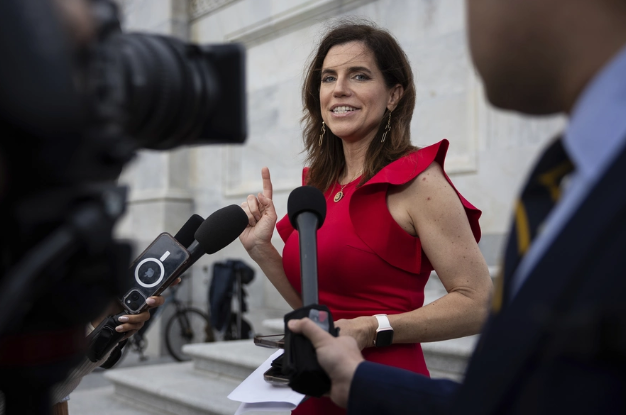
U.S. House Rep. Nancy Mace Source: POLITICO
Representative Nancy Mace has introduced a draft bill that seeks to undo the recently enacted federal ban on intoxicating hemp products — a ban tucked inside the last government shutdown–deal funding package. Her proposal immediately reignited hope across the $28 billion hemp-THC market, an industry blindsided by federal language that effectively outlawed Delta-8, THCA, hemp-derived Delta-9, and similar products.
If the bill gains traction, it could reopen a sector that was on the verge of being wiped out before operators had time to react.
If your business depends on hemp-derived THC products, now is a critical moment. Start with our quick Cannashield intake form to evaluate your risks, pivot strategy, and compliance options.
A Sudden Industry Shutdown — and an Unexpected Lifeline
When Congress passed the federal spending bill earlier this year, very few operators expected it to contain sweeping hemp-THC restrictions. The language redefined hemp, banned intoxicating derivatives, and shut down an entire product category overnight.
Retailers, beverage brands, gummy manufacturers, e-commerce businesses, and hemp farmers all faced sudden uncertainty. Distributors began canceling contracts. Labs froze production. Investors pulled back.
That’s why Mace’s draft bill matters: it offers the first real pathway to reverse or rewrite the ban before enforcement begins.
Her legislation would:
Restore legality to intoxicating hemp-derived cannabinoids
Reopen sales channels for Delta-8, THCA, and hemp-derived Delta-9
Prevent federal agencies from criminalizing compliant hemp businesses
Establish clearer guidelines instead of blanket prohibition
It’s not just a repeal effort — it’s an attempt to rebuild a regulatory structure that recognizes hemp’s economic importance.
If your company manufactures or distributes hemp-THC products, Complete our Cannashield questionnaire to identify compliance gaps and insurance needs before federal changes finalize.
Why This Reversal Matters
The hemp-THC market didn’t grow by accident. It grew because consumers demanded low-dose, accessible, affordable alternatives to alcohol and traditional cannabis. Entrepreneurs filled that gap quickly — especially in states where marijuana remains illegal or highly restricted.
The federal ban ignored that reality. Instead of regulating the space, Congress moved straight to prohibition, risking:
$28 billion in annual revenue
Tens of thousands of jobs
Billions in state and local tax contributions
Growth across rural farming communities
The entire hemp beverage and gummy boom
A large share of the “sober-curious” wellness market
Mace’s bill recognizes the economic damage already unfolding. It acknowledges that intoxicating hemp products require smart regulation — not eradication.
Industry experts believe this could be a turning point: Congress is beginning to understand that hemp and cannabis policy cannot be separated anymore. They must be regulated together, not banned piecemeal.
Regulatory Reform vs. Total Prohibition
The debate now centers on a core question:
Should intoxicating hemp products be regulated, controlled, and tested — or banned entirely?
Supporters of the ban argue that synthetic conversion processes, inconsistent testing, and youth access justify strict prohibition.
Opponents say the real issue is lack of federal standards, not the products themselves. They argue for:
National age restrictions
Accurate potency labeling
Standardized testing and packaging requirements
Clear definitions separating natural, converted, and synthetic cannabinoids
Responsible distribution frameworks
Federal oversight instead of vague loopholes
Mace’s bill leans toward regulatory modernization, not elimination — a perspective many industry operators and economists share.
Need to prepare for a shifting regulatory framework? Fill out our Cannashield intake form for a customized risk and compliance roadmap.
What Businesses Should Do Now
With the federal ban already passed but enforcement still staggered, operators are in a narrow window where preparation matters more than ever.
Here’s what businesses should prioritize immediately:
1. Conduct a Product Risk Audit
Identify which SKUs fall under the ban — Delta-8, THCA, hemp-derived Delta-9, and converted cannabinoids.
2. Build a Transition Strategy
Prepare reformulations, alternative cannabinoids, or a pivot into state-regulated THC channels.
3. Strengthen Insurance Protection
Expect higher liability exposure, contract disputes, and inventory loss as regulations shift.
4. Enhance Compliance Documentation
Testing, COAs, batch tracking, and production records will be essential if the ban is revised — or enforced as-is.
5. Stay Involved in Advocacy
Industry feedback will influence whether Mace’s bill gains momentum.
This is a rare moment where congressional policy is not yet “locked in.” Operators who stay ahead of the curve will have a major advantage.
Conclusion
Representative Nancy Mace’s draft bill offers the hemp-THC sector its first sign of relief since the federal ban blindsided the industry. While nothing is guaranteed, the legislation signals growing recognition that hemp policy requires regulation, not prohibition.
Still, the clock is ticking. Businesses must prepare for either outcome — whether the ban is reversed, softened, or fully enforced.
At Cannashield, we help hemp and cannabis operators navigate uncertainty with tailored insurance, compliance planning, and risk strategy built for rapidly shifting federal environments.
Complete our full intake form here to protect your business and stay ready as federal hemp-THC rules evolve.
Read the full article here →