
Trump Administration Declines to File Supreme Court Brief in Major Cannabis Case
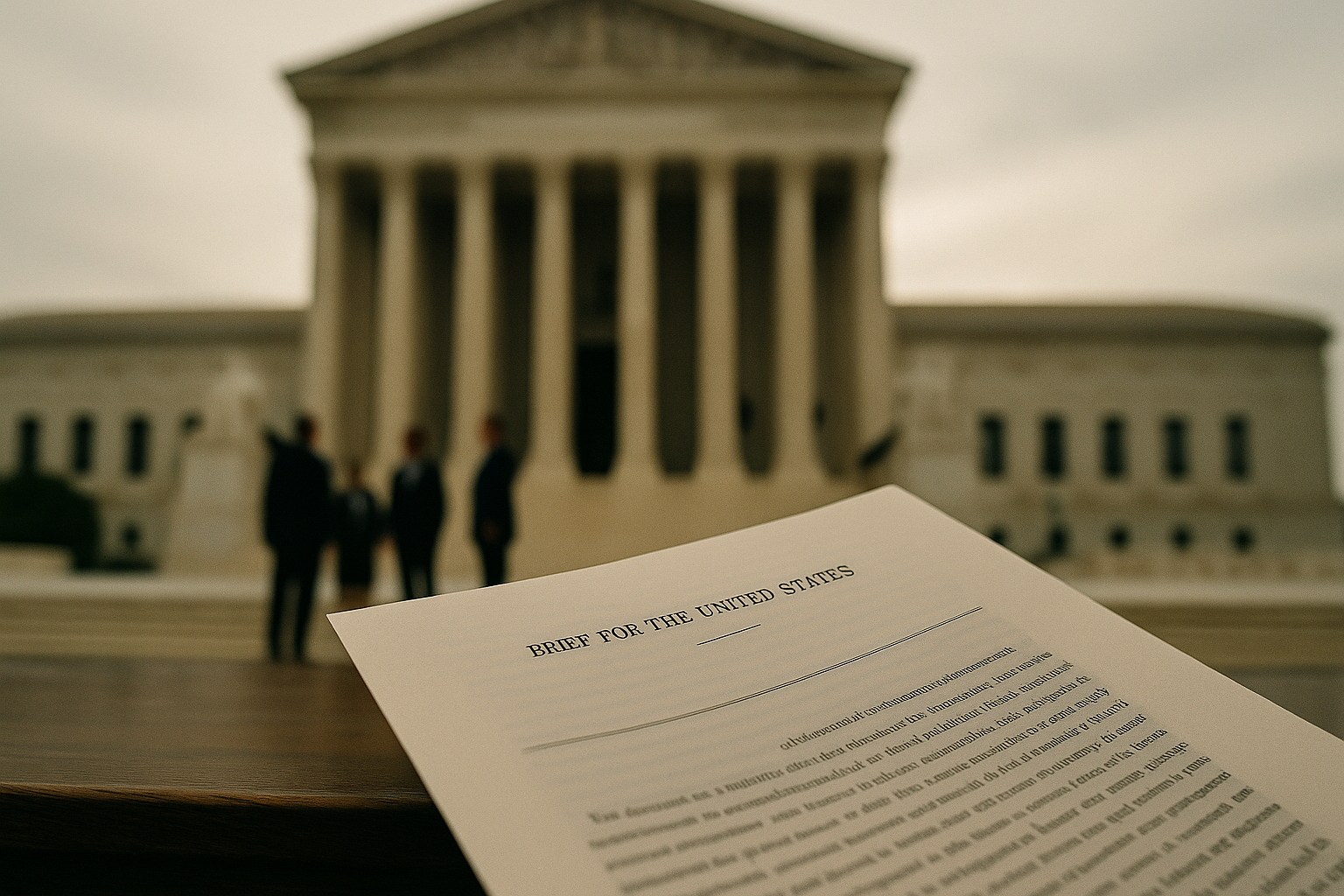
A legal brief labeled ‘Brief for the United States’ lies in front of the U.S. Supreme Court building, with officials blurred in the background, symbolizing the Trump administration’s decision not to file a brief in a major federal cannabis case.
In a move that surprised legal analysts and cannabis policy observers, the Donald Trump administration declined to submit a federal brief to the U.S. Supreme Court in a major cannabis case. While the Court requested input from the Department of Justice, the administration opted not to weigh in — a decision widely interpreted as reduced executive-branch engagement in shaping the future of federal cannabis law.
In a moment where national cannabis policy is evolving through courts, Congress, and state systems, silence from the executive branch sends a message of its own.
If your cannabis business is navigating federal uncertainty, now is the time to tighten compliance and risk strategy. Start with our quick Cannashield intake form to protect your operation in shifting legal environments.
What the Supreme Court Case Represents
The case under review, though not directly tied to national legalization, carried massive implications for federal cannabis enforcement, interstate commerce, and future constitutional challenges. By asking the federal government to submit a brief, the Supreme Court essentially invited the administration to clarify where it stands on cannabis as a federal priority.
That clarity never came.
Instead, the administration declined to participate, leaving the Court — and the cannabis industry — to interpret the silence.
This lack of engagement may reflect a broader strategy: stay out of cannabis fights, avoid committing to policy positions, and let courts or Congress take the lead. But for operators and investors, ambiguity is its own form of risk.
Not sure how federal posture might impact your business model? Complete our Cannashield questionnaire for a compliance and liability review tailored to your state and sector.
Why Declining to File a Brief Matters
Even though the administration wasn’t required to file, the choice to abstain is meaningful. Historically, the federal government has intervened heavily in cannabis cases, often arguing to preserve prohibition or defend federal authority under the Controlled Substances Act.
This time, the administration passed.
Here’s why that matters:
1. It signals hesitation or disengagement on cannabis enforcement.
Remaining quiet suggests cannabis is not viewed as a high-priority issue — or that the administration prefers not to influence judicial outcomes.
2. It leaves the Supreme Court without federal direction.
Absent a federal stance, the Court may interpret the silence in several ways — potentially giving states more room or reinforcing existing precedent.
3. It highlights a growing federal leadership gap in cannabis policy.
Congress debates hemp bans. Agencies scramble to regulate intoxicating cannabinoids. States expand or restrict cannabis markets. And the executive branch sits on the sidelines.
For operators, this inconsistency creates operational uncertainty — especially for businesses operating across state lines or dealing with products near the hemp/cannabis regulatory boundary.
A Federal Vacuum — and What Fills It
When the executive branch steps back from shaping cannabis policy, other institutions fill the void:
Congress pushes competing bills — some reforming hemp, others restricting it.
Federal agencies issue piecemeal guidance without cohesive direction.
States tighten or loosen cannabis and hemp rules based on their own priorities.
Courts become the battleground for major cannabis disputes.
And when courts, not lawmakers, define cannabis policy, decisions become less predictable and more case-specific, making risk planning even more important.
This uncertainty impacts operators in all sectors, including:
Multi-state cannabis companies
Hemp-THC manufacturers
CBD and wellness brands
Tribal cannabis markets
Ancillary service providers
Retailers selling borderline hemp products
Without a clear federal roadmap, the safest path forward is strong compliance, documentation, and insurance protection.
The strongest operators stay ready for legal swings. Fill out our Cannashield intake form to strengthen your protections and prepare for federal movement — or federal silence.
What Businesses Should Take Away from This Moment
Even though the Trump administration’s decision may appear procedural, its impact is strategic. Here’s what cannabis operators need to understand:
1. Federal cannabis reform is still unpredictable.
Silence does not equal support, but it also does not equal opposition. It creates a grey zone that operators must navigate carefully.
2. States remain the primary regulators — for now.
Until the federal government speaks with consistency, states will continue shaping markets on their own terms.
3. Compliance frameworks must be airtight.
Courts and agencies increasingly scrutinize businesses for documentation, safety standards, and transparent operations.
4. Federal enforcement priorities could shift rapidly.
A future administration could reverse course and become more aggressive — or more supportive. Operators must be prepared for either direction.
Conclusion
The Trump administration’s decision not to file a brief in a major Supreme Court cannabis case highlights a recurring theme: federal cannabis policy remains undefined. That ambiguity creates both opportunity and risk for businesses operating in one of the most heavily regulated industries in the country.
For cannabis operators, the takeaway is simple: stay compliant, stay protected, and stay ready. The companies that build strong foundations now will be the ones able to adapt when federal clarity finally arrives — whether through Congress, the courts, or a future administration.
At Cannashield, we help cannabis businesses navigate that uncertainty with risk management, insurance solutions, and compliance strategies built for volatile regulatory environments.
Complete our full intake form here to protect your business and stay ahead of future federal actions — or federal silence.
Read the full article here →