
Oklahoma Mandatory Recall Shows How Lab Errors Become Supply Chain Risk
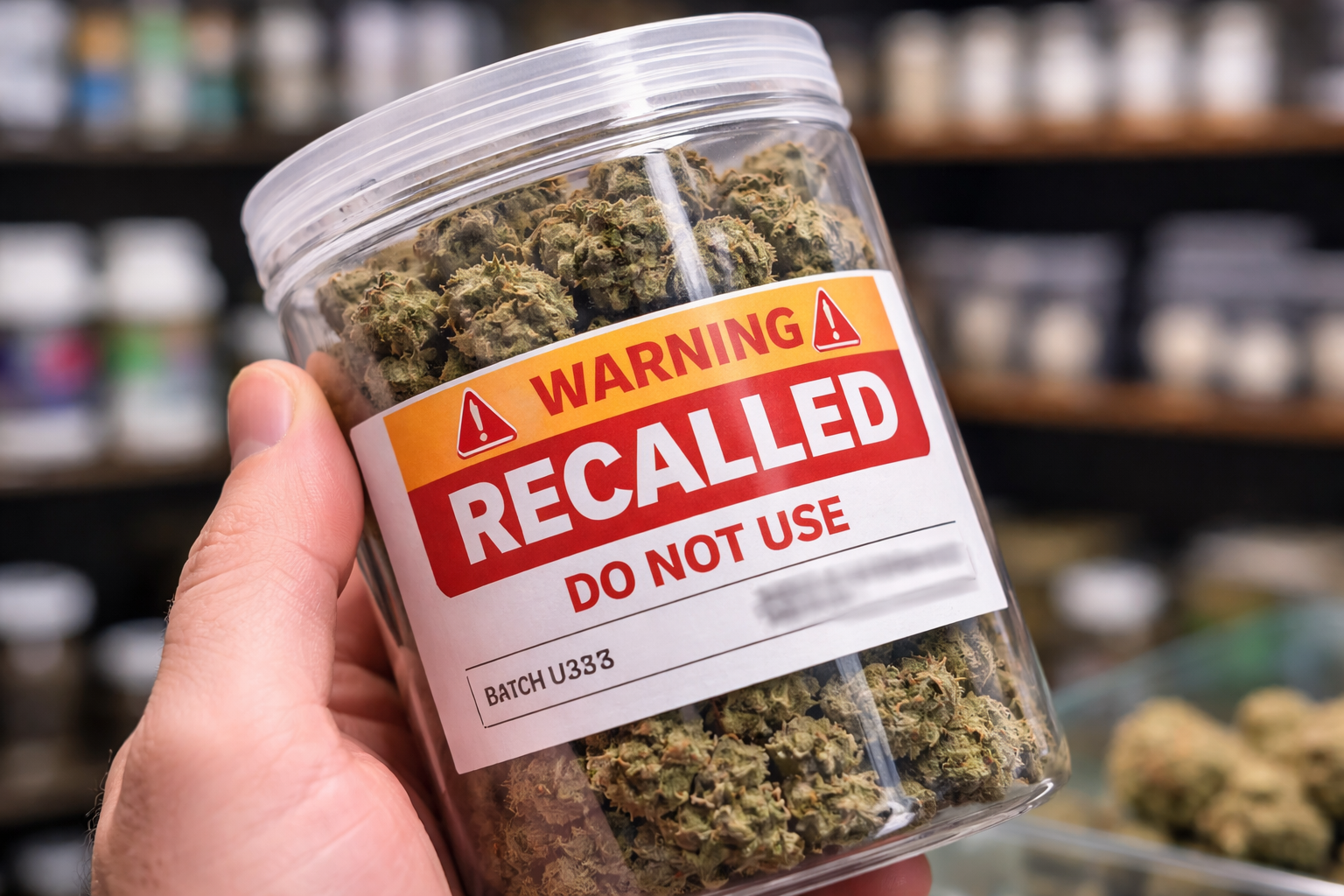
Recall notice and cannabis products in a lab setting representing OMMA mandatory recall tied to Greenleaf Labs testing issues
A mandatory cannabis recall in Oklahoma is forcing a hard truth into the open: lab risk is operational risk. The Oklahoma cannabis regulator OMMA issued a mandatory recall tied to inaccurate yeast and mold calculations by Greenleaf Labs, covering products tested from April 2023 to July 2025. When testing credibility breaks, the blast radius hits every license type that touched those batches, from production to retail, because nobody wants to be the last store holding recalled inventory.
Quick facts
• Mandatory recall issued March 19, 2026 for products tested by Greenleaf Labs
• Testing window covered April 2023 to July 2025
• OMMA said the lab inaccurately calculated yeast and mold content, impacting about 19,000 samples
• OMMA ordered the lab to cease operations in August 2025 after a routine inspection found testing inaccuracies
• OMMA said affected products were updated to failed status in Metrc in August 2025 and package tracing began
• OMMA said mandatory action was triggered after inspectors kept finding test failed products still sitting in dispensary inventory
If you want to map your exposure fast, Start with our quick Cannashield intake form so you can identify impacted vendors, batches, and documentation gaps before your next delivery or audit.
Why This Recall Turned Mandatory
The timeline matters because it explains why this moved from a lab issue to a statewide operational event. OMMA says the core problem was incorrect yeast and mold calculations over a long testing window, and that the lab was ordered to stop operations after the issue was discovered. OMMA also says products tied to the problem were shifted to failed status in Metrc and trace work began to figure out where product moved.
The recall became mandatory because the voluntary cleanup did not fully stick. OMMA said that despite the lab’s stated intention to fix the issue, compliance inspectors continued to discover products in dispensary inventories that were still marked test failed. That is the nightmare scenario for regulators: product that should have been cleaned up is still in circulation risk wise, even if it is not actively being sold.
Universal operator lesson: if your remediation plan relies on perfect follow through across hundreds of businesses, expect gaps and build controls that catch them early.
Where The Blast Radius Hits First
Recalls hit the cash cycle before they hit the headlines.
Inventory freezes first. Anything matching the recall list becomes a hold, meaning you cannot sell it, you cannot transfer it, and you cannot treat it like normal stock. That ties up cash instantly.
Customer trust gets strained next. Customers do not track lab names or lot numbers. They remember that a recall happened. If your staff cannot explain the process calmly and consistently, you lose credibility even when you did everything right.
Vendor relationships tighten right after that. Retailers start asking suppliers for proof. Suppliers start asking labs for documentation. Everyone starts re checking COAs and batch records. If your documentation is disorganized, you get slowed down at the worst time.
Universal operator lesson: the best defense in a recall is not a speech. It is a clean proof trail you can produce in minutes.
If you rely on third party testing, Complete our Cannashield questionnaire to pressure test lab selection, COA handling, and retest triggers before a regulator forces your hand.
What Operators Should Do In The First 48 Hours
This is the simple, repeatable playbook that keeps you out of trouble.
Run a batch audit, not a product name audit
Search by batch number and COA reference, not just SKU names. OMMA tells patients to verify by batch number, and your internal process should mirror that approach.Quarantine and tag affected inventory
Physically segregate the product and make it obvious to staff that it is recalled. Treat it like a controlled hold, not a shelf pull.Stop transfers immediately
OMMA’s recall and embargo guidance makes clear that transfers of affected inventory must pause, and downstream notifications are part of the corrective responsibility.Create a recall log
Record the date you checked, what you found, where it is stored, and who approved the action. If you get questioned later, the log is your memory.Communicate with discipline
Patients are advised to stop using impacted products, verify batch numbers, and contact the dispensary. Your staff should stick to those steps and avoid speculation.Plan disposal steps
OMMA’s recall framework places disposal responsibility on the commercial licensee whose batch is being recalled. Even if you are retail, you should know who that is and what documentation you need to support the chain of custody.
Universal operator lesson: recalls are not solved by removing product from the shelf. They are solved by proving what happened, where product went, and what you did about it.
Why This Oklahoma Signal Matters Nationwide
High impact markets and emerging markets are both vulnerable, just in different ways.
In high volume states, the risk is scale. A single lab event can touch thousands of lots and dozens of categories, creating market wide trust damage.
In emerging markets, the risk is capacity and pressure. When lab supply is thin, turnaround times get tight, and businesses start rushing. Rushing is how paperwork breaks and how corners get cut.
The universal lesson travels everywhere: treat lab oversight like a core vendor control. Labs are not just service providers. They are part of your compliance stack.
If you want a recall ready SOP and communication templates your team can run without panic, use the Cannashield intake form and request the Lab Risk and Recall Readiness pack.
Conclusion
Oklahoma’s mandatory recall tied to Greenleaf Labs is a reminder that lab credibility is market infrastructure. When it fails, everyone downstream pays in time, cash, and trust. The operators who stay standing are the ones who can audit by batch number, quarantine fast, document every step, and communicate clearly without making promises.
What To Do This Week
• Build a single folder for COAs, batch records, and vendor invoices that your whole team can access
• Add a batch number check step before every transfer and every restock
• Create a simple quarantine and tagging SOP for recalled and embargoed inventory
• Run a mock recall drill and time how fast you can identify, isolate, and log affected product
• Tighten your lab vendor policy so you have clear escalation contacts and retest triggers
• Draft one customer facing script for recalls that stays factual and calm
FAQ
What triggered the Oklahoma recall
OMMA said yeast and mold calculations were inaccurate for products tested by Greenleaf Labs during April 2023 to July 2025.How do patients verify whether their product is affected
OMMA advises checking the batch number on the product label or certificate of analysis and comparing it to the recalled product table.What should dispensaries do if they find affected inventory
Immediately quarantine it, stop sales and transfers, tag it clearly, and follow OMMA recall instructions for documentation and coordination.Does a recall automatically mean every unit is contaminated
Not necessarily. A recall can be driven by unreliable testing results, meaning regulators cannot rely on the safety assessment.Who bears disposal responsibility
OMMA’s recall guidance says the commercial licensee whose harvest or production batch is being recalled bears disposal costs.What is the universal operator lesson
Lab oversight is not optional. Your ability to produce clean records fast is what keeps a lab issue from becoming a business crisis.