
California Voluntary Vape Recall Highlights Traceability And Misbranding Risk
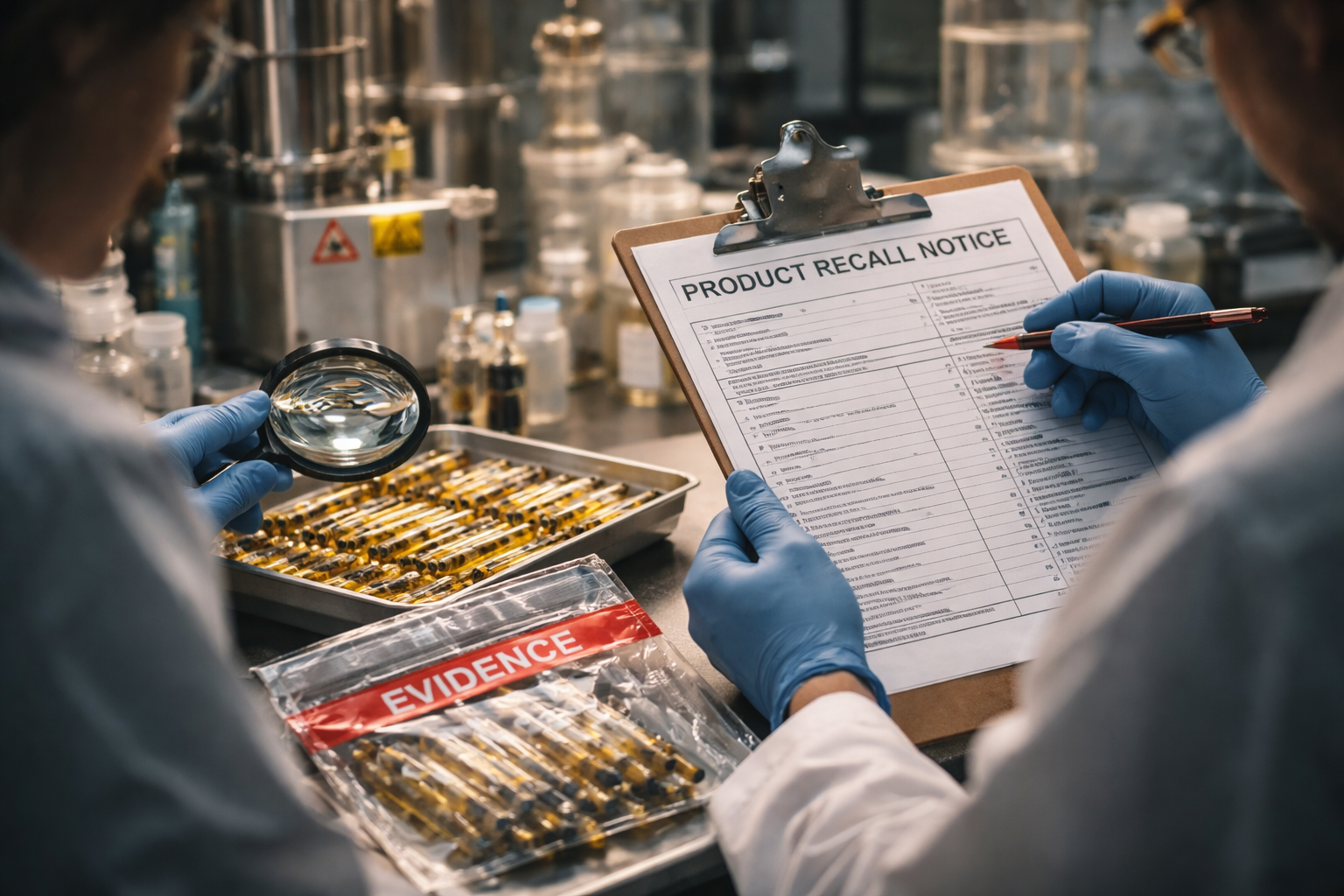
California recall inspection scene with vaporizer products and documentation for traceability review
California just gave the industry a clear reminder that traceability is not paperwork. It is the product. The Department of Cannabis Control published a voluntary recall for Luigi Integrated Vaporizer products after determining the cannabis distillate used could not be traced to a verified, compliant source.
Quick facts
• Recall type: Voluntary
• Business recall date: March 17, 2026
• DCC publication date: March 18, 2026
• Recall reason category: Adulterated and Misbranded other
• Stated cause: Distillate from an unknown and unidentifiable source
• Consumer actions include checking the UID and batch number on the package and disposing or returning the product
If you want to pressure test your vape traceability and recall readiness, Start with our quick Cannashield intake form so you can map exposure and tighten your controls.
Why Unknown Source Distillate Triggers A Recall Fast
Vape products are a high scrutiny category because they move fast, travel through multiple hands, and rely on ingredients that must be traceable back through the licensed supply chain. In this case, DCC’s recall notice says the issue was simple and serious: the distillate used in multiple Luigi integrated vaporizers was from an unknown and unidentifiable source.
When the source cannot be verified, everything downstream gets pulled into the risk. That is why regulators use terms like misbranding and adulteration. The concern is not marketing language. The concern is that the product cannot be tied back to a compliant origin story that an inspector can validate.
This is the bigger operator lesson. Your supply chain proof is part of your label. If you cannot prove where the input came from, the package on the shelf becomes a liability even if the product looks normal.
What Licensees Need To Do Immediately
A voluntary recall still requires action. You do not get to treat it like optional clean up because the word voluntary is on the page. Your job is to stop the flow and document the response.
Start with a fast internal audit.
Identify affected inventory by UID and batch number
DCC tells consumers to check their package for the UID and batch number and match it to the recall notice. Licensees should do the same in inventory, then document what was found.Quarantine and embargo
Physically separate affected product so it cannot be accidentally sold or transferred. Tag it clearly and restrict access.Verify your system records
DCC’s guidance for deliveries shows how strongly California expects UIDs to be tracked and recorded in the cannabis track and trace system. When a recall hits, UIDs are the fastest way to prove what moved and where it went.Document return or disposal
Your recall file should include the inventory count, where the product was stored, who handled it, and the disposition outcome. Treat it like an audit file, because that is exactly how it will be viewed later.
DCC also notes it sent notices to licensees that had this product in their inventory with instructions for responding to the recall.
If you want a recall response checklist your manager can run in under an hour, Complete our Cannashield questionnaire and request the Recall Readiness Pack.
Consumer Guidance That Keeps Trust Intact
Your store team will get questions the moment this hits social feeds.
Stick to what DCC tells consumers.
• If someone is experiencing symptoms or adverse reactions, they should contact a physician
• Consumers should check their package for the UID and batch number and match it to the recall notice
• If it matches, the product should be disposed of or returned to the retailer for proper disposal
• DCC states that cannabis vape cartridges and integrated vaporizers must be disposed of as hazardous waste at a household hazardous waste facility or other approved facility
Your team should avoid freelancing explanations. The fastest way to lose trust during a recall is to speculate.
How To Build A Vape Traceability Firewall
This recall is a reminder that vape risk is rarely a single step problem. It is usually a chain problem. The fix is a chain control.
Build these four controls into your standard operating rhythm.
Intake verification that starts with the input source
Before a run is made, verify the distillate source documentation, the license chain, and the UID lineage. If anything feels unclear, stop and resolve it before production.Batch release checklist that includes supply chain proof
Treat supply chain documentation like a required ingredient. No release without the paperwork.UID and batch number discipline across the entire warehouse
DCC track and trace guidance emphasizes that UIDs are used to report movement of cannabis goods, including during delivery processes. That same discipline protects you in recalls because you can pull a clean map quickly.Vendor risk controls
Have a backup supplier option for critical inputs and keep your documentation requirements consistent across vendors. The problem usually starts when a team makes an exception.
If you want a copy and paste vape traceability checklist and a simple folder structure for UIDs, COAs, and vendor documentation, use the Cannashield intake form.
Conclusion
California’s voluntary recall for Luigi Integrated Vaporizer products is a clean warning shot. If the distillate source cannot be verified, the product becomes a compliance and trust problem immediately. The operators who stay standing are the ones who can audit by UID and batch, quarantine fast, and prove their supply chain without scrambling.
Educational note: This article is for education only and is not legal, medical, or compliance advice..
What To Do This Week
• Run a vape inventory audit by UID and batch number and confirm every unit has complete records
• Create a quarantine process for recalled inventory with a simple log that records who moved what and when
• Standardize a vendor intake checklist for distillate inputs that includes proof of source and UID lineage
• Test your ability to pull UIDs and movement records from track and trace in under 10 minutes
• Train staff on one recall script that sticks to regulator guidance and avoids speculation
• Review your disposal and return documentation process for vape products since DCC classifies them as hazardous waste for disposal
FAQ
What was recalled in California
DCC issued a voluntary recall notice for multiple Luigi integrated vaporizers.Why was the product recalled
DCC said the distillate used was from an unknown and unidentifiable source, triggering adulteration and misbranding concerns.Does voluntary mean retailers can keep selling it
No. A voluntary recall still requires licensees to remove affected inventory and follow the recall instructions sent by DCC.How do consumers verify whether they have an affected product
DCC instructs consumers to check the package for the UID and batch number and match it to the recall notice.What should consumers do if the UID and batch number match
DCC says to dispose of the product or return it to the retailer for proper disposal, and to contact a physician if symptoms occur.Why is this a bigger issue for vape products
Vapes rely on inputs like distillate that must be traceable through the licensed supply chain. When traceability breaks, the whole chain gets pulled into the response.