
Oregon Edible Packaging Proposal Died But The Signal Still Matters
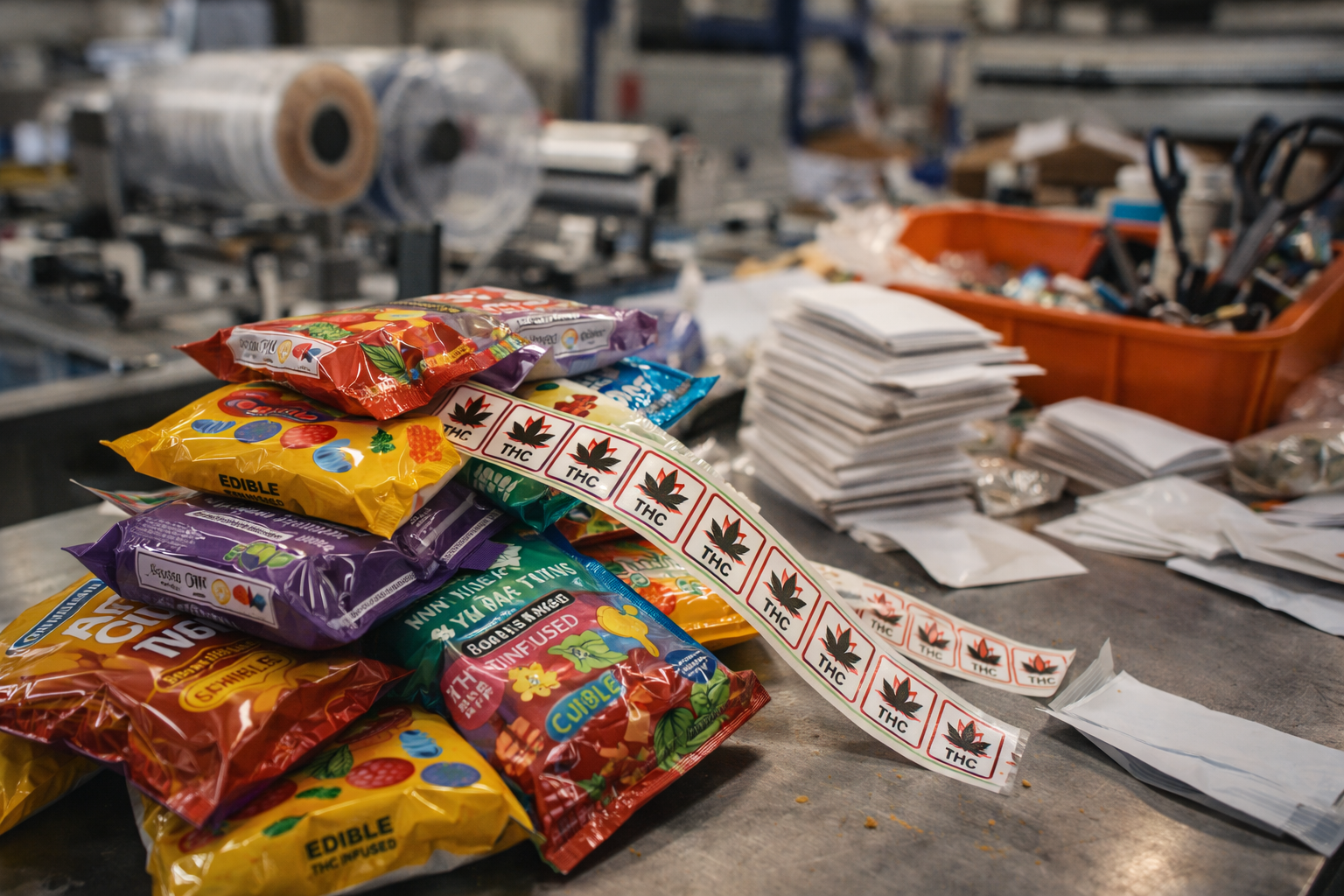
THC infused edible packages and warning label stickers on a packaging work table, highlighting Oregon discussions on child safety packaging rules and operational burden for local manufacturers.
Oregon’s SB 1548 did not advance, but the real story is what it tried to change and why it will likely come back in some form. If you make or sell edibles, cannabis edible packaging compliance is one of the fastest ways a state can change your unit economics without touching your license. That is why a “dead bill” still matters. It shows what child safety concerns lawmakers are prioritizing, and it shows exactly where manufacturers would feel the pain first.
Quick facts
• SB 1548 proposed requiring each THC containing edible piece to be individually wrapped
• Each individual edible would be limited to 10 mg
• Oregon’s current market allows multi serving packages, and reporting noted a single candy can reach 100 mg
• Supporters framed the change as slowing down accidental ingestion by kids
• Industry pushback centered on equipment cost and production throughput
• The bill summary shows an operative date concept of January 1, 2027
Oregon already operates inside a regulated system, but regulators and lawmakers still tweak the rules when public health pressure rises. This proposal is a reminder that packaging and potency rules are “quiet regulations” that can flip a category overnight, especially when the products look like normal snacks.
If edible packaging rules are changing your cost model, Start with our quick Cannashield intake form so you can map exposure and plan for multiple outcomes.
What The Oregon Proposal Would Have Changed
SB 1548 focused on a simple idea: make each edible unit a true single dose by requiring individual wrapping and capping each piece at 10 mg. The practical impact is bigger than it sounds.
Today, many products rely on multi serving formats. A consumer can buy a resealable pouch, and inside it might be multiple pieces. The proposal was aimed at the products where one item can carry a large amount of THC, meaning a child who gets access can ingest a lot quickly. Reporting highlighted that this was part of the rationale, and it also compared the approach to similar packaging requirements in Washington.
The bill summary itself makes the intent clear: individual packaging and a 10 mg limit per individual edible, with an operative timeline that would have started in 2027.
Why Child Safety Packaging Bills Gain Traction Fast
This type of bill moves because it is politically simple. Nobody wants kids getting sick. Once that narrative locks in, the debate shifts to “how” not “if.”
Supporters argued that individual wrapping slows down consumption. It creates friction. It adds time between piece one and piece ten. Even if the packaging does not prevent access, it can reduce the speed and scale of ingestion. That is why these proposals often show up alongside potency clarity rules and marketing rules focused on products “attractive to minors.”
Oregon’s existing packaging guidance already treats youth appeal as a risk category, describing “attractive to minors” elements like cartoons, kid coded product look alike design, and similar tactics. That baseline matters because it shows the direction of travel: less ambiguity, more guardrails.
Universal operator lesson: when the safety conversation centers on kids, the response is usually packaging, potency clarity, and retail controls, not friendly suggestions.
The Real Cost Driver Is Equipment And Throughput
This is where operators should pay attention, even if you are not in Oregon.
Individual wrapping is not a label change. It is an operational redesign. It can require new machinery, new labor assumptions, new packaging inventory, and a different production tempo. Oregon manufacturers warned that the required equipment could be expensive and that small local producers would feel it the most. One operator told KLCC the change would have required a wrapping machine priced around $2 million, and that it was not part of the original facility budget.
That is the point. Packaging rules can become capital events. A rule can be “small” on paper and still force a buildout.
Universal operator lesson: packaging compliance is a manufacturing constraint, not a marketing constraint.
If you want a packaging compliance sweep your manager can run in 30 minutes, Complete our Cannashield questionnaire and request the edible packaging checklist.
Why A Dead Bill Still Moves The Market
Even when a proposal fails, it creates a reference point for the next session. It also creates a pressure test for your product mix.
If you rely on high dose single piece edibles, you just saw where the next spotlight might land. If you rely on multi serving pouches, you just saw the risk that lawmakers may try to force “single serving by design” packaging. If you operate in multiple states, this is an early warning that similar proposals can pop up anywhere that sees rising public health pressure.
Universal operator lesson: mature markets still evolve, and the most disruptive changes are often the ones that look like simple safety upgrades.
How To Prepare Without Overreacting
The right move is not panic reformulation. It is building optionality.
Start by mapping your edible SKUs by packaging type. Single serving items, multi serving pouches, and any product where one piece exceeds standard serving expectations. Then map your production dependencies. What equipment would you need if individual wrapping became mandatory. What contract packers could absorb it. What lead times would it create.
Next, tighten documentation. Oregon’s packaging guidance emphasizes child resistant packaging expectations, including third party testing certification and the need to keep documentation available. In a packaging focused enforcement moment, paperwork becomes protection.
Finally, track “quiet regulation” bills like this even when they fail. Your best advantage is early notice.
If you want a simple policy watchlist and cost impact template for packaging and potency proposals, use our Cannashield intake form to request it.
Conclusion
Oregon’s SB 1548 died, but it delivered a clear operator signal: the next wave of cannabis regulation in mature markets can come through packaging and potency design, not licensing. Treat these proposals as early warnings. The operators who stay competitive are the ones who can adapt packaging, protect margins, and prove compliance without freezing production.
What To Do This Week
• List your edible SKUs by packaging type and flag anything that is high dose per piece
• Get a real quote for individual wrapping capability, either equipment or contract packing
• Build a packaging inventory plan that includes alternate pouch and unit packaging options
• Centralize child resistant certification documents and keep them inspection ready
• Add packaging and potency bills to your policy watchlist and review weekly during session months
• Train staff on how to answer packaging questions without overpromising outcomes
FAQ
Why did the Oregon proposal matter if it did not pass
Because it shows the next pressure points lawmakers may target, especially around child safety and dosing clarity.What would SB 1548 have required
Individual wrapping for each THC containing edible piece and a 10 mg limit per individual edible.Why do regulators focus on packaging
Packaging is one of the fastest ways to reduce accidental ingestion risk and reduce youth appeal.What is the biggest operator risk with individual wrapping rules
They can force expensive equipment changes and slow production throughput, hitting smaller manufacturers hardest.What should multi state operators learn from this
Packaging and potency proposals travel. A bill in one state can preview the next debate in another.What is the simplest preparation step
Map your product formats and build a backup packaging path so you are not stuck when rules change.