
New York Recall Shows Why Lab Credibility Is Operational Risk
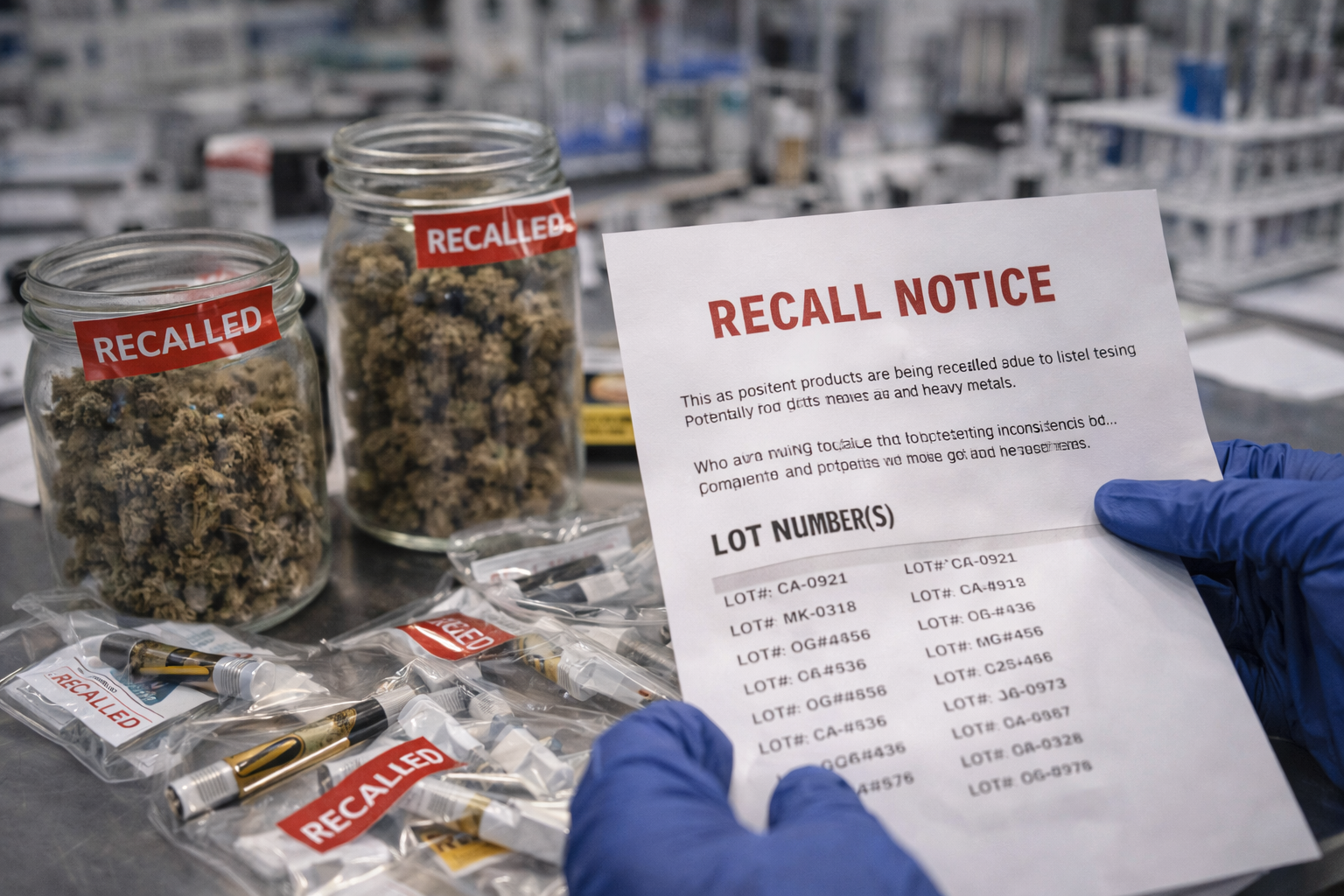
Recall notice with cannabis flower jars and vape products on a lab bench during testing review
A New York cannabis product recall is never just a consumer headline. It is an operational stress test that shows how fast trust can break when lab credibility breaks. In late February, the New York State Office of Cannabis Management issued a precautionary recall tied to unreliable lab results involving mold and a heavy metal, impacting dozens of adult use product lots.
Quick facts
• Recall issued February 26, 2026 for multiple adult use products tested by Keystone State Testing New York
• OCM identified 54 product lots with Aspergillus results reported incorrectly, plus 1 additional lot with cadmium results reported incorrectly
• The issues were found after inspections and a records audit conducted between December 2025 and January 2026
• Products were sold through licensed adult use dispensaries across New York State and dispensaries and distributors were directed to stop sales and distribution of affected lots
• OCM described the action as precautionary and noted no reports of adverse effects at the time of the notice
If a recall like this would disrupt your operation, Start with our quick Cannashield intake form so you can map lab dependencies and tighten documentation before it becomes urgent.
What This Recall Really Means For Operators
The big operator takeaway is not “labs can mess up.” Everyone knows that. The takeaway is that a lab event becomes a chain event.
When a regulator says results were unreliable, it instantly puts every step in the chain under a microscope: production records, batch numbers, distribution logs, retail receipts, returns, and customer communications. Even if only certain lots are impacted, the reputational damage tends to spread wider than the lot list. People do not remember lot numbers. They remember that a recall happened.
In this case, OCM said the recalled lots included multiple product types, and industry reporting described a mix that reached flower, edibles, prerolls, and beverages.
That breadth is exactly why lab risk is operational risk. It is not limited to one category. It can touch every SKU that depends on that lab’s certificate of analysis.
Universal operator lesson: in regulated cannabis, your compliance partners are part of your product, because their credibility becomes your credibility.
Where The Blast Radius Hits First
Most operators feel a recall in five places first.
Inventory freeze. Anything connected to the affected lots becomes unsellable until it is resolved. That ties up cash fast.
Retail disruption. Staff are forced to answer questions, pull products, and process returns, all while trying to keep the store running.
Distributor and vendor friction. Everyone starts asking who knew what and when, and whether documentation is complete enough to prove what moved where.
Customer trust. Even compliant operators can get lumped into the mess if consumers begin to question testing reliability across the market.
Regulatory attention. If one lab is flagged, other labs and other operators often see increased scrutiny, because regulators want to prevent a repeat.
This is why operators should treat lab selection like a core vendor decision, not a checkbox. The costs of “good enough” show up later, and they show up all at once.
If uncertainty is affecting how you plan or negotiate, Complete our Cannashield questionnaire to pressure test your lab vendor controls, COA handling, and recall readiness.
How To Build A Lab Risk Program That Holds Up
You cannot control everything a lab does, but you can control how you manage the relationship.
Start with COA discipline. Store certificates in one place, tied to batch and lot, with a naming system your team actually follows. If a regulator asks for proof, you should be able to pull it in minutes, not hours.
Add a retention mindset. Keep retain samples where permitted and practical. If a result is challenged later, your ability to retest can matter.
Set vendor expectations in writing. Your supply agreements should clarify what happens when testing credibility is questioned, including communication timing, responsibilities, and how product is handled if a recall hits.
Watch for risk signals. Big swings in results, unusually fast turnaround, or results that consistently look too perfect are signals to slow down and verify. A market that has already seen multiple lab controversies will not treat “trust us” as a sufficient answer.
Finally, build a recall playbook before you need it. The operators who survive recalls best are the ones who already know who calls who, what gets pulled, what gets documented, and how staff speak about it without speculating or overpromising.
If you want a practical recall response checklist you can hand to your manager today, use our Cannashield intake form and request the Lab Risk and Recall Readiness pack.
Conclusion
New York’s recall is a reminder that lab credibility is market infrastructure. When it breaks, the impact spreads to operators who did nothing wrong, because consumers and regulators respond to the category, not just the company. The winning posture in 2026 is simple: treat lab oversight as a daily system, keep documentation clean, and build a recall response plan that protects trust when the unexpected happens.
Educational note: This article is for education only and is not legal, medical, or compliance advice. Always follow the requirements issued by your state regulators and your licensed partners.
What To Do This Week
• Audit where your COAs live and standardize batch and lot file naming
• Confirm your lab relationships, turnaround times, and escalation contacts
• Review vendor contracts for recall communication and responsibility language
• Train retail staff on how to handle recall questions calmly and consistently
• Run a mock product pull drill so your team can execute fast if needed
• Create a one page recall log template for dates, lots, actions taken, and outcomes
FAQ
What triggered the New York recall
OCM said a records audit and inspections found unreliable test results from Keystone State Testing New York for mold and a heavy metal across multiple lots.How many lots were involved
OCM reported 54 lots with Aspergillus results reported incorrectly and one additional lot with cadmium results reported incorrectly.Does an unreliable result automatically mean every product is contaminated
Not necessarily. It means the test results cannot be relied on, so regulators treat affected lots as a safety risk until addressed.What should dispensaries do when a recall is issued
Stop selling affected lots, follow regulator instructions, document actions taken, and direct customers to return instructions through the original retailer.What is the biggest operator lesson from lab related recalls
Lab credibility is part of your supply chain. If it fails, your business still absorbs the cost and trust impact.How can operators reduce lab risk
Tight COA handling, clear vendor expectations, retain samples where feasible, and a documented recall response process.