


Team reviewing cannabis drug licensing and commercialization plans
Cannabis pharmaceutical companies are still chasing regulated medical markets, but the path is expensive, slow, and capital intensive. Business of Cannabis reports that Argent BioPharma sold global commercialization rights for CannEpil, its pharmaceutical grade cannabis based epilepsy drug, to Splash Beverage Group through a $5.5 million debt relief deal. Splash takes responsibility for development and regulatory approval in new markets, with the United States as a priority, while Argent keeps ownership of the intellectual property, regulatory assets, manufacturing know how, and a royalty interest.
Quick facts
• Argent BioPharma sold global commercialization rights for CannEpil to Splash Beverage Group
• The transaction is structured around $5.5 million in debt relief and preferred equity
• Mercer Street Global Opportunity Fund agreed to forgive about $5 million of Argent debt
• C/M Capital Partners committed $1 million for early United States regulatory work
• Splash takes responsibility for development, commercialization, and regulatory approval in new markets
• The United States is a priority market for CannEpil development
• Argent keeps ownership of intellectual property, regulatory assets, and manufacturing know how
• Argent will continue manufacturing CannEpil under EU GMP standards
• Argent keeps a 15 percent royalty on worldwide net sales
• The universal operator lesson is simple: cannabis pharma opportunity depends on clinical evidence, regulatory execution, capital structure, and patient access, not product hype
If cannabis pharma financing or product access is affecting your growth plan, complete our quick Cannashield intake form so you can map licensing, clinical, IP, compliance, and insurance exposure before a deal becomes a survival decision.
Why this deal matters
This deal matters because it shows how cannabis pharma companies are using licensing agreements and debt restructuring to stay alive while pursuing regulated medical markets. Argent is not simply selling a consumer cannabis product. CannEpil is a standardized cannabis based oral solution aimed at drug resistant epilepsy, a serious neurological condition where patients may continue having seizures despite existing therapies.
That makes the opportunity real, but difficult. Pharmaceutical cannabis is not like retail flower, vapes, or edibles. A company needs clinical evidence, manufacturing controls, regulatory filings, physician confidence, patient access pathways, and enough capital to survive the approval process. The deal gives Splash the commercial rights and regulatory responsibility, while giving Argent debt relief and a continued economic interest.
Why the debt relief structure matters
The structure says as much as the product. Business of Cannabis reports that Argent was under financial pressure, with limited cash, negative net assets, accumulated losses, and convertible debt. Instead of receiving a simple cash payment, Argent is reducing debt tied to Mercer Street while Splash issues preferred equity as part of the transaction.
That kind of structure matters for investors and lenders because it shows the financing reality behind cannabis pharma. Valuable medical assets can still sit inside companies with weak balance sheets. A licensing deal can preserve a path forward, but it can also show that the seller did not have enough capital to fully control the next stage.
This is the universal operator lesson. In cannabis pharma, the asset may be promising, but the balance sheet still decides who controls the future.
Why the United States pathway is the key question
The United States is the central growth target in this deal. CannEpil has already reached patients through regulated access pathways in markets such as Ireland, the United Kingdom, Germany, and Australia, but the United States remains a much larger and more complex opportunity.
Splash says it intends to advance FDA related activities, expand the clinical and real world evidence package, engage United States epilepsy investigators, and seek a pharmaceutical development partner. Business of Cannabis reports that Splash must use commercially reasonable efforts to begin a Phase I trial within 24 months and a Phase II trial within 48 months before pursuing a new drug application.
That timeline is important. A United States pharmaceutical pathway is not only about interest from patients or physicians. It requires clinical work, safety data, manufacturing information, regulatory strategy, capital, and the right development partner.
Why IP control and manufacturing still matter
Argent keeping the intellectual property and manufacturing know how is an important part of the deal. Splash gets the global commercialization pathway, but Argent remains tied to the asset through IP, manufacturing, and royalty economics. That gives Argent a continued role if CannEpil succeeds, even though Splash now carries the next major development burden.
For operators and investors, this is a useful structure to study. Commercial rights, IP ownership, manufacturing control, regulatory responsibility, and royalties can be separated. Each piece has value. Each piece also creates risk if the parties are not aligned.
If you need to organize IP, manufacturing, clinical, and insurance records before a licensing or financing deal, use the Cannashield intake form to identify weak points and build a cleaner transaction file.
Conclusion
Argent’s CannEpil deal with Splash Beverage Group is a clear example of where cannabis pharma is heading. Companies with cannabis based medical assets need capital, regulatory pathways, clinical partners, and patient access strategies. When those pieces are hard to fund, licensing and debt relief deals become survival tools.
For investors, medical cannabis companies, operators, healthcare providers, lenders, and compliance teams, the message is simple. Cannabis pharma is not a simple growth story. The winners will be the companies that can protect IP, fund trials, manage debt, satisfy regulators, and turn patient access into approved medical products.
Educational note: This article is for education only and is not legal, regulatory, medical, tax, financial, investment, clinical, pharmaceutical, or insurance advice.
What to do this week
• Review whether cannabis pharma assets are supported by real clinical and regulatory pathways
• Separate commercial rights, IP ownership, manufacturing control, royalties, and approval responsibility
• Review debt, convertible notes, dilution risk, and lender influence before valuing a transaction
• Track United States FDA milestones, trial timelines, and pharmaceutical partner discussions
• Confirm manufacturing standards, regulatory records, and patient access history before investing
• Build a short internal memo on cannabis pharma financing risk, IP control, and clinical development exposure
FAQ
What did Argent BioPharma sell?
Argent sold global commercialization rights for CannEpil to Splash Beverage Group.
What is CannEpil?
CannEpil is a pharmaceutical grade cannabis based oral solution being developed for drug resistant epilepsy and related seizure disorders.
How much was the deal worth?
The transaction involved $5.5 million in consideration tied to debt relief and preferred equity.
What does Splash take over?
Splash takes responsibility for development, commercialization, regulatory approval, marketing, distribution, sublicensing, and sales in new markets.
What does Argent keep?
Argent keeps intellectual property ownership, regulatory assets, manufacturing know how, EU GMP manufacturing responsibility, and a 15 percent royalty on worldwide net sales.
What is the biggest operator takeaway?
Cannabis pharma companies need more than promising products. They need capital, clinical evidence, IP control, regulatory strategy, manufacturing quality, and patient access pathways.
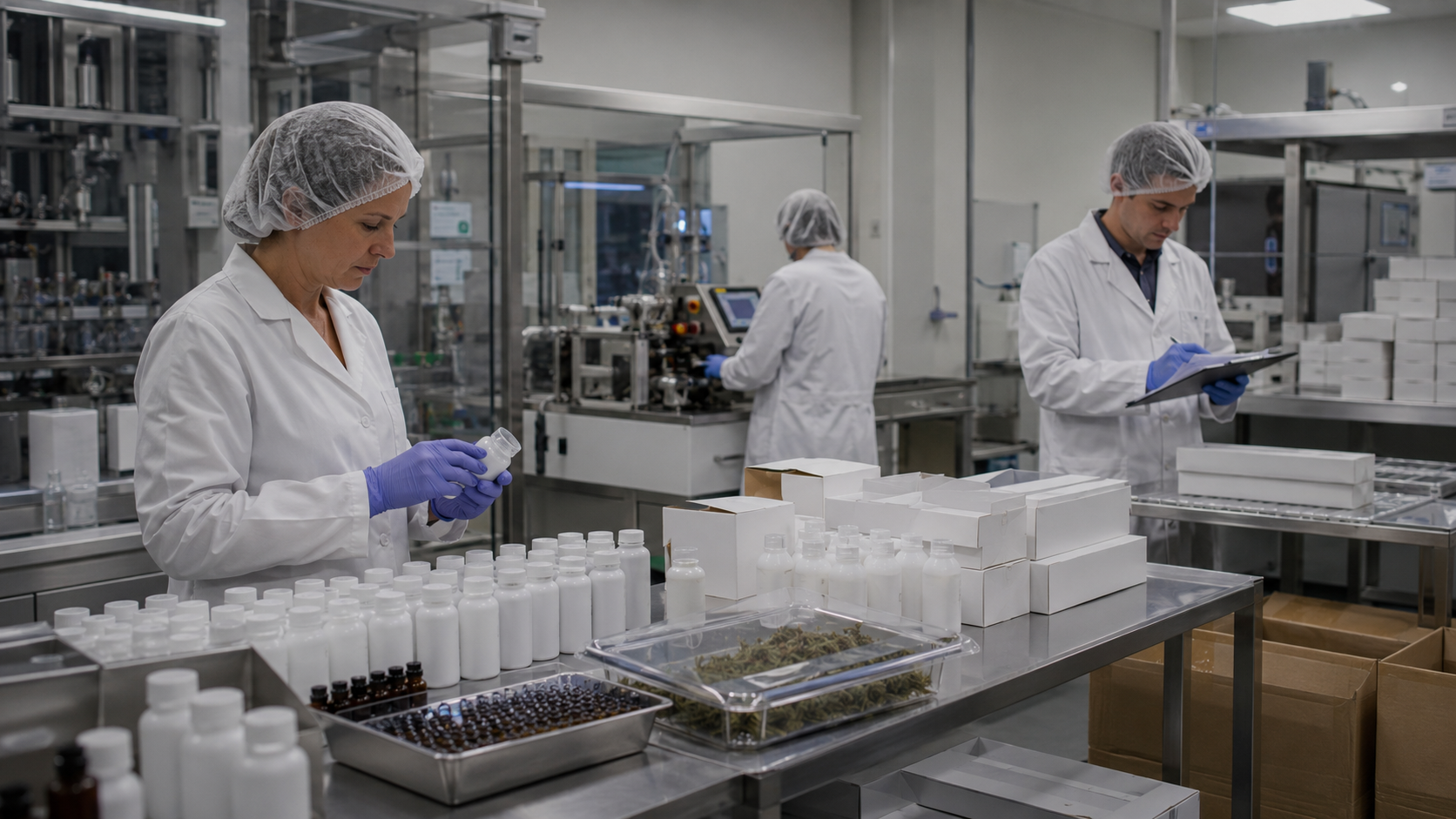
Staff reviewing cannabis pharmaceutical manufacturing compliance
You might also like


SOURCES
Business of Cannabis, Argent Trades Global Rights to Lead Cannabis Drug For Debt Releaf in New $5.5m Deal
https://businessofcannabis.com/argent-trades-global-rights-to-lead-cannabis-drug-for-debt-releaf-in-new-5-5m-deal/
Splash Beverage Group, Splash Beverage Group Acquires Exclusive Global Rights to CannEpil
https://www.globenewswire.com/news-release/2026/07/06/3322414/0/en/splash-beverage-group-acquires-exclusive-global-rights-to-cannepil-an-epilepsy-therapy-with-established-european-patient-access-fda-engagement-and-u-s-development-potential.html
FDA, Drug Development and Review Definitions
https://www.fda.gov/drugs/investigational-new-drug-ind-application/drug-development-and-review-definitions

Trulieve and Cronos have each gained roughly 27 percent in 2026 while reporting stronger operating results. The broader signal is that public market attention is increasingly rewarding cash generation, improving margins, liquidity, and measurable revenue growth.