
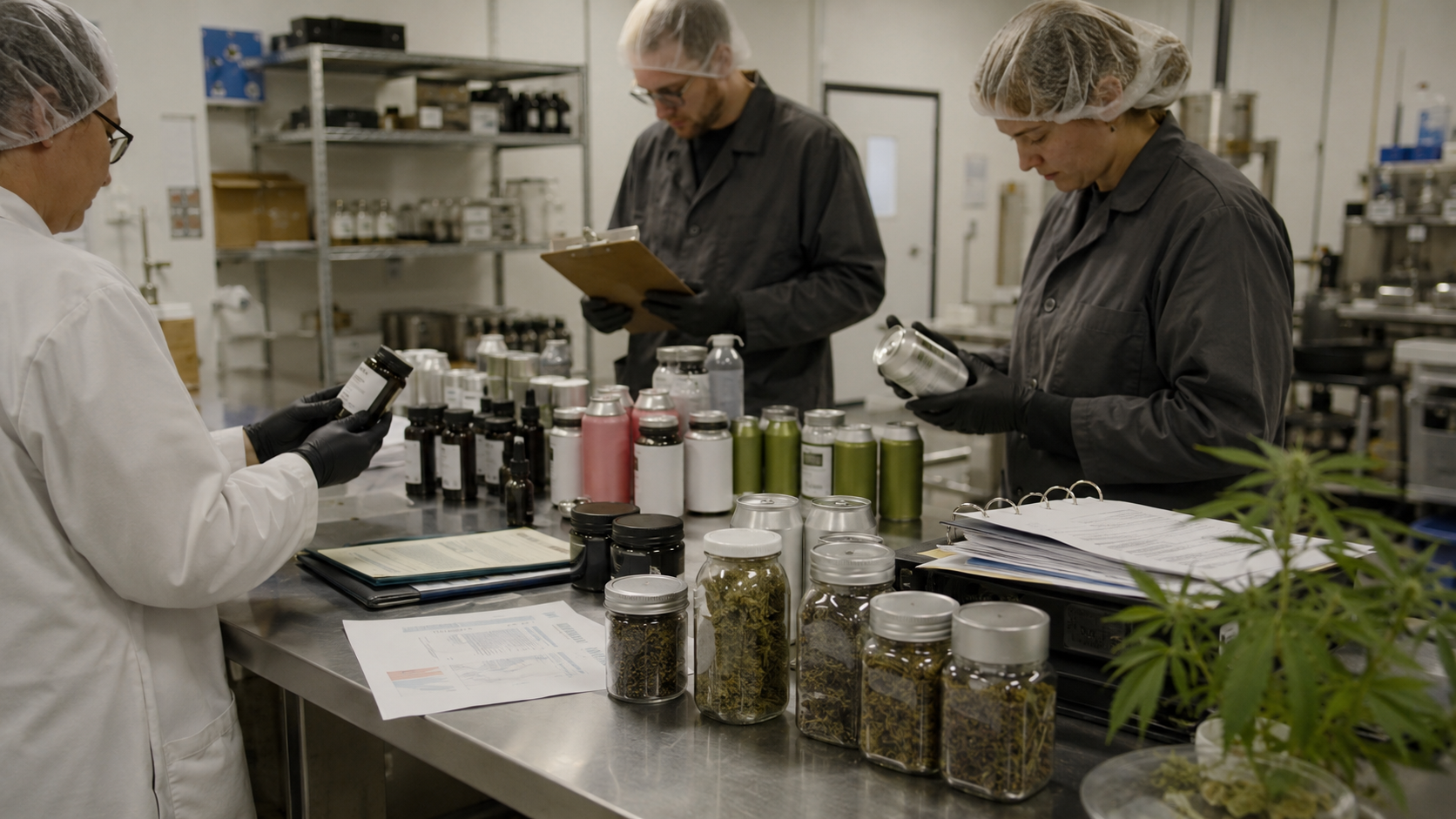
Staff inspecting hemp THC beverages and labels
Federal hemp THC regulation may be getting a last minute alternative before the November deadline. MJBizDaily reports that a bipartisan proposal introduced in Congress would create a federal framework for hemp derived THC products instead of allowing the pending federal ban to move forward without a replacement structure. The Lawful Hemp Protection Act, introduced by Rep. Andy Barr of Kentucky and Rep. Angie Craig of Minnesota, would raise the federal THC threshold for hemp, ban synthetic and non naturally occurring cannabinoids, require consumable hemp products to be grown and made in the United States, set age 21 and older sales rules, and create new taxes on hemp THC beverages and other consumables.
Quick facts
• The Lawful Hemp Protection Act was introduced in Congress on July 22, 2026
• The proposal is sponsored by Rep. Andy Barr and Rep. Angie Craig
• The bill would raise the federal THC threshold for hemp to 1 percent total THC by dry weight
• The bill would ban synthetic cannabinoids and other non naturally occurring compounds
• Consumable hemp products would need to be cultivated, processed, finished, and packaged in the United States
• Retail sales of consumable hemp derived cannabinoid products would be limited to adults age 21 and older
• The bill would create packaging, labeling, and marketing standards to reduce youth access and deceptive advertising
• Hemp THC beverages would be taxed at 5 cents per milligram of THC
• Other THC consumables would be taxed at 5 percent of retail price
• The universal operator lesson is simple: Congress may be moving from prohibition toward regulation, but operators still need to prepare for both outcomes
If federal hemp THC uncertainty is affecting your business plan, complete our quick Cannashield intake form so you can map product, tax, packaging, supply chain, and insurance exposure before the November deadline forces faster decisions.
Why this bill matters
This bill matters because the hemp industry has been operating under a countdown. Current federal changes are scheduled to take effect on November 12, 2026, and the Congressional Research Service says excluded products would no longer be treated as hemp once the new definition becomes effective. That includes final hemp derived cannabinoid products with more than 0.4 milligrams of total THC and similar cannabinoids per container.
That pending framework has created major pressure for beverage brands, edible makers, hemp retailers, distributors, cultivators, seed businesses, investors, and lenders. Operators have been preparing for product removals, reformulation, contract disputes, inventory exposure, financing problems, and possible state channel pivots.
The Lawful Hemp Protection Act offers a different path. Instead of allowing a blunt ban to become the default, it tries to create a national structure around cultivation, manufacturing, testing, labeling, age gates, taxes, and interstate commerce.
Why the 1 percent threshold matters
The proposed move from 0.3 percent to 1 percent total THC by dry weight would be a major shift for cultivation and manufacturing. A higher threshold could reduce crop failure risk, create more breathing room for farmers, and make the federal hemp line less fragile.
But the threshold does not mean the market would be wide open. The bill also gives FDA authority to establish maximum cannabinoid content limits for consumable hemp products, with fallback limits if FDA does not act within 12 months. That means finished product limits would still matter, especially for beverages, edibles, and other consumer products.
This is the universal operator lesson. A higher hemp threshold may help farmers, but finished products will still live or die by compliance limits, testing, packaging, and retail rules.
Why taxes and age gates change the business model
The tax structure is one of the biggest signals in the bill. A 5 cent per milligram tax on THC beverages could change pricing immediately. A 5 percent retail price tax on other THC consumables would also create new reporting and margin pressure. Operators would need to model whether their products still work after federal tax, state tax, distributor margins, retailer margins, testing, packaging, and compliance costs.
The age 21 and older requirement is equally important. Hemp THC has grown partly because it reached outlets outside state licensed cannabis systems, including liquor stores, grocery, online channels, convenience stores, and beverage retailers. A federal age gate would force more formal retail controls, identity checks, staff training, and vendor procedures.
That may help responsible operators. It may also raise operating costs for businesses that were built on looser retail channels.
Why U.S. supply chain rules matter
The bill would require consumable hemp products to be cultivated, processed, finished, and packaged in the United States. That is a major supply chain requirement. Operators would need to review ingredient sourcing, extraction partners, bottling, co packing, packaging, manufacturing records, and certificates.
For import reliant businesses or companies using overseas inputs, this could force a major operational shift. For U.S. farmers and domestic manufacturers, it could create a more protected channel. For investors and lenders, it creates a new diligence question: can the company prove the product was grown and made where the law requires.
If you need to organize supplier, manufacturing, tax, and insurance records before federal hemp rules change, use the Cannashield intake form to identify weak points and build a cleaner compliance file.
Why state cannabis operators are watching closely
The bill could also reopen tension between hemp THC companies and state regulated cannabis operators. Hemp businesses may see the proposal as a lifeline that replaces prohibition with federal regulation. State licensed cannabis operators may see it as a new competitive threat if hemp THC products can continue selling through wider retail channels while licensed cannabis businesses remain stuck with heavier taxes, local controls, and state licensing costs.
That conflict will matter in Congress. Alcohol interests, hemp farmers, beverage companies, and some retailers appear to support regulation. Some state regulated cannabis advocates are expected to oppose anything that preserves hemp THC competition without matching the same burdens.
Operators should not assume the bill passes quickly. Congress may still amend it, delay it, ignore it, or let the November deadline arrive first.
Conclusion
The Lawful Hemp Protection Act is one of the most important federal hemp THC proposals to watch before November. It would replace a pending federal ban with a regulated and taxed framework covering THC thresholds, synthetic cannabinoid restrictions, U.S. supply chain rules, age gates, packaging, labeling, FDA limits, and beverage taxes.
For operators, manufacturers, retailers, cultivators, investors, lenders, and compliance teams, the message is simple. This bill could create a survival path for compliant hemp THC products, but it is not law yet. Businesses need to plan for regulation and prohibition at the same time until Congress makes the next move clear.
Educational note: This article is for education only and is not legal, regulatory, tax, financial, product safety, supply chain, or insurance advice.
What to do this week
• Review which products would fail under the current November 12 federal hemp restrictions
• Model how a 5 cent per milligram THC beverage tax would affect pricing and margin
• Review packaging, labeling, youth appeal, and age verification controls
• Confirm whether consumable hemp products are grown, processed, finished, and packaged in the United States
• Track whether the Lawful Hemp Protection Act receives hearings, amendments, or companion support
• Build a short internal memo on ban scenario, regulated scenario, tax impact, and supply chain exposure
FAQ
What is the Lawful Hemp Protection Act?
It is a bipartisan federal proposal that would regulate and tax hemp derived consumer products instead of allowing the pending federal hemp THC ban to move forward without a replacement framework.
Who introduced the bill?
The bill was introduced by Rep. Andy Barr of Kentucky and Rep. Angie Craig of Minnesota.
What would the bill do to the hemp THC threshold?
It would raise the legal hemp threshold to 1 percent total THC by dry weight.
Would synthetic cannabinoids be allowed?
No. The bill would prohibit synthetic cannabinoids and other non naturally occurring compounds.
How would hemp THC products be taxed?
Hemp THC beverages would be taxed at 5 cents per milligram of THC, while other THC consumables would be taxed at 5 percent of retail price.
What is the biggest operator takeaway?
The bill may offer a regulated path forward, but operators still need to plan for the November deadline, tax exposure, packaging rules, supply chain requirements, and state cannabis competition.
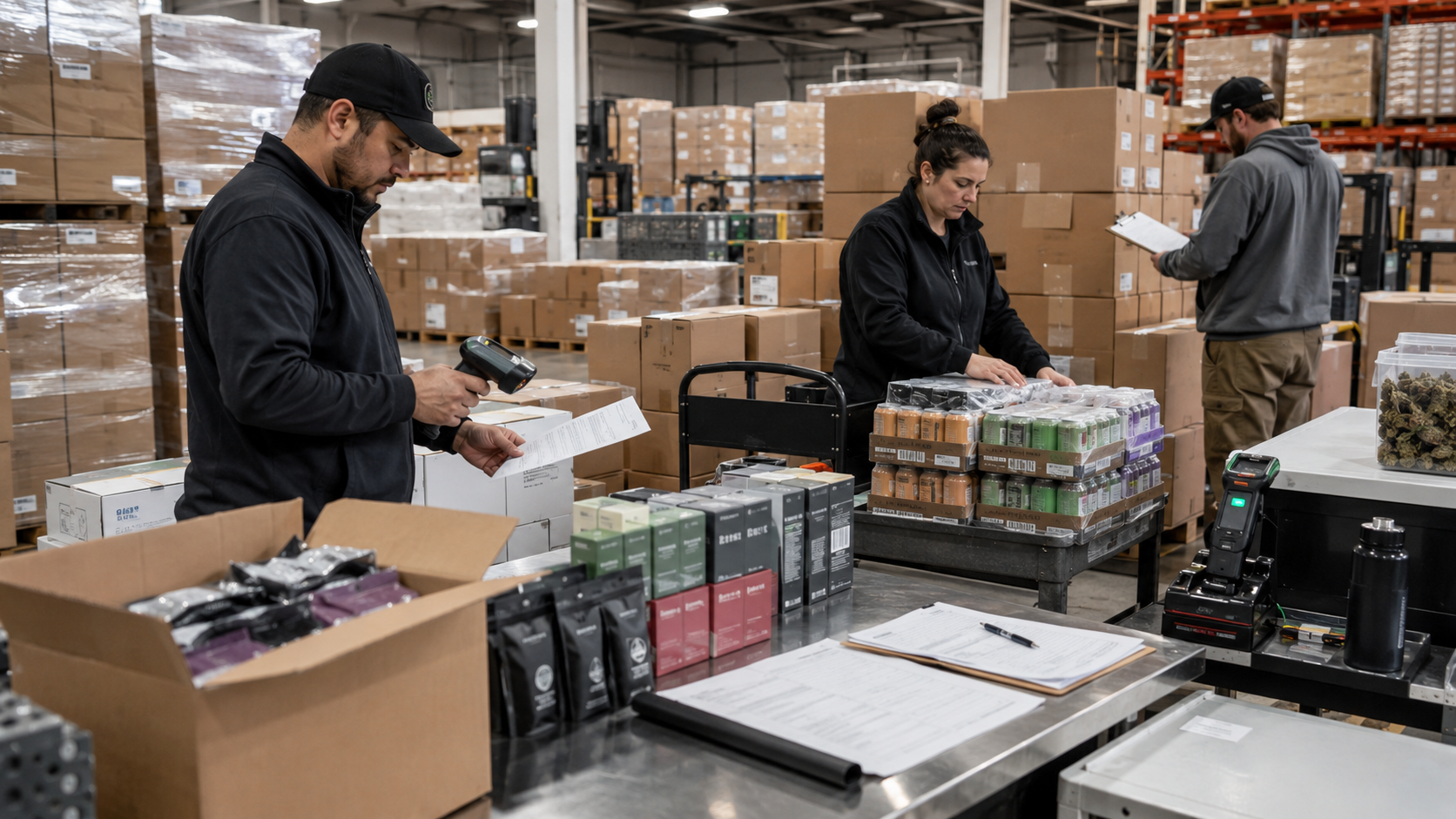
Warehouse team reviewing hemp THC product compliance
You might also like


SOURCES
MJBizDaily, Bipartisan effort to save and tax hemp THC products introduced in Congress
https://mjbizdaily.com/news/bipartisan-effort-to-save-and-tax-hemp-thc-products-introduced-in-congress/617062/
Congressman Andy Barr, Barr Introduces Lawful Hemp Protection Act to Protect Kentucky Farmers, Consumers, and the Future of the Hemp Industry
https://barr.house.gov/2026/7/barr-introduces-lawful-hemp-protection-act-to-protect-kentucky-farmers-consumers-and-the-future-of-the-hemp-industry
Congressional Research Service, Changes to the Statutory Definition of Hemp and Issues for Congress
https://www.congress.gov/crs-product/IF13136

Trulieve and Cronos have each gained roughly 27 percent in 2026 while reporting stronger operating results. The broader signal is that public market attention is increasingly rewarding cash generation, improving margins, liquidity, and measurable revenue growth.