

San Leandro Considers Expanding Cannabis Retail Access
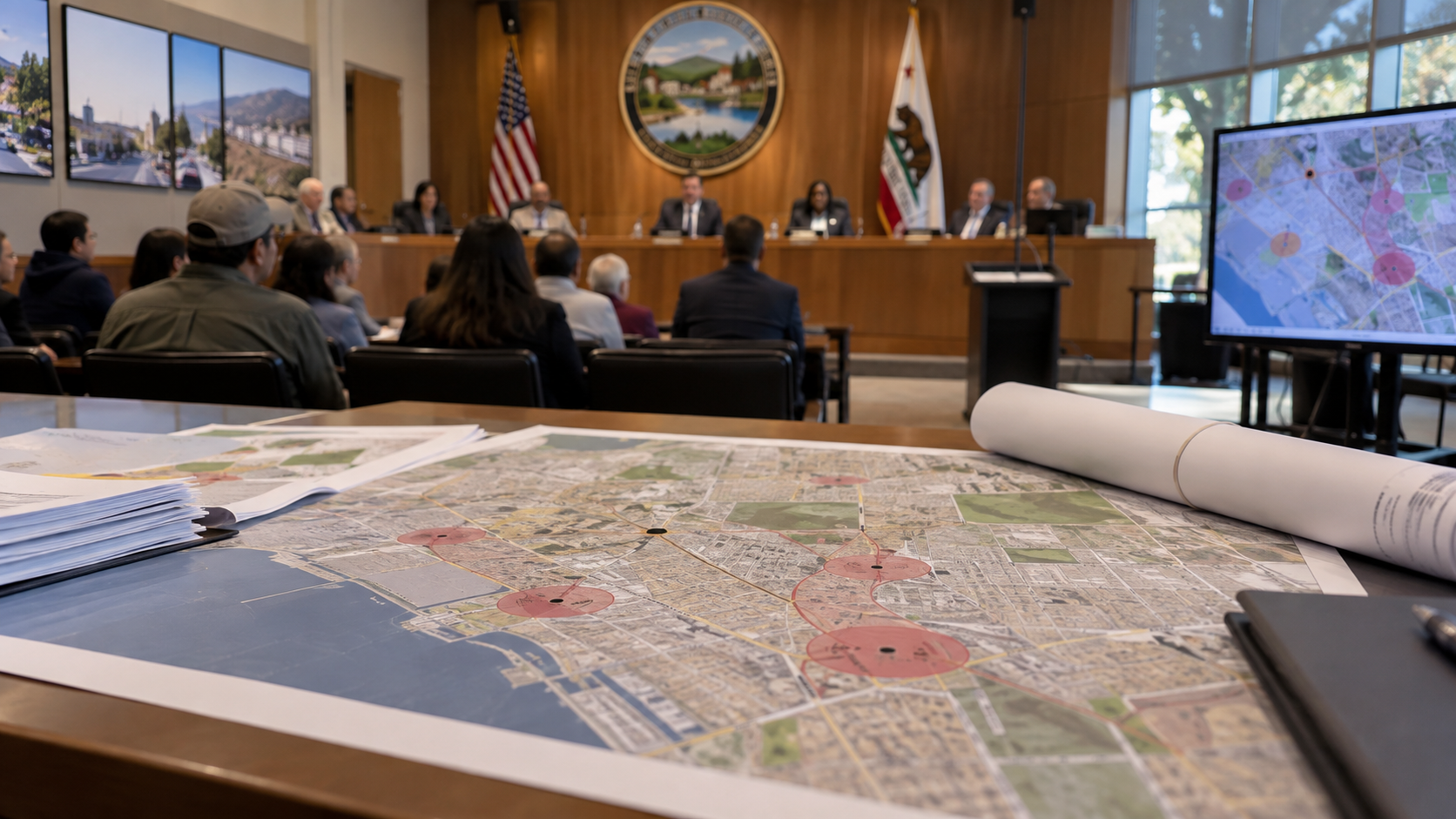
San Leandro officials reviewing zoning maps and proposed buffer changes that could expand eligible locations for licensed retailers.
San Leandro is considering a significant update to its local retail rules that could create two additional store opportunities and expand the number of viable commercial properties available to operators. City officials are discussing increasing the permitted retail total from four to six while reducing certain sensitive use buffers from 1,000 feet to 600 feet. Staff is also working on clearer youth center definitions and broader commercial and industrial zoning eligibility. The changes remain proposed, but they show how local zoning can determine market access even when California licensing rules stay the same.
Quick facts
• San Leandro currently allows four retail operating permits
• City staff plans to return with an ordinance that could increase the limit to six
• The proposal could create two additional retail opportunities
• Officials are considering reducing certain sensitive use buffers from 1,000 feet to 600 feet
• The proposed distance would apply around locations such as schools, youth centers, and parks
• City officials are also reviewing how youth centers should be defined
• The updated framework could expand eligible commercial and industrial locations
• The September 14 City Council discussion provided direction to staff rather than final approval of the changes
• Any future retailer would still need applicable state and local licensing, zoning, security, property, and operating approvals
• The universal operator lesson is simple: a license opportunity has limited value until an operator identifies a property that can actually satisfy local land use rules
If San Leandro retail expansion could fit your growth strategy, complete our quick Puro Risk intake form so you can map property, licensing, lease, security, compliance, and insurance exposure before competition for viable sites increases.
Why The Retail Cap Matters
Moving from four stores to six would represent a meaningful increase in a relatively limited local market.
For prospective retailers, two new permits create possible market entry. For existing operators, they create additional competition.
That means operators should evaluate more than citywide demand.
Store level economics matter. Traffic, parking, nearby retail activity, rent, customer access, local competition, security costs, and property configuration can determine whether a new location creates profitable growth or simply adds fixed expenses.
Why The 600 Foot Buffer Could Open More Sites
The proposed buffer reduction may ultimately matter as much as the two additional permits.
A 1,000 foot separation requirement can remove large sections of a city from consideration, particularly in dense areas where schools, parks, youth facilities, and other sensitive uses are common.
Reducing the requirement to 600 feet could increase the number of properties that survive an initial zoning review.
That does not make every commercial building viable.
Operators still need to evaluate zoning, neighboring uses, lease restrictions, building conditions, security, parking, accessibility, local approvals, and state requirements.
If you are evaluating potential San Leandro properties, use the Puro Risk intake form to organize zoning, lease terms, property conditions, construction needs, insurance, and operating assumptions before signing a long term commitment.
Why The Youth Center Definition Matters
Local definitions can have major real estate consequences.
San Leandro officials are considering clarifying what qualifies as a youth center so the rule better reflects actual community uses.
That can affect whether a property falls inside or outside a restricted area.
Operators and landlords should therefore avoid relying only on a map prepared under older definitions. A location should be evaluated under the ordinance that is actually adopted before significant capital is committed.
Why Landlords Should Pay Attention
An expanded retail framework could make previously overlooked commercial and industrial properties more attractive.
But landlords should understand the licensing process before treating a prospective tenant as a normal retail user.
Lease timing, permit contingencies, security improvements, building modifications, insurance requirements, permitted use language, and responsibility for failed licensing should be addressed before construction begins.
If you own a property that could become eligible under revised rules, complete our quick Puro Risk intake form to identify lease, property, liability, construction, and insurance issues before negotiating with an operator.
Conclusion
San Leandro has not yet approved two additional retail stores or the proposed 600 foot buffer.
The September discussion gives city staff direction to prepare a future ordinance.
For operators, investors, landlords, brokers, and developers, that creates a planning window.
The universal lesson extends beyond San Leandro. Local zoning frequently determines market access more directly than statewide legalization. Operators that understand site eligibility, lease structure, licensing timelines, security, and operating economics before new permits become available will be better prepared when an application opportunity opens.
Educational note: This article is for education only and is not legal, regulatory, zoning, licensing, financial, investment, real estate, construction, or insurance advice.
What to do this week
• Map potential sites against both 1,000 foot and 600 foot buffer scenarios
• Review commercial and industrial properties that were previously excluded
• Avoid signing long term leases before confirming zoning feasibility
• Model store economics using realistic rent, payroll, security, tax, and insurance costs
• Review lease contingencies tied to licensing and land use approval
• Track the future ordinance rather than assuming the September discussion changed current law
FAQ
How many retail stores does San Leandro currently allow?
San Leandro currently allows four retail operating permits.
How many stores are being considered?
City staff plans to prepare an ordinance that could increase the total permitted retailers from four to six.
Has San Leandro approved the additional stores?
No. The September 14 discussion provided direction to city staff. A future ordinance would still need to move through the applicable approval process.
What buffer change is being considered?
Officials discussed reducing certain sensitive use separation requirements from 1,000 feet to 600 feet.
Why does the buffer matter?
A smaller buffer can increase the number of commercially viable properties available for licensed retail operations.
What is the biggest operator takeaway?
Do the property work before the licensing rush. Zoning, buffers, leases, construction, security, and operating economics can eliminate an otherwise attractive site.

City officials and community members reviewing zoning maps during a San Leandro hearing on proposed retail expansion and location rules.
You might also like

SOURCES
Tri City Voice, San Leandro Discusses Allowing Two More Cannabis Shops, September 22, 2026
https://tricityvoice.com/san-leandro-discusses-allowing-two-more-cannabis-shops/
City of San Leandro, Proposed Draft Code Amendments Related To Retail Cannabis Dispensaries, September 14, 2026
City of San Leandro, Retail Dispensary Permit Background And Operating Permit History

San Leandro is considering expanding its permitted retail market from four stores to six while reducing certain sensitive use buffers from 1,000 feet to 600 feet. The proposal could open additional properties and retail opportunities while making zoning, site control, licensing, and lease strategy increasingly important.