

Schedule III Push Survives DOJ Shakeup
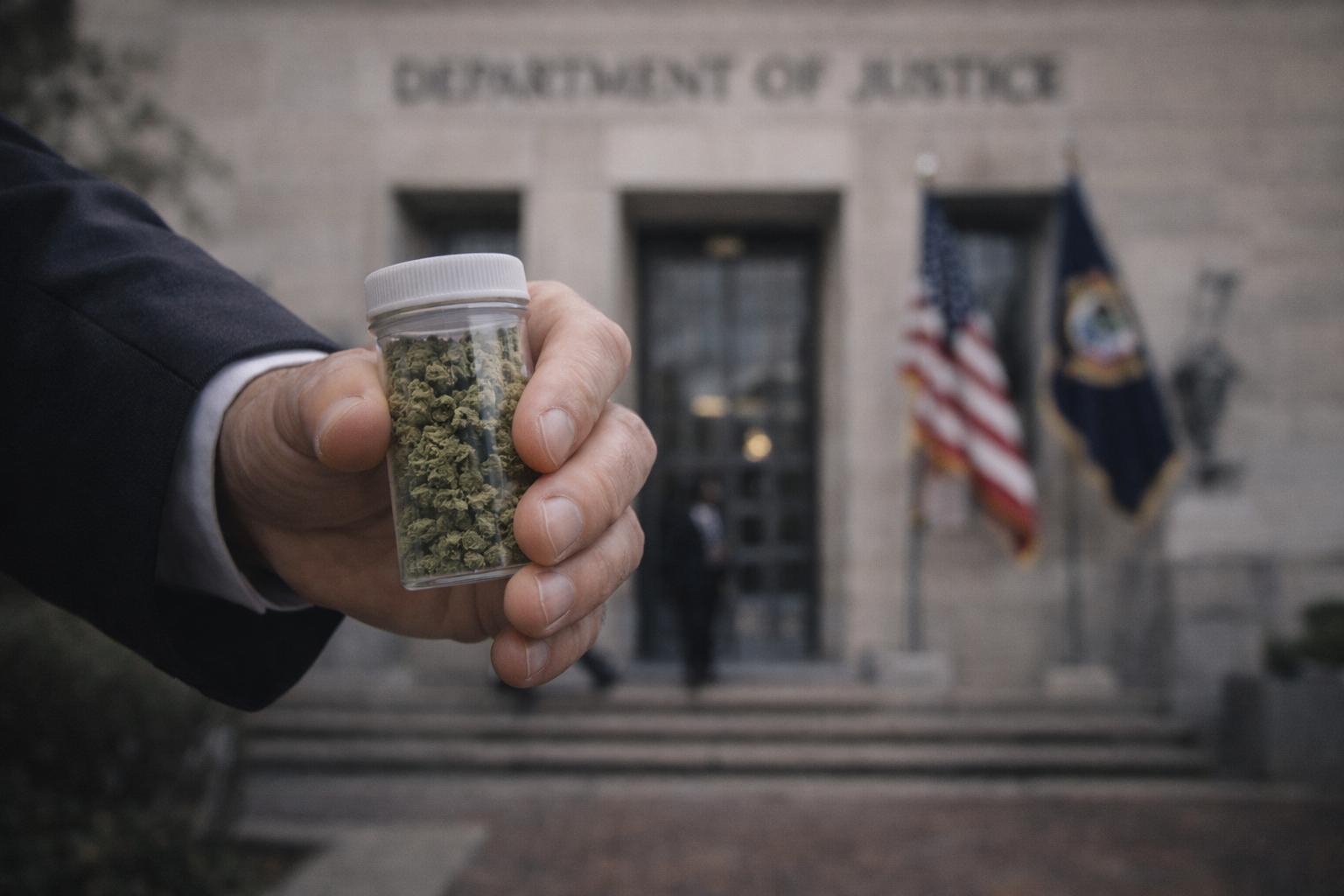
Cannabis sample bottle in front of the Justice Department showing federal rescheduling momentum and litigation risk.
Federal cannabis rescheduling is still alive, but the part that matters most to operators is timing. Officially, the May 2024 DOJ proposed rule to move cannabis from Schedule I to Schedule III is still on the table, and President Trump’s December 18, 2025 executive order told the Attorney General to complete that rulemaking in the most expeditious manner possible. Just as important, the old hearing track never finished. DEA postponed the January 21, 2025 hearing pending an appeal, which means the public record still shows a process that stalled before it restarted. MJBizDaily now reports that sources close to the process do not expect the recent Justice Department shakeup to derail the push and that movement could come within 30 to 60 days.
Quick facts
• The White House directed the Attorney General on December 18, 2025 to take all necessary steps to complete the Schedule III rulemaking as quickly as possible.
• DOJ’s May 2024 proposed rule would move cannabis from Schedule I to Schedule III, but DOJ also said cannabis would still remain subject to applicable criminal prohibitions under the Controlled Substances Act and applicable provisions of the FDCA.
• DEA publicly announced on January 15, 2025 that the hearing scheduled for January 21, 2025 was postponed pending resolution of an appeal filed in the proceedings.
• Federal tax code section 280E applies to businesses trafficking in controlled substances within the meaning of Schedule I and II, which is why Schedule III matters so much to operators.
• MJBizDaily reported on April 2, 2026 that sources close to the process do not expect the recent DOJ shakeup to slow the rescheduling push and that one observer said movement could come within 30 to 60 days.
If Schedule III timing is affecting your tax, valuation, or expansion planning, Start with our quick Cannashield intake form so you can map exposure before the federal timeline moves again.
What Is Official Right Now
The cleanest way to read this story is to separate official record from industry chatter. The official record says DOJ proposed Schedule III in May 2024, Trump ordered DOJ to finish the job in December 2025, and the DEA hearing process was postponed in January 2025. What the official record does not show yet is a public final rule or a public effective date. That means any talk about an exact finish line is still a reported expectation, not a published federal action. [Federal Cannabis Risk Review] [Cannabis Compliance Update Hub]
Universal operator lesson: do not build a serious business plan on mood alone. Build it on what is filed, signed, and effective. That is an inference based on the current gap between the official docket and the latest source reporting.
Why Schedule III Matters So Much
The reason operators care is simple. Tax relief. Section 280E bars deductions and credits for businesses trafficking in Schedule I and II controlled substances. The U.S. Code says that plainly, and DOJ’s own proposed rule acknowledged that moving cannabis to Schedule III could have significant economic consequences for small businesses because of 280E. That is why the industry is not watching this like a symbolic policy fight. It is watching it like a cash flow event. [Cannabis Tax Exposure Review] [Retail Margin Stress Test Guide]
But there is a catch. Schedule III is not the same thing as full federal legalization. DOJ’s proposal says cannabis would still remain subject to the Controlled Substances Act and the FDCA, which means rescheduling would be major, but not magical. It can change tax treatment faster than it changes the deeper federal conflict around product approval, interstate commerce, and ordinary operations. That is the part many people skip when they get excited.
If federal tax relief timing could change your pricing, hiring, or debt plan, use our Cannashield questionnaire to pressure test your operation before you build on a rule that is still not final.
Why Lawsuits Could Still Slow The Real Benefit
The next risk is not only whether DOJ finalizes the rule. It is what happens after. MJBizDaily reported that cannabis reform opponents already sued over the new CBD pilot and are expected to use similar tactics against cannabis rescheduling. The article also said the bigger question is not whether the administration keeps pushing, but whether inevitable legal challenges delay tangible benefits such as tax relief and for how long. In plain English, the final rule may not be the finish line. It may be the start of the next fight.
That matters because operators do not pay taxes in theory. They pay them in real filing periods, under real deadlines, with real lender pressure. So the smart move is not to spend future tax savings before the rule is final and stable. The smart move is to model both outcomes now. [Schedule III Scenario Planner] [Cannabis Cash Flow Planning Guide] This is practical guidance inferred from the current legal posture, the official rulemaking record, and the reported expectation of litigation.
Conclusion
The latest reporting suggests DOJ turmoil has not killed the Schedule III push. But the official record still shows a proposed rule, a postponed hearing, and no public final date. That is why the right mindset is not celebration. It is preparation. The operators who benefit most will usually be the ones who are ready before the timeline becomes obvious to everyone else.
If uncertainty around Schedule III is affecting how you negotiate, budget, or expand, Complete our quick Cannashield intake form so you can separate real opportunity from rumor.
Educational note: This article is for education only and is not legal, regulatory, tax, or insurance advice.
What To Do This Week
Based on the current federal record and the live timing risk, here is what to do this week.
• Build two tax models for 2026, one under current 280E and one under a post Schedule III scenario.
• Identify which decisions in your operation actually depend on a final effective date.
• Review vendor, lender, and investor conversations for assumptions tied to tax relief.
• Separate immediate compliance issues from your Schedule III wish list.
• Track federal notices and court developments instead of social media chatter.
• Prepare one internal memo on what Schedule III would change and what it would not.
FAQ
Is Schedule III official yet?
No. The official federal record still shows a proposed rule, not a final rule.
What did Trump officially order?
On December 18, 2025, Trump directed the Attorney General to take all necessary steps to complete the rulemaking to move cannabis to Schedule III as quickly as possible.
Why does Schedule III matter so much to cannabis businesses?
Because section 280E applies to Schedule I and II controlled substances, so moving cannabis to Schedule III could remove that specific federal tax barrier.
Would Schedule III make cannabis fully legal federally?
No. DOJ’s proposed rule says cannabis would still remain subject to applicable criminal prohibitions under the CSA and to the FDCA.
Did the DEA hearing already happen?
No. DEA announced in January 2025 that the hearing was postponed pending resolution of an appeal.
Could lawsuits delay the practical upside even after a final rule?
Yes, that is a real risk. MJBizDaily reported that opponents are expected to sue and that litigation could delay tangible benefits such as tax relief.