
FDA Opens a Narrow Lane for the CMS CBD Pilot
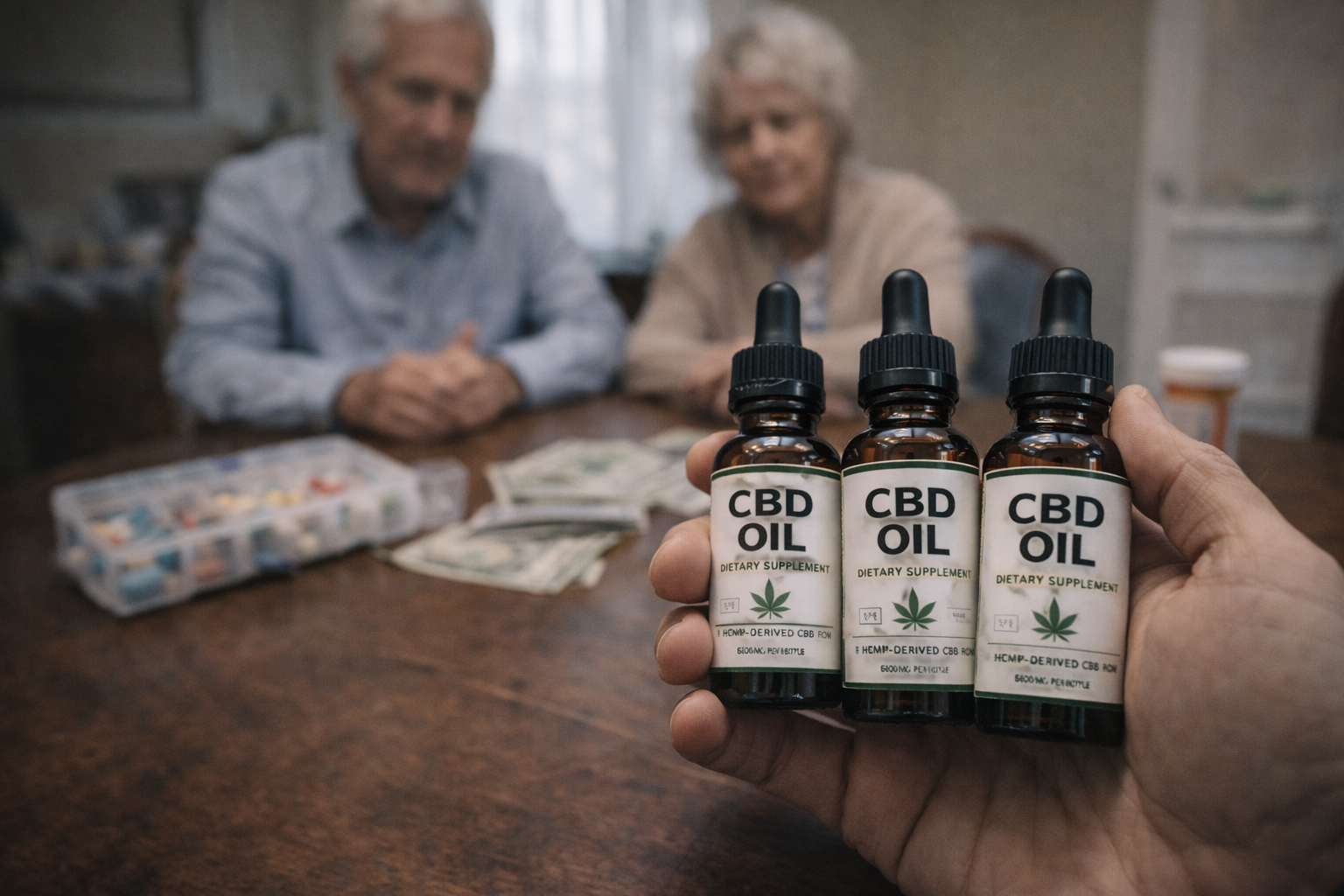
Oral CBD bottles in a healthcare setting with older adults, showing the federal CMS pilot and FDA enforcement shift.
At the federal level, the FDA just drew a very specific line around certain hemp derived oral CBD products tied to CMS’s new Substance Access Beneficiary Engagement Incentive. In an April 1 letter, FDA Commissioner Marty Makary said the agency does not intend to enforce two key FD&C Act provisions against an orally administered hemp derived CBD product solely because it contains CBD, but only if four conditions are met. At the same time, CMS says its program lets certain participating organizations furnish eligible hemp products up to $500 a year per eligible beneficiary, while also stressing that this is not a general Medicare coverage change and that Medicare does not pay a claim for the product itself.
Quick facts
• FDA’s April 1 letter says it does not intend to enforce sections 502(f)(1) or 505 against certain oral hemp derived CBD products solely because they contain CBD, if four stated conditions are met.
• CMS says participating organizations may furnish eligible hemp products up to $500 a year per eligible beneficiary.
• Eligible products must be federally legal hemp derived products, cannot be inhalable, and cannot contain more than 3 milligrams per serving of tetrahydrocannabinols in an orally administered form.
• CMS says this is not a general Medicare coverage change and Medicare does not reimburse a product claim under this incentive.
If federal CBD uncertainty is affecting your product mix or channel strategy, Start with our quick Cannashield intake form intake form so you can map labeling, contamination, and distribution exposure before policy pressure finds the weak spots.
What FDA Actually Said
This is not blanket approval for the CBD market. It is a narrow enforcement position with conditions. The April 1 FDA letter says the agency’s lighter approach applies only to orally administered hemp derived CBD products and only when the product is made, marketed, and labeled in a way that fits a dietary supplement style framework, including a supplement facts panel and structure or function claims. The product also cannot be contaminated, cannot be packaged or labeled in a way that attracts children or is marketed for children, and must be provided to a beneficiary through a Medicare program of medical items or services under the direction of the patient’s treating physician. That is a very different thing from a broad green light for general retail CBD. [CBD Labeling and Claims Checklist]
What CMS Actually Allows
CMS is also narrower than the headlines make it sound. The Substance Access Beneficiary Engagement Incentive is optional and only available inside certain CMS Innovation Center models. CMS says participants in ACO REACH and the Enhancing Oncology Model may begin offering it starting April 1, 2026, while the LEAD model begins later. Organizations have to elect the incentive, submit an implementation plan, and get CMS approval. A physician must determine the product is appropriate, document shared decision making, review current medications, and plan follow up. CMS also requires products to comply with federal, state, and local law and meet quality and safety standards, including potency and contaminant testing. [Retail Product File Review]
If your company wants to play anywhere near clinical or wellness channels, use our Cannashield questionnaire to pressure test labels, COAs, supplier files, and channel strategy before someone else defines your risk for you.
Why This Matters for Operators
signal is that the federal government just showed what a tolerated lane looks like right now. It looks like oral products, physician direction, supplement style labeling, contamination control, child safe marketing, and a tightly limited program structure. CMS says the incentive excludes inhalable products, excludes products with more than 3 milligrams per serving of tetrahydrocannabinols in oral form, and excludes cannabinoids not naturally produced by or capable of being produced by the cannabis plant during cultivation. That gives operators a pretty clear message about what federal risk looks like today. The products closest to a controlled, documented, adult facing, medically supervised lane appear to have the best chance of avoiding immediate pressure. That last sentence is an inference based on the FDA letter and CMS program design. [Multi State CBD Channel Risk]
Conclusion
This story is bigger than one pilot. It is the federal government showing its hand in a narrow but meaningful way. There is now a specific lane for certain oral hemp derived CBD products inside a CMS model structure, but it is not broad permission for the wider market. Operators that treat this as a documentation, labeling, and channel discipline moment will be in a much better position than operators still hoping ambiguity will do the work for them.
If uncertainty around federal CBD rules is affecting pricing, packaging, or channel decisions, Complete our quick Cannashield intake form and request a CBD documentation review.
Educational note: This article is for education only and is not legal, regulatory, healthcare, tax, or insurance advice.
What To Do This Week
• Pull your top oral CBD SKUs and review every label line by line.
• Flag any claim that sounds medical, disease related, or hard to support.
• Confirm you have current potency and contaminant testing for every key product.
• Separate oral products from inhalable and higher THC adjacent products in your files.
• Build one clean supplier and documentation packet for every product you want to defend.
• Review whether any packaging, imagery, or messaging could be seen as appealing to children.
FAQ
Did FDA approve CBD generally?
No. FDA said it does not intend to enforce certain provisions against a narrow category of oral hemp derived CBD products solely because they contain CBD, but only if specific conditions are met.
Is this a full Medicare coverage change?
No. CMS says this is not a general Medicare coverage change and Medicare does not pay a claim for the product itself under this incentive.
Who can offer the CMS incentive?
Only participating organizations in certain CMS Innovation Center models that elect the incentive, submit an implementation plan, and receive CMS approval.
What products qualify?
Eligible products must be federally legal hemp derived products, cannot be inhalable, and cannot contain more than 3 milligrams per serving of tetrahydrocannabinols in an orally administered form.
What are the biggest FDA conditions?
The product must fit a supplement style labeling framework, not be contaminated, not target children, and be furnished through a covered Medicare program under a treating physician’s direction.
What is the operator lesson here?
A tolerated federal lane is starting to look like documentation plus discipline, not broad freedom. That is an inference based on the FDA letter and CMS program structure.