

Virginia Cannabis Amendments Create Budget and Rollout Friction
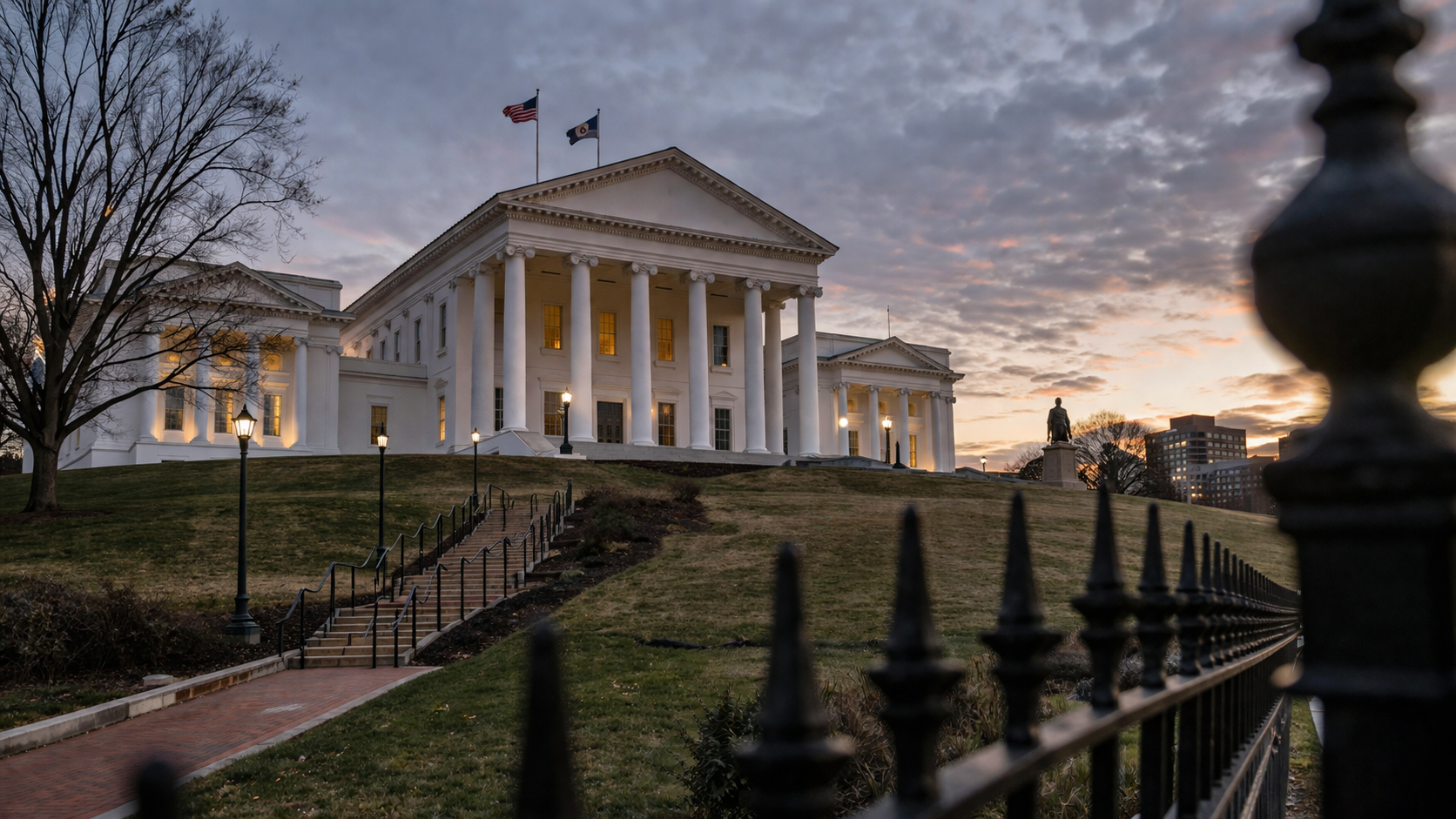
Virginia Capitol evening scene showing political and budget uncertainty around delayed cannabis retail sales and revised license limits.
Virginia cannabis retail planning just got messier. The retail framework the General Assembly passed would have allowed sales to start on January 1, 2027, and official bill text snippets indicate the framework contemplated 350 retail store licenses. Governor Abigail Spanberger’s amendments would move the retail start to July 1, 2027, and lawmakers say the shift is now creating real budget and rollout tension.
Quick facts
• The Governor’s office says the proposed amendments would move the retail marketplace start to July 1, 2027.
• Cardinal News reported the amendments would reduce retail store licenses from 350 to 200.
• Senate Democrats said delaying sales and cutting licenses makes it harder to plan the state budget because cannabis revenue timing changes.
• Official Virginia session information says the General Assembly reconvenes on April 22, 2026.
• Cardinal News reported the legislature is set for a special session on April 23 to tackle the budget.
If Virginia launch timing affects your growth plan, Start with our quick Cannashield intake form so you can map licensing, capital, and timing exposure before the state resets the path again.
The real issue is not just delay
A six month delay sounds minor until you look at what it does to cash flow expectations and state planning. Cardinal News reported lawmakers argued they had already built expected cannabis revenue into budget thinking, and that pushing retail sales from January to July 2027, while also shrinking the license pool, makes it much harder to know what money is actually available. That means this is no longer just a cannabis policy debate. It is also a budget timing problem.
That matters for operators too. When a state moves the revenue window, it also moves the timeline for site control, staffing, cultivation planning, financing, and market entry decisions. The operator lesson is simple: a delayed launch can burn capital long before it generates revenue. This is an inference based on the amended timing and the budget friction lawmakers described.
Fewer licenses changes the market shape
The license cut may be just as important as the delayed launch. Cardinal News reported the governor’s amendments would reduce retail stores from 350 to 200. That is not a technical tweak. That is a different market structure. A smaller license pool means fewer winners, tighter competition, and more pressure on applicants to be better capitalized and better organized from day one.
The political fight around that change is already clear. Cardinal News reported bill patrons and Senate Democrats said the amendments are a significant departure from what passed the General Assembly, and they argued the revised framework would reduce opportunity, delay revenue, and make it harder for smaller businesses to plan. This is where rollout friction becomes real business friction.
If your team is trying to model Virginia entry, Complete our quick Cannashield intake form and request a licensing and rollout review before you commit capital to a framework that may still change on April 22.
The governor is framing this as a safety reset
The Governor’s office is not presenting the amendments as a retreat from legalization. The official release says the later start date is meant to allow more time to implement a legal market safely and curb the illicit market. That framing matters because it tells operators what the administration is prioritizing. It is not speed first. It is control first.
That creates a bigger operator lesson. In cannabis, market launches often get sold as access stories, but they are implemented as control stories. If a governor believes the market needs more time and fewer initial licenses to launch safely, applicants should assume scrutiny goes up, not down. This is an inference based on the governor’s stated rationale for the amendments.
April 22 is the real pivot point
Virginia’s reconvened session now matters more than the original bill passage. Official session information says lawmakers return April 22, and Cardinal News explained they can accept or reject the governor’s amendments at that point. That means operators are in a holding pattern until lawmakers decide whether Virginia moves forward with the original framework, the amended version, or another round of uncertainty.
That uncertainty is the real business problem. A market can survive a slow launch. What it struggles with is moving targets. When dates, license counts, and revenue expectations keep shifting, the people most exposed are usually the ones locking up leases, raising money, and building plans too early. This is an inference based on the current legislative posture and the budget concerns now on the record.
If uncertainty around Virginia licensing, rollout dates, or budget politics is affecting your next move, Complete our quick Cannashield intake form so you can identify weak spots before the state picks its final path.
You might also like


Conclusion
Virginia’s cannabis retail framework is no longer just about whether the state will launch. It is about when, how big, and under what political constraints. The amendments delay revenue, reduce licenses, and force lawmakers to make those choices in the middle of budget pressure. For operators, that is the takeaway: timing risk is now part of the market design.
Educational note: This article is for education only and is not legal, regulatory, tax, or insurance advice.
What To Do This Week
Based on the current bill framework, the governor’s amendments, and the April 22 reconvened session, here is what to do this week.
• Rework any Virginia revenue timeline that assumes January 2027 sales.
• Stress test your market entry plan under both a 350 store and 200 store scenario.
• Separate capital already committed from capital you can still hold back.
• Review whether your strategy still works if the state favors a slower, tighter launch.
• Track April 22 first, then build around facts instead of assumptions.
• Prepare one internal memo on how a later launch changes staffing, real estate, and fundraising needs.
FAQ
What did the General Assembly originally pass?
Official Virginia legislative sources said the retail framework would not allow sales before January 1, 2027, and bill text snippets indicate it contemplated 350 retail store licenses.
What is the governor proposing now?
The Governor’s office says retail sales should begin July 1, 2027 instead. Cardinal News reported the amendments also would reduce retail store licenses from 350 to 200.
Why are lawmakers upset?
Cardinal News reported lawmakers said the delay and lower license count change expected cannabis revenue timing and make state budget planning harder.
When do lawmakers decide what happens next?
Official Virginia session information says the General Assembly reconvenes on April 22, 2026.
What is the governor’s reason for the delay?
The Governor’s office says the extra time is meant to help implement a legal market safely and curb the illicit market.
What is the operator lesson here?
Do not treat launch timing as a detail. In cannabis, timing changes can reshape revenue, competition, and capital needs just as much as the law itself. This is an inference based on the current amendment fight and budget concerns.

Trulieve and Cronos have each gained roughly 27 percent in 2026 while reporting stronger operating results. The broader signal is that public market attention is increasingly rewarding cash generation, improving margins, liquidity, and measurable revenue growth.