
Small Cannabis Operators Need To Prepare For Interstate Commerce Now
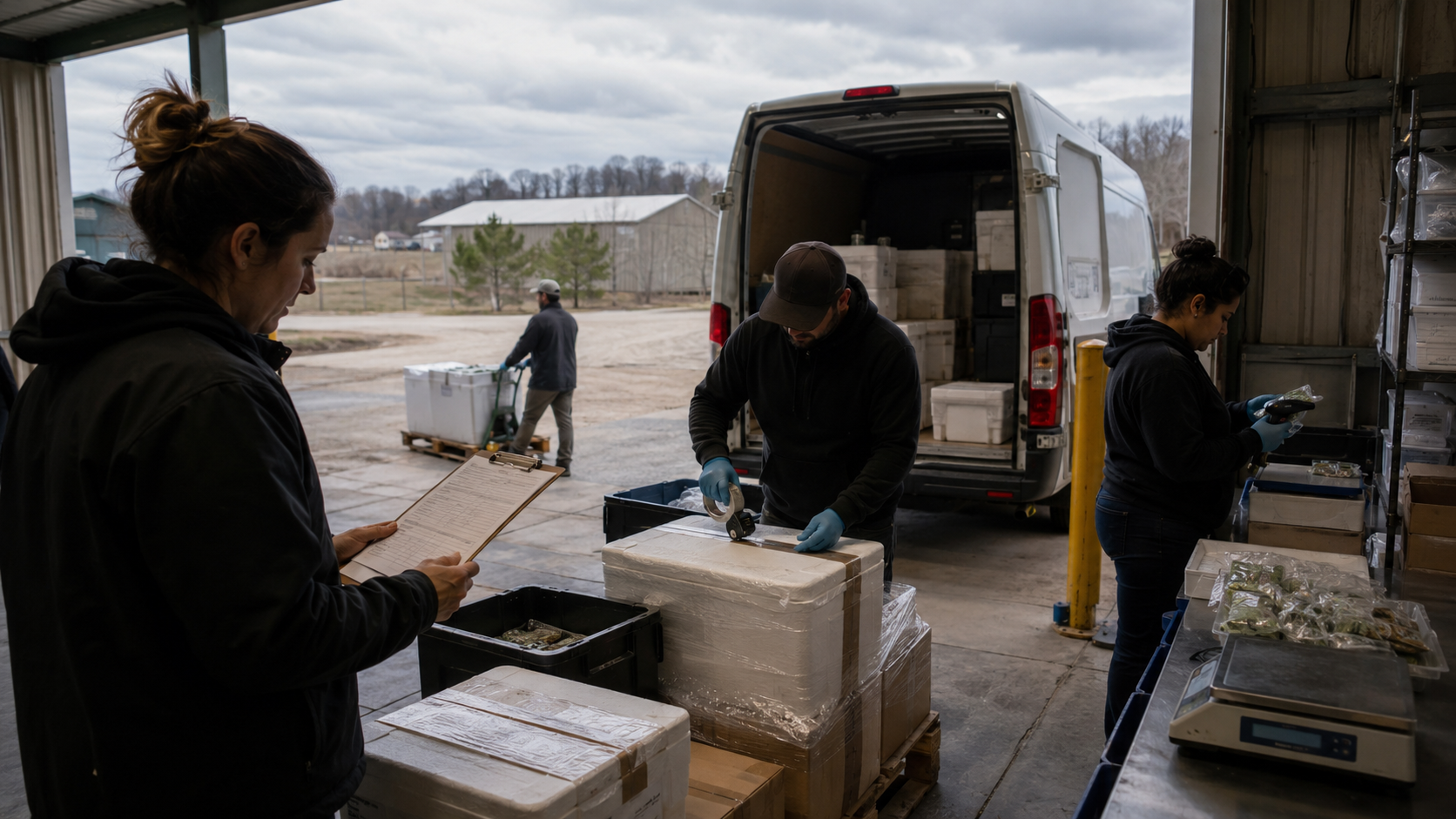
Cannabis staff reviewing shipping and inventory controls for interstate commerce.
Interstate cannabis commerce is still uncertain, but operators who wait for certainty may already be behind. MJBizDaily reports that Arkansas operator Amanda Strickland believes medical only cannabis states may have a real opening if interstate commerce becomes possible. The advantage depends on state legislation, DEA registration, testing standards, labeling rules, shelf life requirements, and whether smaller operators can compete when larger multistate operators start shipping into smaller markets.
Quick facts
• Arkansas may have a potential advantage because it remains a medical only cannabis market
• Interstate commerce would likely require state level legislation or compact authority
• DEA registration may become a key requirement for operators that want to move medical cannabis across state lines
• Mismatched track and trace systems could create serious operational risk
• Different lab standards, labeling rules, and shelf life requirements may create litigation exposure
• Larger multistate operators may be better positioned to absorb costs and compete on price
• The universal operator lesson is simple: interstate commerce could reward prepared operators and punish the ones waiting around
If interstate commerce could affect your growth plan, Start with our quick Cannashield intake form so you can map supply chain, compliance, contract, and insurance exposure before larger operators force the issue.
Why Arkansas could have an opening
The interesting part of the Arkansas story is that its limitation may become its advantage. Arkansas does not have an adult use cannabis market. That means operators in the state may not need to separate medical and adult use activity the same way operators in dual market states might if federal registration creates different paths for medical cannabis.
That does not mean Arkansas operators automatically win. It means they may have a cleaner starting point if lawmakers authorize the right framework. MJBizDaily reported that Strickland believes Arkansas would need state legislation allowing the governor to enter into interstate compacts. Without that kind of state action, the opportunity stays theoretical.
Why DEA registration matters
The DEA registration issue is one of the biggest pressure points. Federal registration could become the gate that separates operators who can participate in future medical cannabis movement from those stuck inside their existing state market.
That creates anxiety for operators who built businesses under state law before federal cannabis registration became a practical conversation. The DEA Diversion Control Division already directs medical cannabis dispensary registration through its dedicated portal, which shows that federal process is no longer just a policy debate. It is becoming an operating step.
This is the universal operator lesson. If the next phase requires federal registration, the businesses with clean ownership records, strong security procedures, disciplined inventory control, and organized compliance files will be in a better position than those trying to clean everything up at the last minute.
If uncertainty around DEA registration, supplier verification, or interstate contracts is affecting how you plan, Complete our quick Cannashield intake form to pressure test your exposure before the market changes.
Why track and trace could become a problem
Interstate commerce sounds simple until product has to move across systems that were never built to talk to each other. Most states use seed to sale tracking, but not every state uses the same platform, the same reporting rules, or the same data standards. MJBizDaily reported that Strickland pointed to uneven state programs, including differences in Oklahoma and Texas, as examples of why supplier accountability will matter.
That creates a basic business question. If product crosses state lines, who verifies the seller, buyer, lab, transporter, storage site, and final retail channel. If something goes wrong, who owns the mistake. The cultivator. The distributor. The buyer. The lab. The state regulator. The operator who trusted the wrong paperwork.
Why testing and labeling may create litigation risk
Testing standards may become one of the hardest problems. A product that passes in one state may not meet another state’s testing rules. Labeling requirements may differ. Shelf life rules may differ. Packaging rules may differ. Even batch documentation may not line up cleanly.
That is where litigation risk enters the picture. If a product crosses state lines and later triggers a recall, consumer claim, failed test, or labeling dispute, smaller operators may be hit harder than large companies with deeper legal teams and stronger reserves.
The operator lesson
The temptation is to wait until interstate commerce is legal before planning. That is the wrong move. By the time it becomes legal, the best prepared operators may already have supplier files, lab relationships, contracts, SOPs, insurance reviews, shelf life controls, and distribution plans ready.
Small operators should not try to compete with MSOs on scale alone. They need to compete on trust, product integrity, documentation, local relationships, and speed of compliance. If interstate commerce turns cannabis into a commodity race, smaller operators need a defensible reason to exist beyond price.
If you need to organize supplier, testing, labeling, contract, and insurance records before interstate commerce becomes real, Complete our quick Cannashield intake form to identify weak points and build a clearer readiness plan.
You might also like


Conclusion
Interstate commerce could become one of the biggest market shifts in cannabis. It could open new opportunities for prepared medical operators, especially in states like Arkansas. But it could also expose smaller businesses to price compression, compliance gaps, supply chain disputes, and litigation risk.
For operators, the message is simple. Do not wait for the law to change before building the file. The companies that prepare now will have more options when the market finally moves.
Educational note: This article is for education only and is not legal, regulatory, financial, tax, logistics, or insurance advice.
What To Do This Week
• Review whether your state would need legislation or compact authority for interstate commerce
• Identify whether your operation may need DEA registration under a future medical cannabis framework
• Audit supplier, buyer, lab, and transporter verification procedures
• Compare your labeling, testing, and shelf life standards against neighboring markets
• Review contracts for product transfer, recall, indemnity, and dispute language
• Build a short internal memo on how your business would compete if larger operators begin shipping into your market
FAQ
What is interstate cannabis commerce?
It refers to cannabis products moving legally across state lines, which is currently restricted under federal law except for developing medical cannabis pathways.
Why could Arkansas have an advantage?
Because Arkansas is a medical only market, it may avoid some complications faced by dual medical and adult use states if future federal registration treats medical cannabis differently.
What role could DEA registration play?
DEA registration may become a key requirement for operators that want to participate in future federally recognized medical cannabis activity.
Why are track and trace systems a concern?
Different states may use different tracking systems, reporting rules, and compliance standards, which can make product movement harder to verify.
Why do testing and labeling standards matter?
A product that satisfies one state’s rules may not satisfy another state’s lab, labeling, packaging, or shelf life requirements.
What is the biggest operator takeaway?
Prepare now. Interstate commerce could reward operators with clean records, strong contracts, verified suppliers, and disciplined compliance systems.
SOURCES
MJBizDaily, How small cannabis operators are preparing for interstate commerce
https://mjbizdaily.com/news/can-arkansas-small-mmj-operators-survive-interstate-commerce/616184/
DEA Diversion Control Division
https://www.deadiversion.usdoj.gov/
Reuters, US DEA medical cannabis registration portal to launch Wednesday
https://www.reuters.com/legal/litigation/us-dea-medical-marijuana-registration-portal-launch-wednesday-2026-04-27/

Trulieve and Cronos have each gained roughly 27 percent in 2026 while reporting stronger operating results. The broader signal is that public market attention is increasingly rewarding cash generation, improving margins, liquidity, and measurable revenue growth.