
Cannabis Site Selection Risk Starts Before the Lease
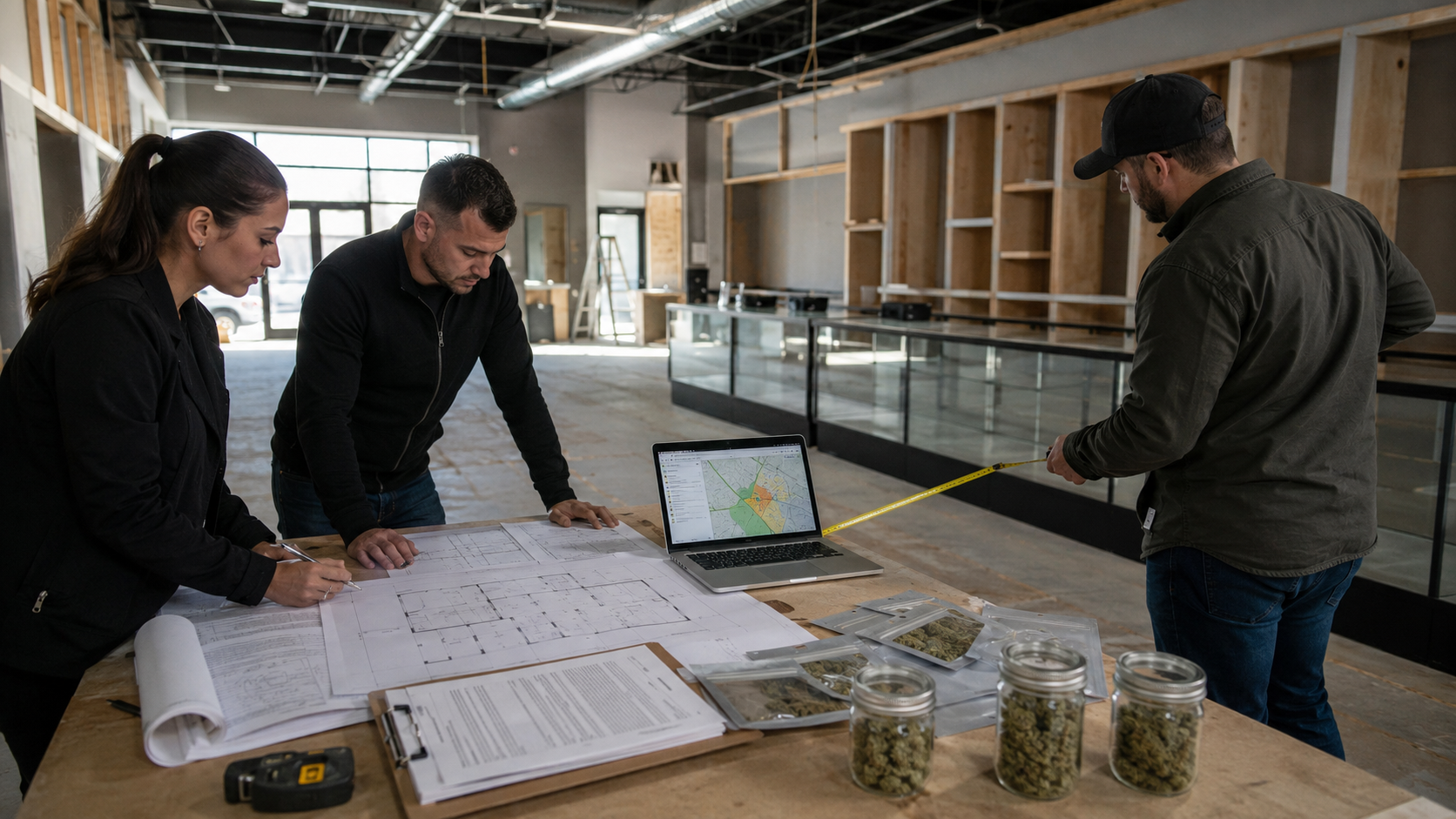
Cannabis operators review floor plans, measurements, and buildout documents.
Cannabis site selection risk can turn a promising retail location into an expensive dead end.
A licensing decision reported July 12 shows how narrow the margin can be. The D.C. Alcoholic Beverage and Cannabis Board denied a request to reconsider the rescission of a medical cannabis retailer application. The proposed site was measured at 383 feet from a school, placing it 17 feet inside the applicable 400 foot buffer.
The applicant argued that earlier measurements supported the location. The Board relied on updated geographic data and the shortest distance between the relevant property lines, not simply the distance between building entrances. D.C. law restricts medical cannabis retailers from locating within 400 feet of a preschool, school, or recreation center.
The bigger lesson is not about one applicant or one city. The bigger lesson is that a cannabis lease, buildout, insurance quote, or licensing application should never move forward on an informal distance estimate.
Reviewing a dispensary location, lease, buildout, or licensing opportunity?
Quick facts box
Story classification: Emerging market
What happened: The D.C. Board upheld the rescission of a medical cannabis retailer application after concluding that the proposed location did not satisfy the required distance from a school.
Distance finding: The proposed retailer was reported to be 383 feet from the school property, which placed the location 17 feet inside the 400 foot restricted area.
Measurement issue: The regulator relied on the shortest linear distance between property boundaries rather than a casual entrance to entrance estimate.
Legal structure: D.C. law restricts medical cannabis retailers from locating within 400 feet of specified schools and recreation centers.
Insurance angle: A failed location can affect lease deposits, buildout costs, property coverage, hired contractors, equipment purchases, lender requirements, projected payroll, and dispensary insurance planning.
Universal operator lesson: Site eligibility should be verified before the lease starts controlling the business.
What cannabis site selection risk means for operators
The universal operator lesson is simple: the address is not enough.
Cannabis licensing rules may measure from parcel boundaries, school property lines, recreation areas, other retailers, residential zones, or locally defined sensitive uses. A broker map, online search, walking estimate, or landlord statement may help identify a location, but it should not be treated as final regulatory confirmation.
A small measurement difference can create a large financial problem.
The operator may already have paid a deposit, retained legal counsel, ordered architectural plans, requested zoning work, purchased equipment, started construction, or submitted an insurance application. If the location is later rejected, those expenses may not disappear with the application.
The lease is where the risk often becomes permanent. A standard commercial lease may require rent, insurance, improvements, indemnification, and restoration even if the cannabis license is delayed or denied. That is why site control should include licensing contingencies, approval deadlines, access rights, construction conditions, and a clear exit path reviewed by qualified counsel.
Insurance also needs to follow the actual stage of the project.
A future dispensary that has not opened may still have premises exposure, tenant improvements, stored equipment, hired contractors, property in transit, cyber records, and contractual insurance requirements. At the same time, an insurance policy cannot make a prohibited location eligible for a cannabis license.
Operators should separate three questions:
Can the location legally qualify?
What financial obligations begin before approval?
What insurance exposures exist during the application and buildout period?
When those questions are handled in the wrong order, the business may insure a project that cannot open or sign a lease that cannot support the planned operation.
Clean cannabis risk management starts before the keys are handed over.
What to do this week checklist
☐ Confirm the exact legal parcel and proposed licensed premises.
☐ Obtain the current zoning map and property boundary information.
☐ Identify every school, recreation center, residential zone, licensed retailer, and sensitive use that may trigger a distance rule.
☐ Confirm how the regulator measures distance and which property boundaries control.
☐ Obtain written findings from qualified zoning, land use, or licensing professionals.
☐ Review the lease for licensing, zoning, financing, and regulatory approval contingencies.
☐ Confirm when rent, insurance, construction, and operating expenses begin.
☐ Avoid permanent buildout work before required approvals are documented.
☐ Update projected property values, equipment, payroll, revenue, security, and opening dates before requesting dispensary insurance.
☐ Maintain one site file containing surveys, maps, correspondence, lease drafts, approvals, insurance requirements, and consultant reports.
FAQ
1. Is a landlord’s statement enough to confirm cannabis eligibility?
No. A landlord may provide useful information, but operators should independently confirm zoning, distance rules, property boundaries, licensing restrictions, and local approvals.
2. Why are property lines more important than building entrances?
Some jurisdictions calculate distance using parcel or property boundaries. That can produce a different result from measuring between doors, sidewalks, or visible structures.
3. Should an operator sign a lease before receiving license approval?
Site control may be required during licensing, but the lease should be reviewed for regulatory contingencies, approval deadlines, rent commencement, construction obligations, and termination rights.
4. When should dispensary insurance be reviewed?
Review should begin before signing the lease. Insurance requirements can appear in leases, financing documents, construction contracts, vendor agreements, and licensing materials before the retailer opens.
5. What happens if a site is rejected after construction starts?
The outcome depends on the lease, contracts, approvals, and project facts. The operator may still face rent, contractor invoices, equipment costs, restoration obligations, and other expenses.
6. What is the practical takeaway for smaller operators?
Spend money verifying the site before spending heavily improving it. A professional measurement is cheaper than rebuilding the entire plan around a rejected location.
Conclusion
A cannabis location should not be treated as approved because it looks compliant on a map.
Confirm the parcel, measurement method, zoning, sensitive uses, lease contingencies, buildout obligations, and insurance requirements before the project gains financial momentum. The strongest time to find a site problem is before the deposit, construction contract, and opening deadline start working against the operator.
Cannashield helps cannabis operators review the insurance and risk details behind site selection, leases, buildouts, property values, security plans, contractors, equipment, and opening timelines.

Cannabis retail team reviews site plans and zoning compliance outside a storefront.
Educational note
This article is for educational purposes only. It is not legal, zoning, regulatory, financial, real estate, engineering, surveying, or insurance coverage advice. Cannabis operators should consult qualified professionals before selecting a site, signing a lease, beginning construction, or purchasing insurance.
You might also like


SOURCES
Primary source: D.C. Alcoholic Beverage and Cannabis Administration, order page dated July 8, 2026
https://abca.dc.gov/publication/dc-dank-07-08-2026-order
Supporting source: Outlaw Report, July 12, 2026
https://outlawreport.com/dc-board-upholds-denial-of-dc-dank-medical-cannabis-retail-license/
Supporting legal source: Council of the District of Columbia
https://code.dccouncil.gov/us/dc/council/laws/25-255

Trulieve and Cronos have each gained roughly 27 percent in 2026 while reporting stronger operating results. The broader signal is that public market attention is increasingly rewarding cash generation, improving margins, liquidity, and measurable revenue growth.