
California Cannabis Self Checkout Signals Retail Modernization
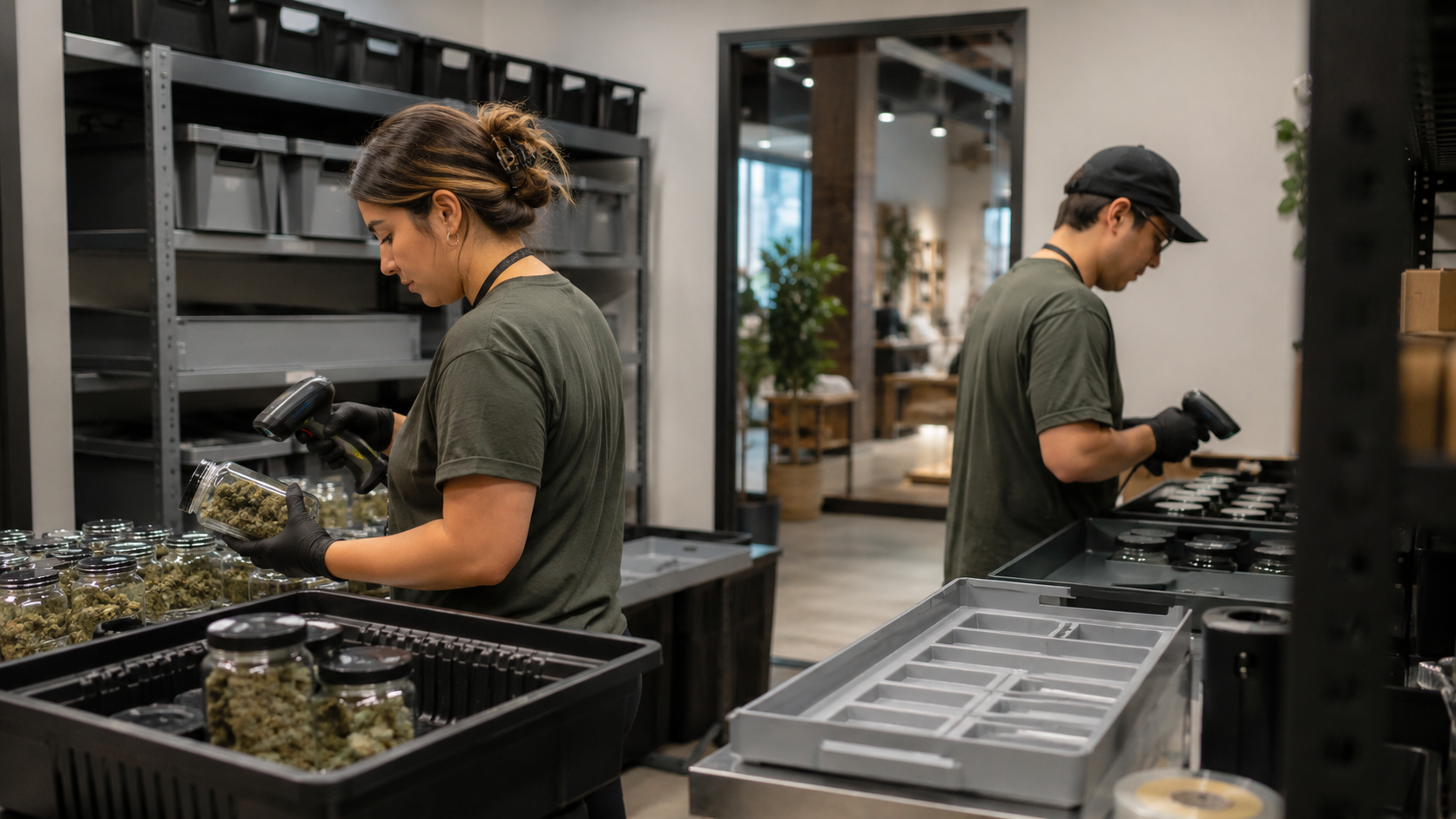
Cannabis employees scanning inventory in California
California cannabis retail is starting to look more like modern mainstream retail, but with compliance still built into the system. MJBizDaily reports that Perfect Union Northside in Sacramento became the first licensed cannabis retailer in California approved to keep operating an RFID powered self checkout system on the sales floor. The system, developed by Exo Solutions, connects with the retailer’s point of sale software and Metrc, California’s required seed to sale track and trace platform. For operators, retailers, investors, compliance teams, and technology providers, this is a real signal that cannabis retail is moving toward automation, faster checkout, inventory visibility, and stronger loss prevention.
Quick facts
• Perfect Union Northside in Sacramento received approval to keep using a cannabis self checkout system
• The retailer is owned by MWG Holdings Group, which operates 10 stores in California
• The self checkout system uses RFID technology to read multiple products at once
• The system connects with point of sale software and Metrc
• California’s Department of Cannabis Control reviewed the Exo Solutions system and found it compliant, according to the company
• The system is designed to improve checkout speed, inventory visibility, and loss prevention
• MJBizDaily reported that cannabis self checkout appears largely absent across the United States
• The universal operator lesson is simple: retail convenience only works in cannabis when age checks, inventory records, track and trace, and security stay intact
If retail automation is affecting your growth plan, complete our quick Cannashield intake form so you can map point of sale, inventory, security, compliance, and insurance exposure before technology changes your operating risk.
Why this approval matters
This approval matters because cannabis retail has been slower to modernize than many other retail categories. Grocery stores, pharmacies, and big box stores have used self checkout for years, but cannabis has stayed behind because of age restrictions, inventory controls, payment limitations, track and trace reporting, and product handling rules.
Perfect Union Northside shows that some of those barriers can be managed with the right system. RFID can read multiple products quickly, point of sale software can process the transaction, and Metrc integration can help maintain the inventory and compliance trail. That does not make self checkout simple, but it does show a path.
The bigger market signal is that compliant convenience is becoming part of cannabis retail strategy.
Why inventory visibility is the real value
The headline is self checkout, but the deeper value may be inventory visibility. Cannabis retailers need tight control over product movement. Every unit matters because inventory affects compliance, cash flow, theft exposure, customer experience, and state reporting.
RFID can help staff see what is moving, what is missing, and what is still available. That matters in a market where shrink, theft, miscounts, and product handling errors can create real problems. A faster checkout experience is valuable, but a better inventory system may be even more important.
This is the universal operator lesson. In cannabis retail, technology is only useful if it improves compliance and operational control at the same time.
Why age gates and staff controls still matter
Self checkout does not remove the need for staff oversight. Cannabis is still an age restricted product with strict retail rules. Operators need to know who verifies the customer, when identification is checked, how staff intervene, how product access is controlled, and how exceptions are documented.
A cannabis self checkout lane cannot be treated like a normal grocery checkout lane. The customer experience can be faster, but compliance cannot become looser. Staff training, customer flow, product placement, camera coverage, transaction review, and cash or payment controls all need to be reviewed before self checkout expands.
Retailers should also think about customer education. Some consumers may like faster checkout. Others may need help understanding product format, dosage, onset time, labels, and safe use. Automation should not eliminate responsible service.
Why other operators will be watching
California operators are under constant pressure to improve efficiency. Labor costs, taxes, price compression, security, illicit competition, and inventory management all affect retail performance. A system that speeds checkout and strengthens inventory control may interest operators looking for better margins without reducing service quality.
But operators should be careful not to copy the technology without copying the compliance process. DCC approval in one store does not automatically mean every retailer can install the same system without review. Premises layout, local rules, operating procedures, security plans, point of sale setup, Metrc workflow, and staff training all matter.
If you need to organize retail technology, inventory, security, and insurance records before modernizing your store, use the Cannashield intake form to identify weak points and build a cleaner retail operations file.
Conclusion
California’s approval of RFID powered cannabis self checkout at Perfect Union Northside is an important retail innovation signal. It shows that cannabis stores can move toward faster, more convenient shopping experiences while still connecting transactions to point of sale software and Metrc.
For operators, retailers, investors, compliance teams, and technology providers, the message is simple. Cannabis retail modernization is coming, but it has to be compliance first. The winners will be operators that use technology to improve speed, inventory accuracy, loss prevention, customer experience, and regulatory confidence at the same time.
Educational note: This article is for education only and is not legal, regulatory, tax, financial, technology, security, payment, or insurance advice.
What to do this week
• Review whether your current point of sale system integrates cleanly with Metrc
• Compare current checkout times, inventory errors, and shrink before considering automation
• Review age verification, staff oversight, and customer flow procedures for any self checkout concept
• Confirm cameras, product access controls, and loss prevention tools support the sales floor layout
• Ask technology vendors for documentation on compliance, reporting, data security, and support
• Build a short internal memo on retail automation, inventory control, security, and insurance exposure
FAQ
What did California regulators approve?
California regulators approved Perfect Union Northside in Sacramento to keep using an RFID powered cannabis self checkout system on the sales floor.
Who owns Perfect Union Northside?
Perfect Union Northside is owned by MWG Holdings Group.
What technology does the system use?
The system uses RFID technology to read multiple products at once.
Why does Metrc matter?
Metrc is California’s required track and trace system, and the self checkout system communicated with Metrc during the DCC review.
What does self checkout help with?
It can improve checkout speed, inventory visibility, and loss prevention when properly integrated with compliance systems.
What is the biggest operator takeaway?
Cannabis retail can modernize, but automation must preserve age checks, inventory control, track and trace records, security, and staff oversight.
What this means for operators
Cannabis business news can quickly become an insurance, compliance, contract, renewal, or claims issue. If this topic could affect your operation, review your insurance setup before pressure shows up from a landlord, lender, carrier, contract partner, regulator, or claim.

Cannabis customer using self-checkout with staff oversight
You might also like


SOURCES
MJBizDaily, California cannabis regulators approve self checkout at licensed retailer
https://mjbizdaily.com/news/california-cannabis-regulators-approve-self-checkout-at-licensed-retailer/617177/
PR Newswire, Self Checkout Approved by DCC at Perfect Union Northside
https://www.prnewswire.com/news-releases/self-checkout-approved-by-dcc-at-perfect-union-northside-making-it-the-first-california-cannabis-dispensary-to-launch-rfid-powered-technology-302835568.html
California Department of Cannabis Control, CannaConnect Licensee Resources
https://www.cannabis.ca.gov/licensees/cannaconnect-compliance-hub/

Houston misdemeanor cannabis possession arrests have risen nearly 1,200 percent, from an average of about 35 per year from 2021 through 2023 to roughly 440 annually during the current mayoral administration. The surge comes as voters prepare to decide whether low level cannabis possession should become HPD's lowest enforcement priority.