
Cannabis Flavonoid Research Pushes Medical Cannabis Toward Biotech
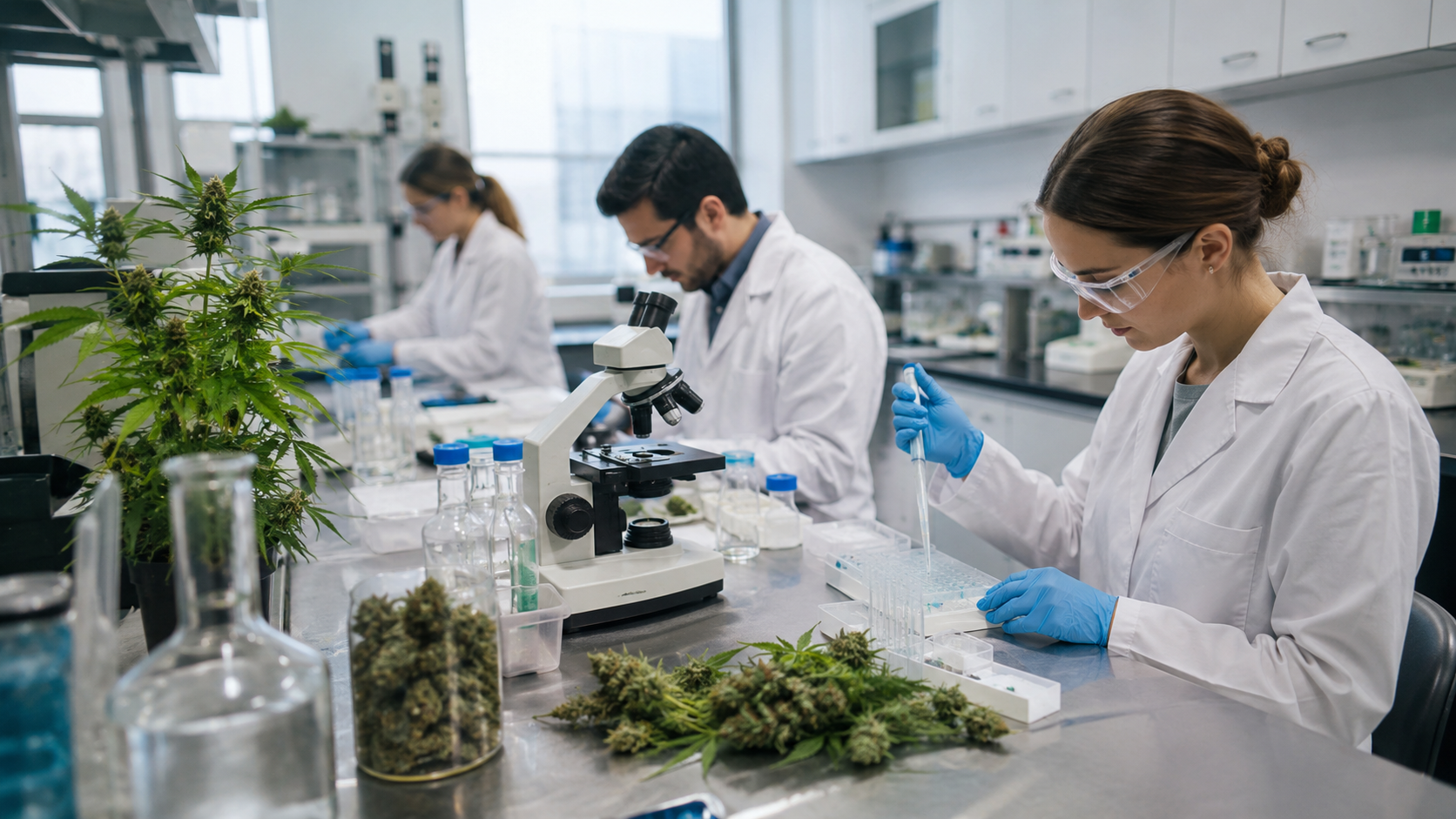
Laboratory team conducting cannabis biotech research
Medical cannabis research is moving deeper into biotech and pharmaceutical territory. Business of Cannabis reports that Standard Seed Corporation believes it has identified a cannabis native flavonoid, cannflavin A, that may inhibit cancer cell growth by more than 90 percent in some aggressive cancer models. The findings come from early lab testing, not animal studies or human clinical trials, so the commercial signal is early. Still, the results are meaningful for medical cannabis companies, investors, researchers, and compliance teams watching how cannabis compounds may move from plant chemistry into patents, clinical validation, and regulated drug development.
Quick facts
• Standard Seed Corporation identified cannflavin A as the focus of the research
• Cannflavin A is a cannabis native flavonoid, not a cannabinoid like THC or CBD
• The compound was tested through the National Cancer Institute’s NCI 60 one dose screen
• Business of Cannabis reported that SSC’s cannflavin enriched extract stopped more than 95 percent of cell growth in an aggressive brain cancer line
• The same reporting said the extract stopped up to 99 percent of growth in several leukemia lines
• Cannflavin A showed weaker but still measurable effects across lung, breast, ovarian, kidney, colon, and prostate cancer cell lines
• The results are preclinical and have not yet been peer reviewed
• The work was conducted in cancer cell cultures, not in animal models or human patients
• The universal operator lesson is simple: cannabis research is moving beyond wellness claims into drug discovery, but clinical proof still decides value
If cannabis research or medical product development is affecting your growth plan, complete our quick Cannashield intake form so you can map clinical, IP, product, compliance, and insurance exposure before early science turns into a larger capital decision.
Why this research matters
This research matters because it points to a different kind of cannabis opportunity. Much of the industry still focuses on retail flower, vapes, edibles, hemp beverages, and consumer wellness products. This story sits in another lane. It is about whether cannabis compounds can be identified, modeled, tested, protected, and developed like pharmaceutical candidates.
Cannflavin A is especially interesting because flavonoids have received far less attention than cannabinoids and terpenes. Cannabis research has historically focused on THC, CBD, and a small group of major compounds. Standard Seed’s work is trying to look deeper into the plant’s chemical profile and use computational tools to identify compounds that may have biological activity.
That does not make cannflavin A a cancer treatment today. It makes it a compound worth studying more seriously.
Why the NCI 60 screen is only the first step
The NCI 60 screen is a respected early research tool because it tests compounds across a panel of 60 human tumor cell lines. The National Cancer Institute describes the platform as a resource for assessing anticancer activity of small molecules and natural products. It can help identify promising signals and tumor selectivity, but it does not prove that a compound will work in living organisms or patients.
That distinction is critical. A one dose cell line screen can show that a compound hits cancer cells under laboratory conditions. It cannot show the right human dose, safety profile, absorption, metabolism, delivery method, side effects, or whether the compound reaches tumors in the body.
This is the universal operator lesson. Lab results create research direction. They do not create medical claims.
Why clinical validation is the real test
Business of Cannabis reported that Standard Seed’s next step is to test a broader flavonoid mixture found in Thai cannabis, including cannflavin A, cannflavin B, cannflavin C, and iso cannflavin B, across a range of doses. That matters because cannabis is chemically complex. A single isolated compound may behave differently from a botanical mixture.
The company’s challenge is moving from a promising result to reproducible evidence. That means dose response studies, repeat testing, mechanism work, safety assessment, animal studies, formulation research, and eventually human trials if the data supports it. Until then, operators and investors should treat the result as a research signal, not a commercial product claim.
For medical cannabis businesses, this is where discipline matters. Early science can attract attention, but overstating findings can damage trust with regulators, clinicians, investors, and patients.
Why IP and funding matter
The commercial opportunity depends on more than biology. It depends on intellectual property, funding, regulatory strategy, partnerships, and manufacturing. If Standard Seed can validate the compound or mixture, the next questions are practical. Can the company protect the discovery. Can it make a consistent research grade extract. Can it fund deeper preclinical work. Can it talk to regulators about a botanical drug pathway. Can it partner with oncology groups or pharmaceutical developers.
The FDA’s botanical drug guidance explains that botanical drug development can support investigational new drug applications and future new drug applications. That matters because plant based medicines can follow a regulated pathway, but they still require serious evidence, quality control, and clinical development.
If you need to organize research, IP, clinical, and insurance records before entering a cannabis biotech or pharmaceutical deal, use the Cannashield intake form to identify weak points and build a cleaner development file.
Conclusion
The cannflavin A findings are early, but they are important because they show where medical cannabis research may be heading. Cannabis science is expanding beyond consumer use and into drug discovery, oncology models, computational screening, botanical drug development, and pharmaceutical partnerships.
For investors, medical cannabis companies, operators, healthcare providers, researchers, and compliance teams, the message is simple. The upside is real only if the evidence keeps improving. Early lab results can open the door, but clinical validation, regulatory approval, IP control, funding, and careful communication decide whether the opportunity becomes medicine.
Educational note: This article is for education only and is not legal, regulatory, medical, clinical, financial, investment, product safety, pharmaceutical, or insurance advice. This research does not show that cannabis or cannflavin A treats cancer in humans, and patients should speak with qualified healthcare providers before making treatment decisions.
What to do this week
• Review whether research claims are clearly labeled as preclinical and not human treatment claims
• Track whether Standard Seed publishes peer reviewed data or follow up dose response findings
• Separate consumer product marketing from pharmaceutical development language
• Review IP, licensing, research collaboration, and funding exposure before investing
• Confirm any medical cannabis claims are supported by evidence and reviewed for compliance
• Build a short internal memo on clinical validation, patent strategy, regulatory pathway, and investor communication risk
FAQ
What compound is being studied?
The research focuses on cannflavin A, a cannabis native flavonoid.
Is cannflavin A the same as THC or CBD?
No. Cannflavin A is a flavonoid, not a cannabinoid like THC or CBD.
What did the lab testing show?
Business of Cannabis reported that the cannflavin enriched extract stopped more than 95 percent of growth in an aggressive brain cancer line and up to 99 percent in several leukemia lines.
Does this mean cannabis cures cancer?
No. These are early cell culture findings, not animal studies or human clinical trial results.
What needs to happen next?
Researchers need dose response studies, repeat testing, mechanism research, safety work, animal studies, formulation development, and eventually human trials if the evidence supports it.
What is the biggest operator takeaway?
Medical cannabis research is moving toward biotech and pharmaceutical development, but value depends on clinical validation, IP control, funding, regulatory approval, and responsible claims.
What this means for operators
Cannabis business news can quickly become an insurance, compliance, contract, renewal, or claims issue. If this topic could affect your operation, review your insurance setup before pressure shows up from a landlord, lender, carrier, contract partner, regulator, or claim.
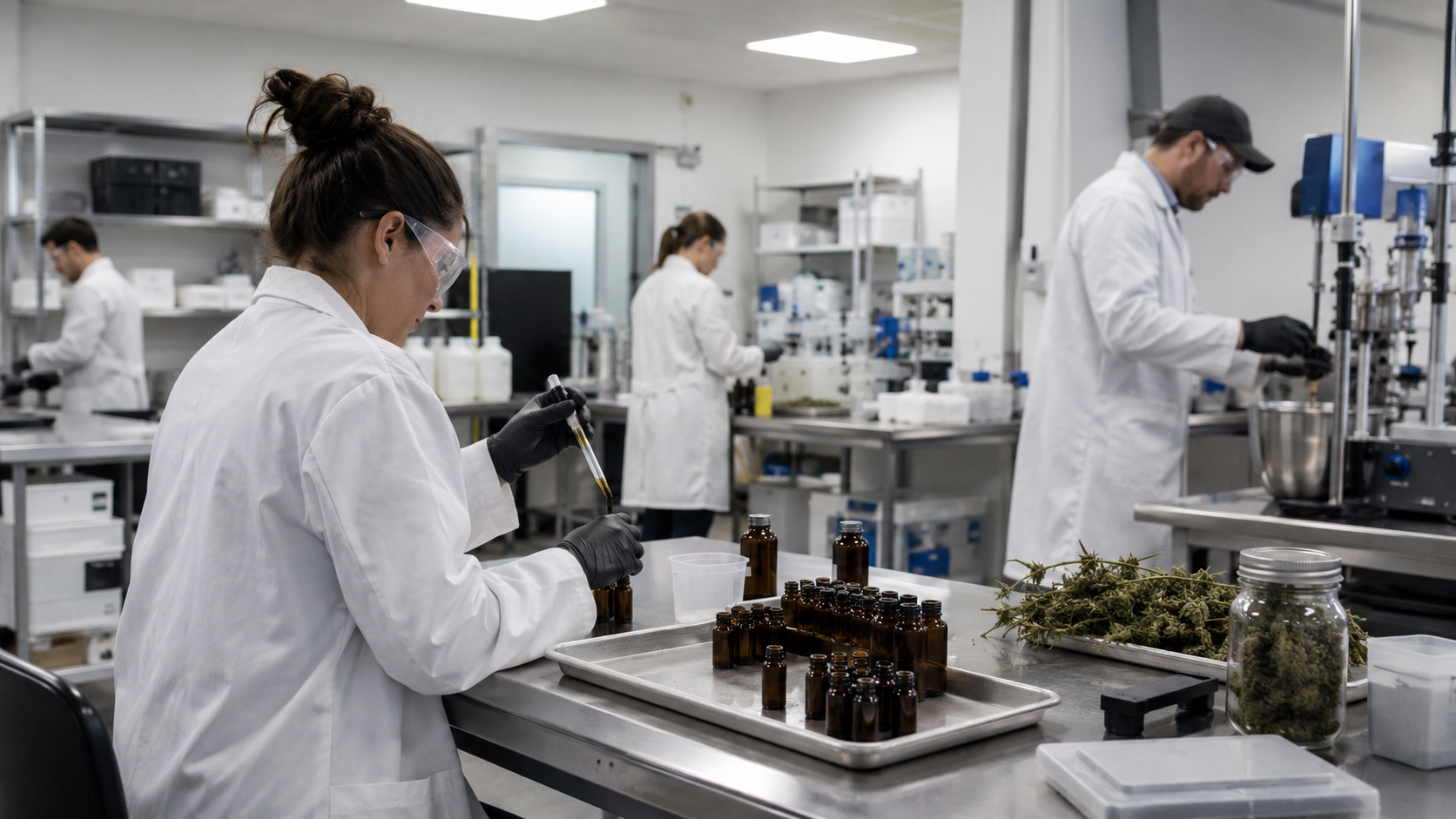
Scientists preparing cannabis extracts for pharmaceutical research
You might also like


SOURCES
Business of Cannabis, A Cannabis Flavonoid Stopped Up to 99% of Cancer Cell Growth in Lab Tests
https://businessofcannabis.com/a-cannabis-flavonoid-stopped-up-to-99-of-cancer-cell-growth-in-lab-tests/
National Cancer Institute, NCI 60 Human Tumor Cell Line Screen
https://dctd.cancer.gov/drug-discovery-development/assays/high-throughput-screening-services/nci60
FDA, Botanical Drug Development: Guidance for Industry
https://www.fda.gov/regulatory-information/search-fda-guidance-documents/botanical-drug-development-guidance-industry

Houston misdemeanor cannabis possession arrests have risen nearly 1,200 percent, from an average of about 35 per year from 2021 through 2023 to roughly 440 annually during the current mayoral administration. The surge comes as voters prepare to decide whether low level cannabis possession should become HPD's lowest enforcement priority.