
California Vape Compliance Bill Targets Next Generation Cannabis Devices
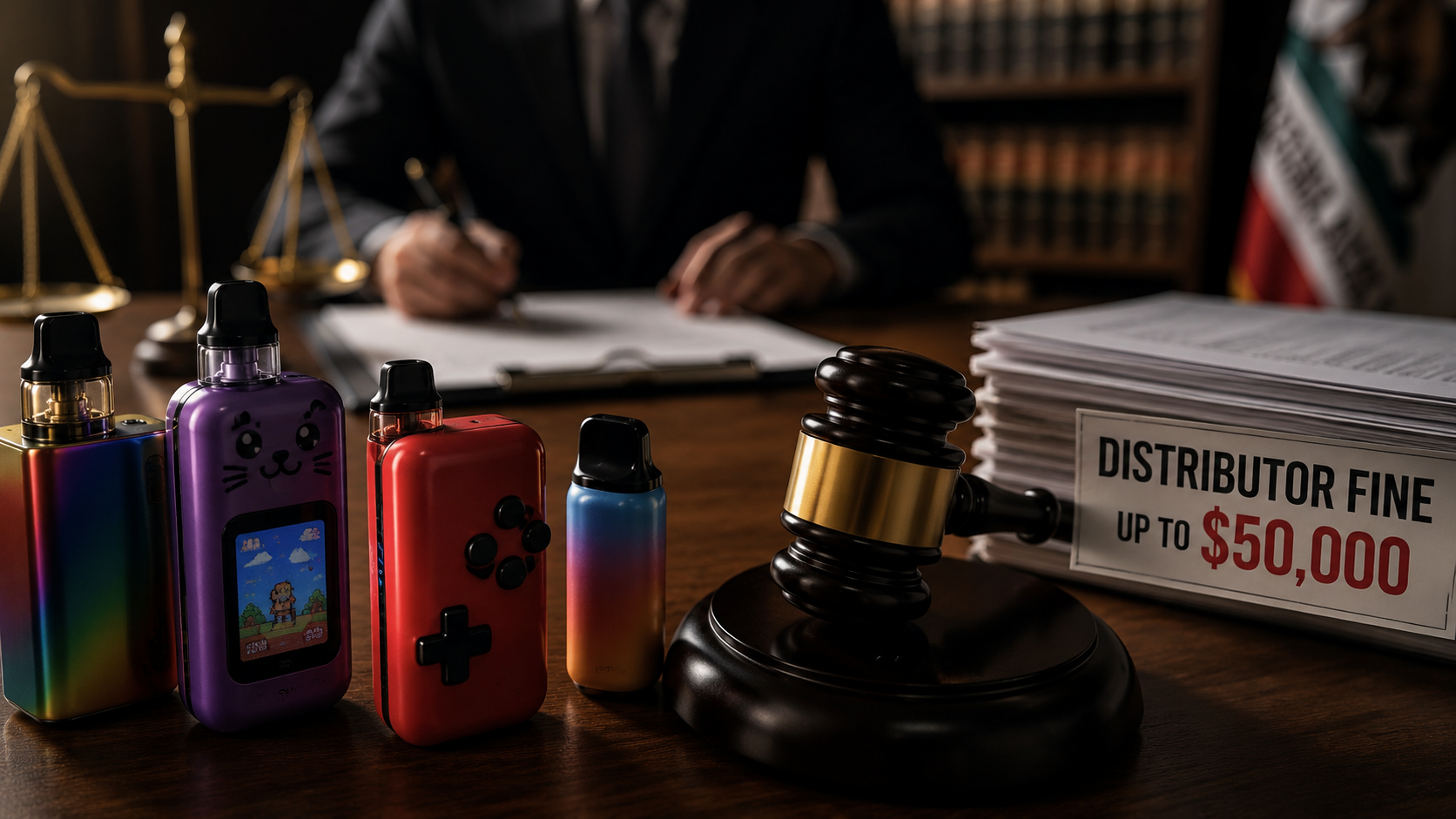
Novelty cannabis vape devices beside a fine notice, showing California compliance risk under AB 2667.
California cannabis vape operators may need to pay closer attention to device design, packaging, hardware features, and supplier standards. GreenState reports that lawmakers are moving Assembly Bill 2667, a proposal that would restrict vape products that imitate non vape items, appeal to minors, or include interactive video game capabilities. For licensed operators, manufacturers, distributors, retailers, and hardware suppliers, this is more than a youth access headline. It is a direct product compliance warning for one of the most competitive categories in the cannabis market.
Quick facts
• California lawmakers are advancing Assembly Bill 2667
• The bill would restrict vape products that imitate non vape items
• The bill also targets packaging or design elements known to appeal to minors
• Interactive video game capabilities inside vape products would be restricted
• Distributors could face $50,000 fines per violation
• Cannabis licenses could be suspended or revoked for violations
• The universal operator lesson is simple: product innovation has to survive compliance review before it reaches the shelf
If vape compliance uncertainty is affecting your growth plan, Start with our quick Cannashield intake form so you can map product, packaging, supplier, and insurance exposure before enforcement rules create a bigger problem.
What Assembly Bill 2667 is targeting
Assembly Bill 2667 focuses on vape products that may blur the line between adult use devices and products that could attract minors or hide their actual purpose. The bill would prohibit marketing, promoting, labeling, advertising, distributing, offering for sale, or selling a vape product in California if it imitates a non vape product, uses design elements known to appeal to minors, or includes interactive video game capabilities.
The official bill language gives examples that matter for operators. It references products that imitate candy, desserts, beverages, school supplies, erasers, highlighters, pens, pencils, clothing, and accessories. It also covers characters, personalities, symbols, comic book references, movie references, television references, video game references, and mythical creatures known to appeal to minors.
That is broad enough that operators should not wait until enforcement begins to review their products.
Why this matters to licensed cannabis operators
The GreenState report points out that vape sales have become a major cannabis category in California, with device makers competing on price, flavor, screens, colors, and new interactive features. That is exactly why this bill matters. In a crowded market, companies often try to stand out through design. But the more a product starts to resemble a toy, gadget, candy product, school item, or entertainment device, the more compliance risk it may create.
This is not just about whether a product contains cannabis oil. It is about the entire presentation. The device shape, screen, packaging, animations, box design, color palette, naming convention, retail display, and supplier description may all come under scrutiny.
The universal operator lesson applies far beyond California. When regulators see a product category moving toward youth appeal or concealed use, enforcement pressure usually follows. Operators who treat hardware design as separate from compliance are leaving money exposed.
If you sell, source, or distribute vape products with advanced screens, animation, hidden device shapes, or packaging that may raise child appeal questions, Complete our quick Cannashield intake form to pressure test the exposure before inventory becomes harder to move.
The distributor fine is the wake up call
The $50,000 distributor penalty is the part operators should not ignore. Assembly Bill 2667 would allow civil penalties of $50,000 per violation for distributors. The bill defines a distributor as a person who sells or accepts orders for products covered by the restricted category to a retailer.
That means the risk may not stop with the company that designed the product. The businesses moving the product through the market could also face serious financial exposure. For distributors, this creates a strong reason to review supplier contracts, product representations, purchase orders, product photos, packaging samples, and indemnity language.
Retailers should pay attention too. The bill allows enforcement agencies to seize prohibited products found at retail locations or other locations. It also calls for the Department of Cannabis Control to suspend or revoke a cannabis license issued to a person who violates the section. That is the kind of consequence that turns product review into license protection.
What operators should review now
Operators should start with the product itself. Does the device look like a school supply, candy product, toy, accessory, nicotine style novelty device, or electronic game? Does the packaging rely on cartoons, fantasy creatures, youth style imagery, or entertainment references? Does the device include interactive features that go beyond simple temperature, battery, or dosage information?
Then review the supply chain. Who approved the hardware? Who approved the packaging? Who holds the compliance file? Who has the lab records? Who confirmed the product presentation aligns with California rules? If that answer is unclear, that is the problem.
The safer move is to create a review process before purchase, not after delivery. A shipment of non compliant devices sitting in inventory is not a product opportunity. It is a cash flow problem with a compliance file attached.
The operator lesson
The temptation is to see this as a bill about flashy vapes. It is really a lesson about product control. California is telling the market that device innovation cannot ignore youth appeal, concealed use, or interactive entertainment features.
The businesses best positioned for this next phase will be the ones that can show how products were reviewed, why they were approved, who supplied them, and what steps were taken before the items reached the shelf.
If you need to organize vape products, packaging files, supplier documents, and insurance records before California enforcement tightens, Complete our quick Cannashield intake form to build a clearer compliance picture.
You might also like


Conclusion
Assembly Bill 2667 is a reminder that cannabis vape compliance is not only about ingredients and lab testing. Hardware, packaging, design, screens, and retail presentation all matter.
For operators, the message is simple. Do not wait until a product is sitting in inventory to ask whether it creates child appeal, concealed use, or interactive feature risk. Review it now, document the decision, and make sure your suppliers can support what they sell.
Educational note: This article is for education only and is not legal, regulatory, tax, product safety, or insurance advice.
What To Do This Week
• Review all vape devices for screens, games, animations, and interactive features
• Check packaging for child appeal, toy like design, candy references, or school supply resemblance
• Ask suppliers for written product representations and compliance documentation
• Separate any inventory that may raise concealed use or youth appeal concerns
• Review distributor agreements for penalty, recall, indemnity, and product return language
• Build a simple approval process before buying new vape hardware or packaging
FAQ
What is Assembly Bill 2667?
It is a California bill that would restrict certain vape products that imitate non vape items, appeal to minors, or include interactive video game capabilities.
What products could be affected?
Cannabis and nicotine vape products with child appealing design, concealed use features, or interactive video game capabilities could be affected.
How much are the distributor fines?
The bill allows $50,000 civil penalties per violation for distributors.
Could cannabis licenses be affected?
Yes. The bill would require the Department of Cannabis Control to suspend or revoke a license issued to a person who violates the section.
Why does this matter to retailers?
Retailers may be holding inventory that becomes harder to sell, subject to seizure, or connected to enforcement risk.
What is the biggest operator takeaway?
Review hardware, packaging, supplier documents, and inventory before enforcement turns product design into a license problem.
SOURCES
GreenState, California targets next generation cannabis vapes with new compliance bill
https://www.greenstate.com/news/california-video-game-vapes-ban/
California Legislative Information, Assembly Bill 2667 bill text
https://leginfo.legislature.ca.gov/faces/billTextClient.xhtml?bill_id=202520260AB2667
California Department of Cannabis Control
https://cannabis.ca.gov/

Trulieve and Cronos have each gained roughly 27 percent in 2026 while reporting stronger operating results. The broader signal is that public market attention is increasingly rewarding cash generation, improving margins, liquidity, and measurable revenue growth.