
Federal Hemp Crackdown Signals A Tougher Road Ahead For Intoxicating Products
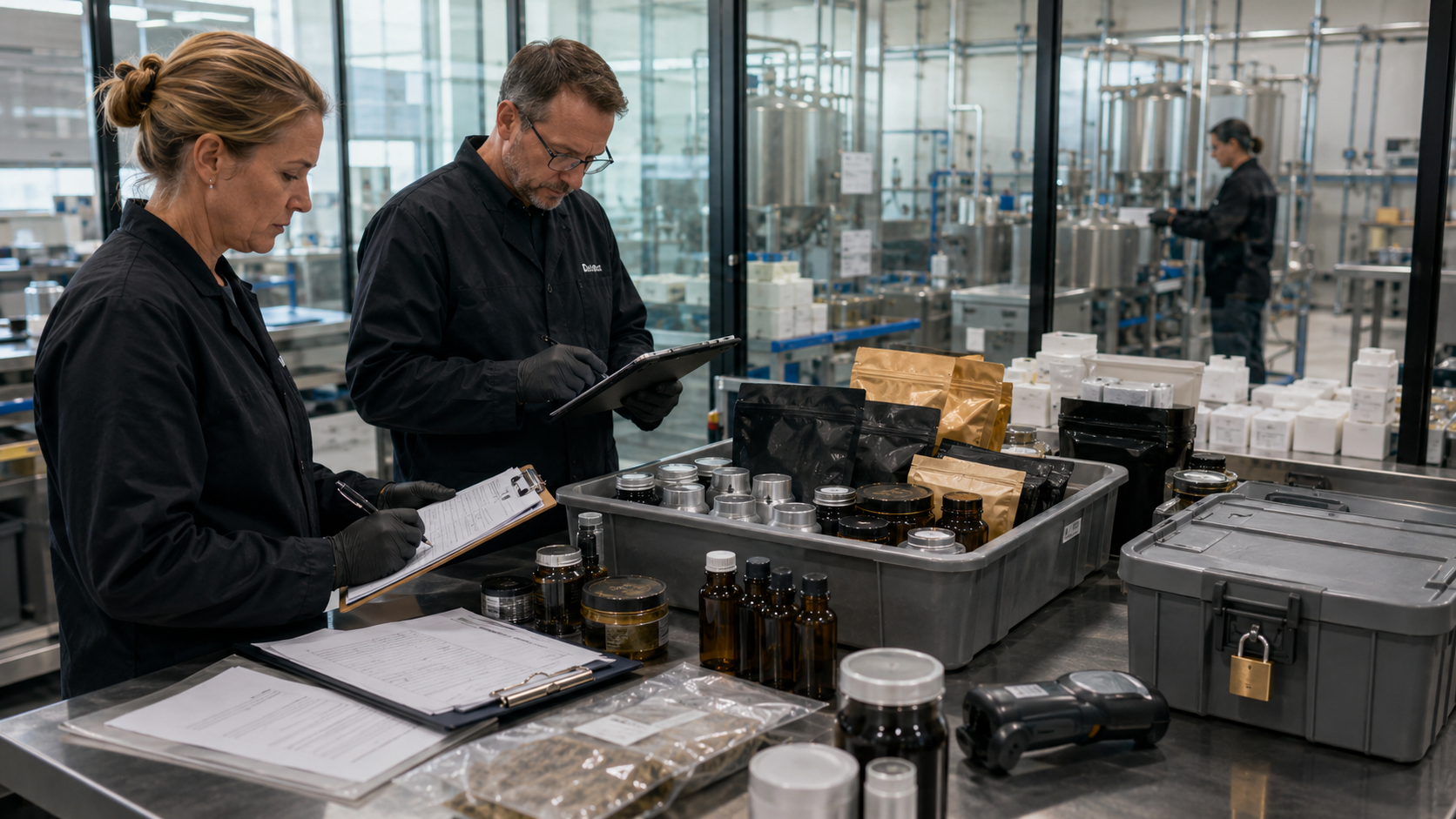
Compliance team reviewing hemp product packaging as new federal intoxicating hemp restrictions approach.
The White House’s 2026 National Drug Control Strategy sends a clear message to the hemp market. The federal government is taking a harder line on intoxicating hemp products, and businesses that sell, make, distribute, or source them should not treat this as background noise. Cannabis Business Times reports that the strategy targets delta 8, delta 10, THC O, THCP, and other THC analogues, while pointing to new federal authority tied to the hemp loophole closure. Restrictions are expected to take effect in November 2026 for products exceeding 0.4 milligrams of total THC per container or containing unnatural or synthesized cannabinoids.
Quick facts
• The White House’s 2026 National Drug Control Strategy targets unregulated psychoactive hemp products
• The strategy specifically names delta 8, delta 10, THC O, THCP, and other THC analogues
• The administration says it has new legal authority tied to the hemp loophole closure
• Restrictions are expected to take effect in November 2026
• The federal limit described in the coverage is 0.4 milligrams of total THC per container
• Products containing unnatural or synthesized cannabinoids are also in the crosshairs
• The universal operator lesson is simple: if your revenue depends on intoxicating hemp, product formulation and compliance planning can no longer be treated casually
If federal hemp restrictions are affecting your growth plan, Start with our quick Cannashield intake form so you can map product, inventory, and compliance exposure before the rules get tighter.
What this means right now
This is bigger than a policy talking point. It is a sign that the federal government is preparing to move from criticism to enforcement. The White House strategy says psychoactive derivatives of hemp are a growing concern and states that final hemp derived cannabinoid products containing certain chemicals will be considered Schedule I controlled substances under the Hemp Restriction regulations scheduled to take effect in November 2026.
That matters because many operators built around a gray market assumption. Some businesses treated intoxicating hemp as a workaround. Others treated it as a growth category with room to expand while state cannabis rules remained expensive or restrictive. This new strategy suggests the federal government is no longer comfortable with that market posture.
The harder truth is that federal policy tends to hit operations long before it hits headlines. Once the line gets harder, product categories, purchasing decisions, supplier relationships, and customer expectations all start shifting. Businesses that wait for the final enforcement shock may end up making rushed decisions with less flexibility.
Why formulation and labeling now matter more
The biggest practical issue is not just what a product is called. It is what is in it, how it is measured, and whether the business can prove what it is selling. If the federal government is focusing on products that exceed 0.4 milligrams of total THC per container or include unnatural or synthesized cannabinoids, then formulation becomes a front line issue.
That affects more than labs. It affects packaging, label review, certificates of analysis, product claims, and internal product categorization. A business may think it is selling a compliant hemp product while its actual formulation, conversion method, or ingredient profile tells a different story under federal scrutiny.
This is the operator lesson for every market. When regulators tighten definitions, loose labeling and weak documentation become expensive problems. A product line that looked profitable six months ago can become a liability if the rulebook changes and the records are sloppy.
If uncertainty around formulation, labeling, or inventory is affecting how you plan or negotiate, Complete our quick Cannashield intake form to pressure test your product exposure before federal action forces a faster reset.
Why distributors and retailers should be paying attention
This is not just a manufacturer story. Retailers, beverage companies, wholesalers, and distributors may all get hit if the product mix they rely on becomes harder to defend. Distribution agreements may need review. Inventory may need to be marked down or moved faster. Product menus may need to change. Vendor representations may need to be documented more carefully.
That is especially important for businesses with large amounts of packaged stock on hand. A future restriction date may feel far away, but inventory does not clean itself up overnight. If a company carries too much exposure in one category, the problem can move from compliance to cash flow very quickly.
The smart move now is to identify which SKUs depend on this category, which suppliers create the most risk, and which contracts assume the products will remain sellable. Operators should also think hard about what happens if one of their best selling product lines becomes the hardest one to defend.
The operator lesson
The temptation is to treat this as another Washington threat that may or may not matter. That would be a mistake. The White House strategy is telling the market where federal attention is going. Even before the restrictions take effect, the signal itself can change behavior across the supply chain.
The businesses that usually survive these transitions are the ones that act early. They review formulations, tighten labeling, clean up compliance files, reduce inventory risk, and stop pretending that loophole revenue will last forever.
If you need to organize your product, vendor, and compliance documents before the next phase of federal pressure arrives, Complete our quick Cannashield intake form to identify weak points and build a cleaner operating plan.
You might also like


Conclusion
The 2026 National Drug Control Strategy makes one thing clear. The federal government is drawing a harder line around intoxicating hemp products, and businesses should prepare now rather than later.
For operators, retailers, and distributors, the message is simple. Review what you sell, how it is formulated, how it is labeled, and how much of your revenue depends on categories that may not hold up under a stricter federal standard. That is how you protect flexibility before the market gets forced into a faster reset.
Educational note: This article is for education only and is not legal, regulatory, tax, financial, or insurance advice.
What To Do This Week
• Identify which products rely on delta 8, delta 10, THC O, THCP, or similar analogues
• Review labels, lab reports, and ingredient documentation for vulnerable product lines
• Separate inventory that may be harder to defend under a stricter federal standard
• Recheck vendor agreements and product representations for compliance risk
• Build a short internal plan for reformulation, phaseout, or category replacement
• Track the November 2026 timeline so leadership is not caught flat footed
FAQ
What products are being targeted?
The White House strategy points to psychoactive hemp products including delta 8, delta 10, THC O, THCP, and other THC analogues.
What is the main federal issue?
The administration says it has new legal authority tied to the hemp loophole closure and plans to restrict certain intoxicating hemp products.
When are the restrictions expected to take effect?
The reporting says the Hemp Restriction regulations are scheduled to take effect in November 2026.
What threshold is being discussed?
The article says products exceeding 0.4 milligrams of total THC per container may be affected.
Why does this matter to retailers and distributors?
Because product formulation, labeling, contracts, and inventory planning may all need to change if federal enforcement gets stricter.
What is the biggest operator takeaway?
Do not wait for enforcement to start planning. Review product exposure and compliance documentation now.
SOURCES
Cannabis Business Times, Trump Administration Claims New Legal Authority to Dismantle Intoxicating Hemp Products
https://www.cannabisbusinesstimes.com/hemp/news/15824298/trump-administration-claims-new-legal-authority-to-dismantle-intoxicating-hemp-products/
The White House, 2026 National Drug Control Strategy
https://www.whitehouse.gov/wp-content/uploads/2026/05/National-Drug-Control-Strategy-2026-1.pdf
Congressional source for the fiscal 2026 agriculture appropriations framework and related hemp policy context
https://www.congress.gov/

Trulieve and Cronos have each gained roughly 27 percent in 2026 while reporting stronger operating results. The broader signal is that public market attention is increasingly rewarding cash generation, improving margins, liquidity, and measurable revenue growth.