
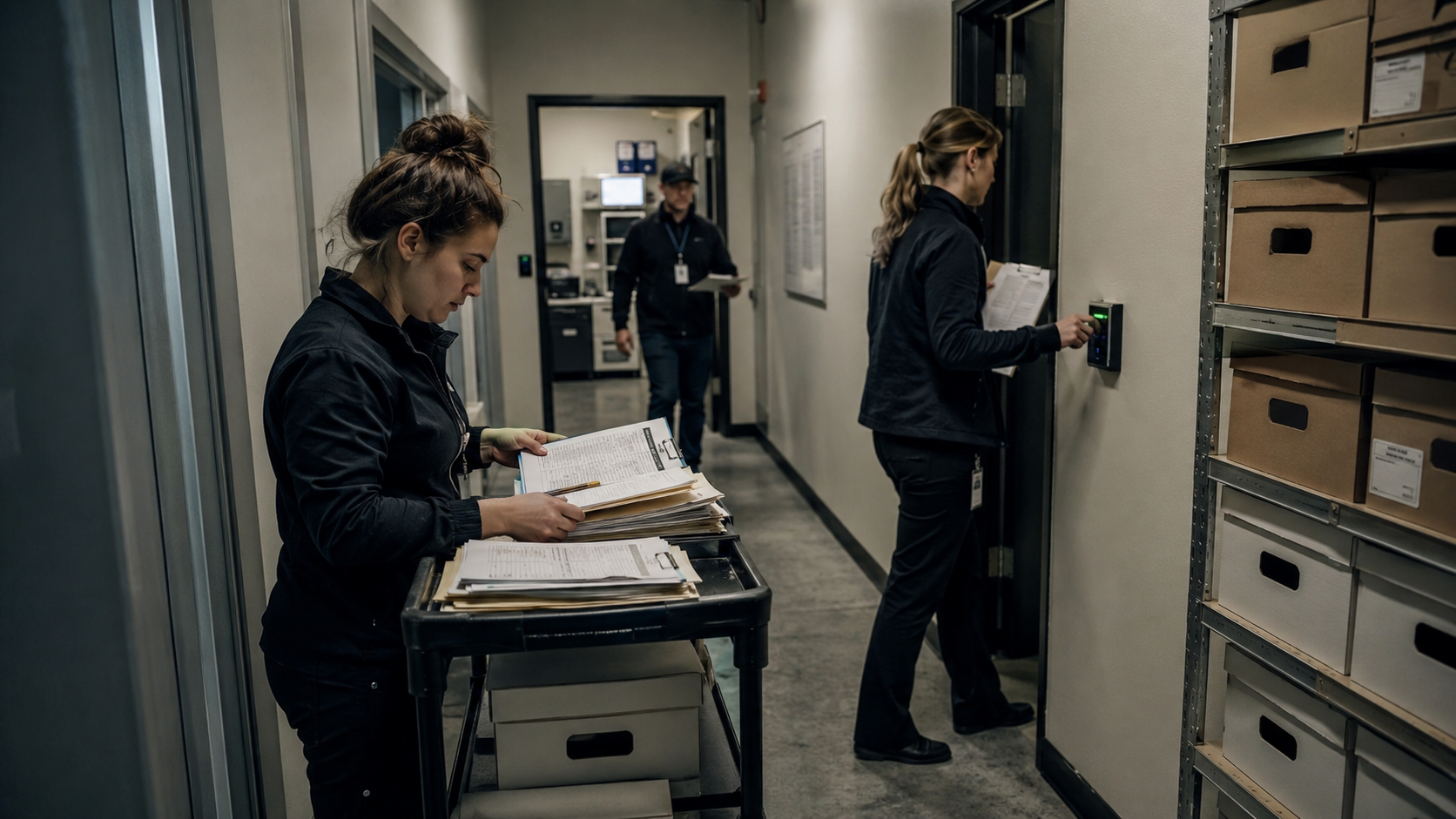
Compliance team reviewing DEA Schedule III cannabis registration paperwork.
Schedule III is starting to look less like instant relief and more like a federal registration maze. Cannabis Business Times reports that the DEA is preparing a separate Schedule III registration portal for state licensed medical cannabis cultivators, manufacturers, testing labs, and distributors. The dispensary registration window already opened on April 29, but non dispensary operators are still waiting on updated forms. That matters because operators now have to think beyond rescheduling headlines and focus on applications, ownership questions, fees, and whether registering could create new federal exposure.
Quick facts
• Cannabis Business Times reports that the DEA is preparing a separate Schedule III registration portal for cultivators, manufacturers, distributors, and testing labs
• The DEA registration window for medical cannabis dispensaries opened on April 29
• Non dispensary operators are still waiting on updated registration forms
• The DEA website says applicants can currently use Form 225 for certain medical cannabis registration categories
• The agency’s registration language mentions cultivators, analytical labs, manufacturers, and distributors
• Application fees and liability questions may create real concern for operators
• The universal operator lesson is simple: Schedule III is a compliance transition, not a federal free pass
If federal cannabis changes are affecting your growth plan, Start with our quick Cannashield intake form so you can map compliance, operational, and insurance exposure before the registration process gets harder to manage.
What the DEA is signaling right now
The key shift is that the federal government is moving from theory to process. That changes the conversation. Once a business has to apply, choose a registration category, answer ownership questions, and think about federal drug codes, the issue stops being political and becomes operational.
According to Cannabis Business Times, the DEA says a separate application for medical cannabis manufacturers, cultivators, analytical labs, and distributors will be available in the coming weeks. The article also notes that dispensaries already have a 60 day window to apply through a separate registration portal. That staggered rollout matters because it shows the federal system is being built in pieces, not all at once.
Why this is more than a paperwork issue
Operators should not treat this like a simple form filing exercise. Registration can become a federal checkpoint. It may require businesses to identify who owns or controls the company, what activities they perform, what type of medical cannabis they handle, and whether their current setup matches the category they are applying for.
The DEA language highlighted by Cannabis Business Times also points to liability concerns. That is where many operators may hesitate. If an application asks the wrong questions in the wrong way, businesses will want to know whether they are disclosing facts that could later be used against them. That is especially important for companies operating in mixed environments where medical activity, adult use activity, or prior conduct may not fit neatly into a new federal framework.
This is the operator lesson. Once federal registration begins, your records, ownership structure, and operating model matter more than your opinion about rescheduling.
If uncertainty around DEA forms, ownership disclosures, or license type is affecting how you plan or negotiate, Complete our quick Cannashield intake form to pressure test your compliance posture before federal review forces the issue.
Why fees and application details matter
The pressure is not only legal. It is also practical. Application fees may sound minor compared with the bigger regulatory shift, but they become more important when a business is already dealing with tax pressure, licensing costs, and uncertain federal guidance. A company may need outside counsel, compliance review, internal document work, and leadership time just to prepare a clean submission.
The DEA website currently tells non dispensary applicants they may use Form 225 for medical cannabis manufacturer, bulk manufacturer, analytical lab, and distributor registration while the updated application is being prepared. The site also says that if someone already submitted an application, there is no need to reapply because the agency will continue processing it. That sounds helpful, but it also shows the process is still evolving.
When a federal process is still being built in real time, businesses should assume confusion, inconsistency, and delay are all possible.
What operators should watch next
The smartest businesses will prepare before the new portal goes live. Start by identifying which registration category actually fits your business. Then review ownership records, license details, organizational charts, product handling activities, security procedures, and any mixed medical or adult use exposure.
This is also a good time to separate excitement from readiness. Schedule III may create opportunity, but federal opportunity usually comes with deeper scrutiny. Businesses that cannot explain what they do, who controls them, and how they handle regulated product may find the process more painful than expected.
If you need to organize your compliance, security, and licensing records before the next phase of Schedule III registration arrives, Complete our quick Cannashield intake form to identify weak points and build a cleaner risk picture.
You might also like


Conclusion
The DEA’s coming registration portal for cultivators, manufacturers, distributors, and labs is a reminder that Schedule III is not the end of the compliance story. It may be the beginning of a more complicated one.
For operators, attorneys, lenders, and investors, the message is simple. Watch the forms, watch the categories, watch the fees, and do not assume that applying is a routine step. In cannabis, federal access usually comes with a much higher standard of proof.
Educational note: This article is for education only and is not legal, regulatory, tax, financial, or insurance advice.
What To Do This Week
• Identify whether your business fits the cultivator, manufacturer, distributor, or lab category
• Organize ownership, licensing, and entity control documents in one place
• Review facility security, product handling, and recordkeeping procedures
• Ask counsel how federal registration questions could affect liability exposure
• Track DEA registration updates and note whether Form 225 still applies to your category
• Build a short internal federal readiness file for leadership and advisors
FAQ
What is the DEA preparing now?
A separate Schedule III registration portal for state licensed medical cannabis cultivators, manufacturers, distributors, and testing labs.
Who already has a registration window?
Medical cannabis dispensaries. The DEA opened that application window on April 29.
What can non dispensary operators do right now?
The DEA says they may currently use Form 225 for certain medical cannabis registration categories while the updated application is being prepared.
Why are operators concerned?
Because application fees, liability questions, ownership disclosures, and license category issues could all create federal exposure or delay.
Does Schedule III mean instant federal relief?
No. The process is starting to look more like a transition with federal registration steps, not an automatic approval.
What is the biggest operator takeaway?
Treat Schedule III as a registration and compliance process. Do not treat it like a green light.
SOURCES
Cannabis Business Times, DEA’s Schedule III Cannabis Registration ‘Coming Soon’ For Cultivators, Manufacturers, Distributors, Labs
https://www.cannabisbusinesstimes.com/cannabis-rescheduling/news/15824820/deas-schedule-iii-cannabis-registration-coming-soon-for-cultivators-manufacturers-distributors-labs
DEA Diversion Control Division
https://www.deadiversion.usdoj.gov/
DEA Medical Cannabis Dispensary Registration Portal
https://mmapplication.diversion.dea.gov/

Trulieve and Cronos have each gained roughly 27 percent in 2026 while reporting stronger operating results. The broader signal is that public market attention is increasingly rewarding cash generation, improving margins, liquidity, and measurable revenue growth.