
Cannabis banking risk is back in the spotlight

Cannabis operators review banking, payment, and insurance renewal documents.
Cannabis banking risk is not just a federal policy issue. It is an everyday operating issue that shows up in cash handling, deposits, payment vendors, security procedures, contracts, payroll, taxes, lending, insurance, and vendor confidence.
On July 8, 2026, Ganjapreneur reported that the American Bankers Association sent a letter urging federal lawmakers to pass the SAFE Banking Act. The ABA letter argues that banking reform would improve public safety, increase financial transparency, reduce illicit finance concerns, and give state licensed cannabis businesses access to essential financial services.
The bigger lesson is not that Congress may or may not act. The bigger lesson is that operators still need to manage cannabis banking risk right now, before a bank review, payment disruption, cash incident, renewal question, or vendor dispute forces the issue.
Need help reviewing your cannabis banking, cash handling, crime, cyber, vendor, and insurance renewal file before questions come up?
Quick facts box
Story classification: Federal government
What happened: The American Bankers Association published a July 1, 2026 letter supporting H.R. 9471 and S. 4942, the Secure and Fair Enforcement Banking Act of 2026. Ganjapreneur covered the letter on July 8, 2026.
Primary issue: The ABA says the bill would create legal and regulatory clarity around proceeds from state licensed cannabis activity and help businesses access essential financial services.
Risk mechanism: The ABA says uncertainty keeps many state licensed operators on a cash basis, outside the regulated banking system, and that cash exposure also affects service providers such as accountants, skilled trades, landlords, and law firms.
Banking controls angle: The ABA says regulated financial institutions follow anti money laundering rules, customer due diligence, transaction screening, suspicious activity monitoring, and recordkeeping requirements.
Legislative backdrop: A June 25 congressional release says the SAFE Banking Act would prevent federal banking regulators from discouraging or penalizing banks for serving state legal cannabis businesses.
Insurance angle: Banking uncertainty can affect crime insurance, cyber controls, payment processing, cash transport, premises security, general liability, workers compensation, management liability, lending, leases, and cannabis renewal review.
Universal operator lesson: If money movement is messy, the insurance file gets messy too.
What cannabis banking risk means for operators
The universal operator lesson is simple: banking is not separate from risk management.
When operators cannot rely on normal banking access, the business starts building workarounds. More cash on site. More cash transport. More vendor payment complexity. More payment processor questions. More manual reconciliation. More room for employee access issues. More pressure on owners when lenders, landlords, tax advisors, and carriers ask for clean records.
That is where cannabis banking risk becomes an insurance problem.
If money moves through cash, armored transport, ATMs, ACH vendors, closed loop systems, payment apps, third party processors, or multiple accounts, the operator needs to explain how each piece works. Who handles deposits? Who has safe access? Who reconciles point of sale to bank records? Who reviews cash over and short reports? What happens if a payment vendor gets shut off? What does the customer see? What does the bank see? What does the insurance application say?
If those answers are unclear, the file is not ready.
This matters because cannabis insurance is built around the real operation. A dispensary with large cash exposure, weak access controls, unclear vendor contracts, inconsistent deposit records, and no written cash procedure is a different risk than an operator with documented controls, camera coverage, dual control, armored transport records, clean reconciliation, cyber safeguards, and clear claims notice procedures.
Banking reform may help the industry if it moves forward. But operators cannot run their current file on future hope. The work this week is to make the cash, banking, payment, and insurance records match what the business is actually doing today.
What to do this week checklist
☐ Pull all active bank records, account agreements, deposit procedures, merchant service documents, payment vendor contracts, fee schedules, and cash handling SOPs into one folder.
☐ Confirm how money moves from customer payment to point of sale, safe, deposit, bank account, tax record, and accounting file.
☐ Review safe limits, cash drawer limits, dual control procedures, employee access, manager overrides, alarm records, camera coverage, and opening and closing procedures.
☐ Confirm armored transport agreements, pickup logs, deposit slips, missed pickup procedures, and responsibility for funds in transit.
☐ Review payment processor representations, customer fee disclosures, receipt language, transaction coding, ACH handling, chargeback procedures, and vendor shutdown plans.
☐ Compare point of sale reports, cash logs, bank deposits, tax records, accounting reports, and inventory records for consistency.
☐ Review crime insurance, cyber liability, general liability, property, inland marine, management liability, and claims notice procedures with your insurance advisor.
☐ Confirm whether landlords, lenders, investors, vendors, or municipalities require specific insurance limits, additional insured wording, or cash security procedures.
☐ Train staff on cash shortages, suspected theft, robbery response, deposit handling, payment disputes, suspicious activity, and customer complaints.
☐ Build a short banking and cash controls memo before renewal so underwriters can understand the money flow before they ask under pressure.
FAQ
1. Why does cannabis banking risk matter if my business already has a bank account?
Bank access does not remove operational risk. Operators still need clean deposit records, payment vendor files, cash controls, cyber safeguards, reconciliation procedures, and insurance documentation.
2. What is the biggest risk for cash heavy cannabis operators?
The biggest risk is not only theft. It is weak documentation around who handled the money, how deposits were tracked, how shortages were investigated, and whether controls were followed.
3. Can payment vendors create insurance issues?
They can create questions. Payment vendors may affect cyber risk, professional services exposure, customer disputes, banking records, contract obligations, claims notice duties, and renewal disclosures.
4. What should operators keep in a banking and payment file?
Operators should keep bank records, account documents, payment vendor contracts, fee schedules, processor approvals, cash logs, deposit slips, armored transport records, reconciliation reports, security procedures, and incident records.
5. Does the SAFE Banking Act guarantee better insurance options?
No. Operators should not assume any law creates automatic coverage, pricing, or carrier appetite. The practical move is to keep the risk file clean so the business can be reviewed accurately.
6. What is the practical takeaway for dispensaries and delivery operators?
Do not wait for federal reform to organize the file. Make sure cash handling, payment vendors, banking records, cyber controls, security procedures, and insurance applications all tell the same story.
Cannashield helps cannabis operators review the operating details behind the insurance file, including banking access, cash handling, payment vendors, crime controls, cyber exposure, contracts, loss history, and renewal documentation.
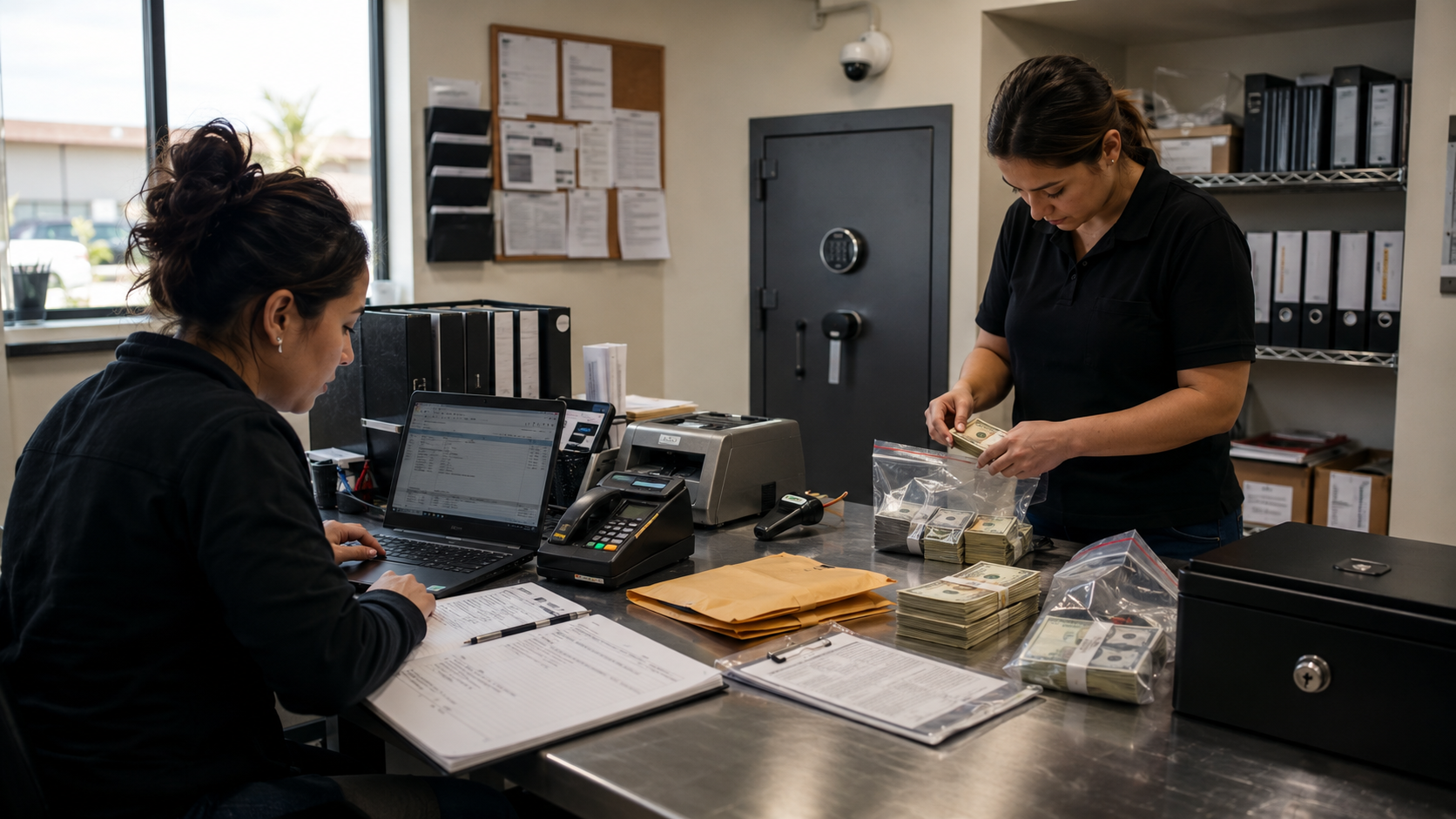
Cannabis staff organize cash deposits and banking compliance records.
Educational note
This article is for educational purposes only. It is not legal, banking, tax, financial, regulatory, or insurance coverage advice. Cannabis operators should speak with qualified legal, banking, tax, compliance, financial, and insurance professionals before making decisions.
You might also like


SOURCES
Primary source: American Bankers Association, Letter to Congress on SAFE Act
https://www.aba.com/advocacy/policy-analysis/letter-to-congress-on-safe-act
Supporting source: Ganjapreneur coverage, July 8, 2026
https://ganjapreneur.com/american-bankers-association-sends-letter-to-congress-urging-passage-of-the-safe-banking-act/
Supporting source: Congressional release on SAFE Banking Act introduction, June 25, 2026
https://joyce.house.gov/posts/joyce-colleagues-reintroduce-safe-banking-act

Trulieve and Cronos have each gained roughly 27 percent in 2026 while reporting stronger operating results. The broader signal is that public market attention is increasingly rewarding cash generation, improving margins, liquidity, and measurable revenue growth.