

Silver Nanoparticles Trigger Cannabinoid Production In Cannabis Cell Cultures
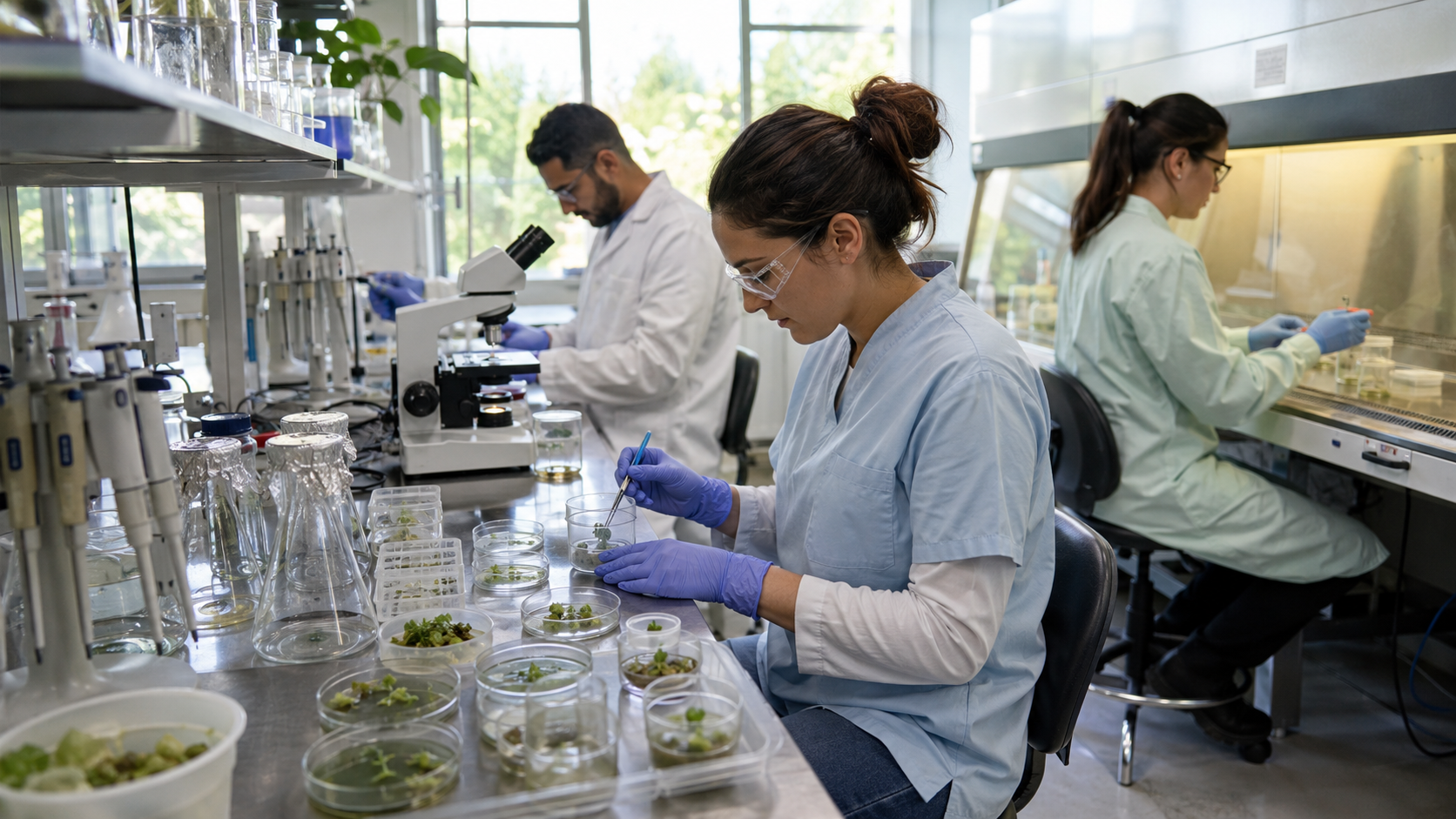
Cannabis tissue culture THC and CBD study
Cannabis cannabinoid production may eventually extend beyond traditional cultivation. A new BMC Biotechnology study found that cannabis callus cultures exposed to biogenic silver nanoparticles produced measurable THC and CBD, while untreated cultures showed no detectable levels of either cannabinoid. At a concentration of 20 milligrams per liter, treated cells produced THC at 0.31 percent and CBD at 0.26 percent. The concentrations remain far below commercial flower, but the experiment offers an early look at how controlled cell culture systems could eventually complement cultivation for specialized cannabinoid production.
Quick facts
• Researchers studied cannabis callus cultures grown under controlled laboratory conditions
• Callus cultures are collections of undifferentiated plant cells rather than mature flowering plants
• Untreated control cultures showed no detectable THC or CBD
• Treatment with 20 milligrams per liter of biogenic silver nanoparticles produced THC at 0.31 percent
• The same treatment produced CBD at 0.26 percent
• Researchers also observed increased activity in THCAS and CBDAS, genes involved in cannabinoid biosynthesis
• The nanoparticles were produced using the yeast Yarrowia lipolytica
• The study was published in BMC Biotechnology on August 30, 2026
• The research received no external funding
• The authors reported no competing interests
• The cannabinoid concentrations remain substantially below levels commonly found in commercial cannabis flower
• The universal operator lesson is simple: emerging biotechnology could eventually change how certain cannabinoids are produced, but commercial viability will depend on yield, consistency, scale, cost, quality control, and regulation
If cannabinoid biotechnology could influence your manufacturing or supply strategy, complete our quick Puro Risk intake form so you can map research, product, intellectual property, quality, equipment, compliance, and insurance exposure before investing in an emerging production method.
Why the United States is starting from behind
American cannabis operators built enormous cultivation and retail capacity, but most of that infrastructure was designed around state borders.
International operators developed differently.
Canadian companies gained years of experience with federal export permits, pharmaceutical buyers, overseas shipping, foreign quality standards, and international supply contracts. Portugal became a major European production hub. Thailand rapidly expanded exports to Australia. Germany built relationships with suppliers across more than 20 countries.
That experience creates an advantage that American companies cannot reproduce immediately.
Why this research matters
Cannabinoids are normally associated with mature cannabis flowers and the glandular structures where the plant produces many of its secondary compounds.
Producing meaningful cannabinoid levels from undifferentiated cell cultures has been more difficult.
The new study suggests silver nanoparticles can act as a biological signal that changes how cannabis cells behave. Researchers found that treated cultures began producing detectable THC and CBD and showed increased activity in genes connected to cannabinoid production.
That makes the research important as a proof of concept.
It does not mean laboratories can suddenly replace commercial cultivation.
Why cell culture could become commercially interesting
Controlled cell culture could offer a different production model from growing complete plants.
Traditional cultivation requires space, lighting, water, environmental controls, pest management, labor, harvesting, and processing. Cell based production could eventually allow certain compounds to be produced inside tightly controlled environments with less dependence on flowering cycles and outdoor conditions.
The potential becomes especially interesting for pharmaceutical or research applications where consistency and repeatability may matter more than flower characteristics.
Why the concentrations matter
The numbers need context.
THC at 0.31 percent and CBD at 0.26 percent prove that cannabinoid production was activated, but those concentrations are nowhere near the levels found in many commercial cannabis products.
That means the next challenge is not simply proving that cell cultures can produce cannabinoids.
Researchers would need to improve yield, stability, repeatability, processing efficiency, and scalability before this becomes a realistic commercial production system.
The economics will matter too.
A technologically impressive process may have limited commercial value if producing one gram of cannabinoid costs significantly more than cultivation, extraction, or other production methods.
Why quality control could become an advantage
One potential advantage of controlled culture systems is consistency.
Agricultural production can vary because of genetics, environmental conditions, pests, irrigation, nutrients, harvest timing, and processing.
Laboratory based systems may eventually allow manufacturers to control more variables and produce standardized outputs.
That could become valuable for pharmaceutical applications, research materials, specific cannabinoid ingredients, and other products requiring narrow specifications.
If new production technology becomes part of your long term strategy, complete the Puro Risk intake form to identify research, intellectual property, quality control, equipment, cyber, and product risks before moving from experimentation toward commercialization.
Conclusion
Silver nanoparticles triggering THC and CBD production in cannabis cell cultures is an important scientific development, but it remains early stage research.
The study shows that cannabis cells without mature flowers can be stimulated to activate cannabinoid production. It does not demonstrate that the process is ready to replace cultivation or compete economically with existing cannabinoid supply.
The larger opportunity is what comes next.
If researchers can increase yield while maintaining consistency and controlling cost, cannabinoid production could eventually become partly a biotechnology and manufacturing problem rather than exclusively an agricultural one.
The universal operator lesson is straightforward. Cannabis production technology is still evolving, and companies should watch emerging science without confusing promising laboratory results with commercial readiness.
Educational note: This article is for education only and is not legal, regulatory, medical, scientific, pharmaceutical, product safety, financial, investment, intellectual property, manufacturing, or insurance advice.
What to do this week
• Track cannabinoid cell culture and biosynthesis research
• Compare experimental yields with conventional cultivation and extraction economics
• Identify intellectual property that could emerge around production methods
• Review quality control requirements for pharmaceutical cannabinoid supply
• Avoid building commercial forecasts from early laboratory results alone
• Monitor whether future studies demonstrate higher yields, repeatability, and scalable production
FAQ
What did the researchers discover?
Researchers found that silver nanoparticle treatment caused cannabis callus cultures to produce detectable THC and CBD when untreated cultures produced none.
How much THC was produced?
The 20 milligram per liter treatment produced THC at 0.31 percent.
How much CBD was produced?
The same treatment produced CBD at 0.26 percent.
Does this mean cell cultures can replace cannabis cultivation?
No. The results are an early proof of concept, and cannabinoid concentrations remain far below typical commercial flower.
Why could cell culture eventually matter?
Controlled production could potentially offer greater consistency, year round operation, reduced agricultural exposure, and specialized production for research or pharmaceutical applications.
What is the biggest operator takeaway?
Watch the technology, but do not price commercial disruption into a business plan yet. Yield, scale, cost, regulation, and quality still need significant development.
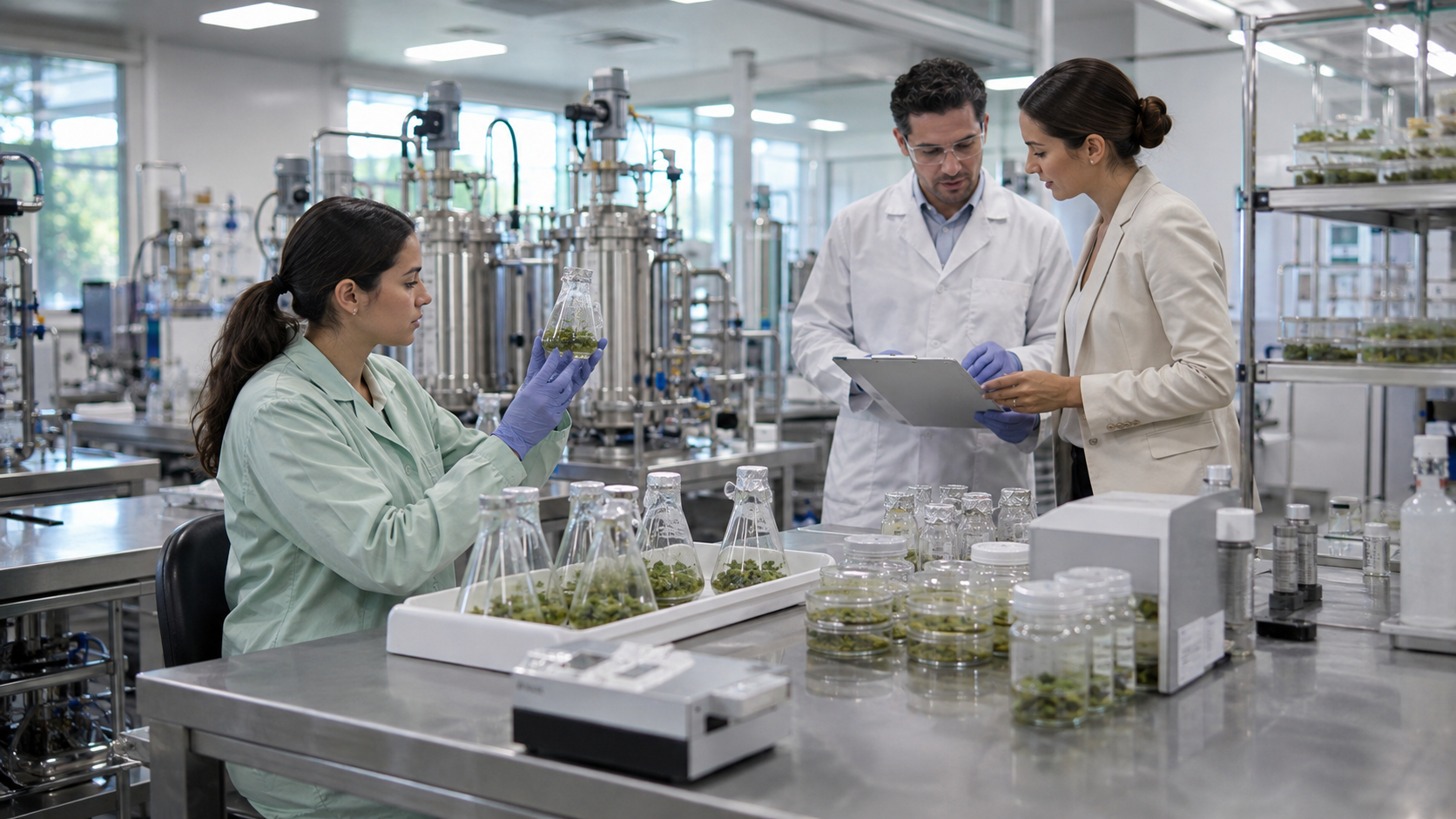
Cannabis biotechnology cell culture research
You might also like


SOURCES
BMC Biotechnology, Induction And Sustainable Production Of Cannabinoids In Cannabis Sativa L. Callus Cultures Using Yarrowia Lipolytica Biogenic Silver Nanoparticles, August 30, 2026
https://link.springer.com/article/10.1186/s12896-026-01218-x
The peer reviewed study reports that untreated cultures had no detectable THC or CBD, while treatment with 20 milligrams per liter of biogenic silver nanoparticles produced THC at 0.31 percent and CBD at 0.26 percent. Researchers also documented increased expression of cannabinoid biosynthesis genes.
The Marijuana Herald, Study Finds Silver Nanoparticles Can Trigger THC And CBD Production In Cannabis Cell Cultures, August 30, 2026
The Marijuana Herald summarizes the study and highlights the potential for controlled cell culture production while noting that cannabinoid concentrations remain far below typical commercial cannabis flower.

Trulieve and Cronos have each gained roughly 27 percent in 2026 while reporting stronger operating results. The broader signal is that public market attention is increasingly rewarding cash generation, improving margins, liquidity, and measurable revenue growth.