

Are AI Data Centers Coming For Cannabis Cultivation Real Estate?
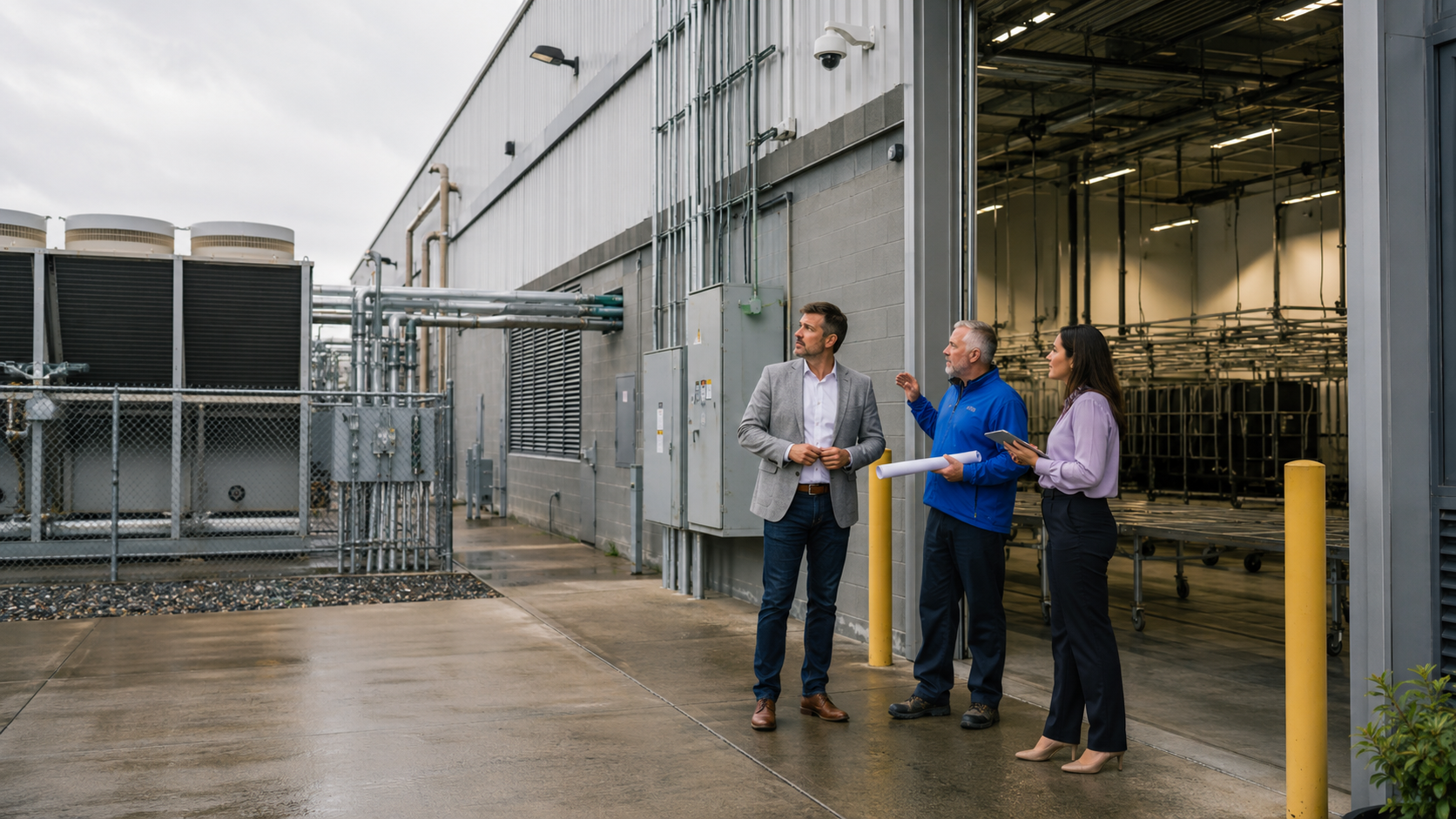
Cannabis cultivation facility evaluated for data center conversion
Distressed cannabis cultivation properties are attracting an unexpected group of potential users: data center developers. MJBizDaily reports that some former and underused cultivation facilities already contain valuable infrastructure such as high capacity electrical service, industrial cooling, climate controls, insulation, and security. With artificial intelligence driving demand for data center capacity while cannabis cultivation margins remain under pressure, certain properties may have value far beyond growing cannabis.
Quick facts
• Cannabis cultivation facilities and data centers both require significant electrical and cooling infrastructure
• Many cultivation properties already have industrial HVAC, climate controls, insulation, and security systems
• Most cannabis cultivation facilities have approximately 3 to 5 megawatts of electrical capacity
• Data centers commonly require more than 10 megawatts, creating a major conversion hurdle
• Many cultivation facilities are around 30,000 square feet while large data center developers often want significantly more space
• Converting a cultivation property can require additional power, fiber connectivity, zoning approvals, and specialized security
• Industry professionals say a complete conversion can take several years in some locations
• Texas and Virginia are viewed as attractive conversion markets because of power, fiber, tax, and development conditions
• Michigan has significant potential because of cheaper power and a supply of distressed cultivation properties
• Harbor Farmz is marketing a 32,850 square foot Kalamazoo cultivation and processing property for potential data center use
• NewLake Capital Partners reported three cultivation properties available for lease as of June 30, showing the real estate pressure facing parts of the sector
• The universal operator lesson is simple: cultivation real estate should be evaluated for its infrastructure and alternative use value, not only for the amount of cannabis it can produce
If cultivation economics are forcing you to reconsider a facility, complete our quick Puro Risk intake form so you can map property, equipment, lease, insurance, utility, and operational exposure before choosing between downsizing, subleasing, selling, or converting space.
Why cannabis facilities are getting attention
Indoor cultivation buildings are unusual industrial assets.
Operators have spent significant capital installing electrical systems, lighting infrastructure, cooling, humidity controls, security, insulation, generators, and other systems designed to support continuous operations.
Some of those investments are also important to data centers.
That does not make cannabis facilities ready made data centers. It does mean distressed cultivation properties may have infrastructure that reduces part of the cost and complexity associated with starting from a traditional warehouse.
For landlords and lenders holding difficult cannabis properties, that possibility changes how an asset should be evaluated.
Why power is the biggest question
Electrical capacity can determine whether a conversion is realistic.
MJBizDaily reports that many cultivation properties operate with approximately 3 to 5 megawatts of power, while a typical data center may require well above 10 megawatts.
That gap can be expensive to close.
A property also needs adequate fiber connectivity, cooling capacity, utility cooperation, appropriate zoning, physical security, and enough land or building area to justify investment.
The building itself is only one part of the equation.
Why Michigan stands out
Michigan offers an early example of how the idea could work.
Harbor Farmz is marketing its approximately 32,850 square foot cultivation and processing facility in Kalamazoo for potential data center development after cannabis wholesale pricing weakened the economics of operating the property as a grow.
MJBizDaily reports that the facility currently has about 1 megawatt of power, can potentially expand to 1.5 megawatts in the near term, and could eventually reach as much as 15 megawatts.
The property is also already zoned for data center use.
That combination does not guarantee a conversion, but it demonstrates why power access and zoning can become valuable real estate assets when cultivation economics deteriorate.
Why this is not a simple exit strategy
Data centers are not coming to rescue every struggling cannabis cultivation property.
Size remains a major obstacle. Many grows are simply too small for large data center users.
Location matters too. Developers want affordable and expandable electricity, strong fiber networks, appropriate zoning, tax advantages, water or cooling resources where needed, and access to infrastructure that can support long term growth.
MJBizDaily reports that fewer than two dozen data center prospects had toured cannabis facilities through one industry real estate marketplace, without completing a purchase at the time of reporting.
That makes this a developing real estate strategy rather than a broad industry conversion trend.
Why shared facilities may be more realistic
Not every solution requires completely replacing cannabis operations.
Some operators have reduced cultivation and now use only part of buildings designed for much larger production volumes. Smaller data center installations can potentially occupy unused sections of certain facilities.
One real estate attorney cited by MJBizDaily recently worked on a transaction where a landlord renegotiated a lease with a cannabis tenant that had reduced operations and brought in a data center operator using container based infrastructure for unused space.
If your facility is operating below capacity, complete the Puro Risk intake form to identify lease restrictions, utilities, property limits, insurance, security, and operational conflicts before bringing another commercial use onto the site.
Conclusion
Artificial intelligence is not suddenly turning every distressed cannabis grow into valuable data center real estate.
But the overlap is real.
Years of cannabis investment created specialized buildings with electrical, cooling, security, and climate infrastructure that few traditional industrial properties possess. In the right market, those assets can create alternative use value.
For cultivators, landlords, lenders, and investors, the lesson is bigger than data centers. When cultivation economics no longer work, the value of a facility should be separated from the value of the cannabis operation occupying it.
Power, zoning, fiber access, infrastructure, location, and alternative uses may determine what the property is actually worth.
Educational note: This article is for education only and is not legal, regulatory, real estate, financial, investment, utility, zoning, technology, environmental, construction, or insurance advice.
What to do this week
• Document the electrical capacity and expansion potential of cultivation properties
• Review actual space utilization and identify underused areas
• Confirm zoning and permitted alternative uses before assuming conversion is possible
• Review leases for subleasing, assignment, shared use, and change of use restrictions
• Inventory HVAC, cooling, security, generators, and other transferable infrastructure
• Compare continued cultivation economics with sale, lease, partial reuse, and alternative use scenarios
FAQ
Why would data center developers want cannabis cultivation facilities?
Indoor grows often contain significant power, cooling, climate control, insulation, and security infrastructure that can also be useful for data center operations.
Can a cannabis grow be converted directly into a data center?
Usually not without additional work. Power upgrades, fiber connectivity, zoning, specialized security, cooling changes, and other improvements may be required.
How much power do cannabis grows typically have?
MJBizDaily reports that many cultivation facilities have approximately 3 to 5 megawatts of electrical capacity.
How much power can a data center require?
A typical data center can require well above 10 megawatts, although requirements vary significantly by project type and scale.
Which markets appear most attractive for conversions?
Industry professionals identified Texas, Virginia, Michigan, Georgia, parts of the Midwest, the Rocky Mountain region, and Nevada as potential markets depending on power, fiber, taxes, zoning, and property economics..
What is the biggest operator takeaway?
Do not evaluate a distressed cultivation facility only as a cannabis grow. Electrical infrastructure, zoning, cooling, security, fiber access, and alternative uses can materially affect real estate value.
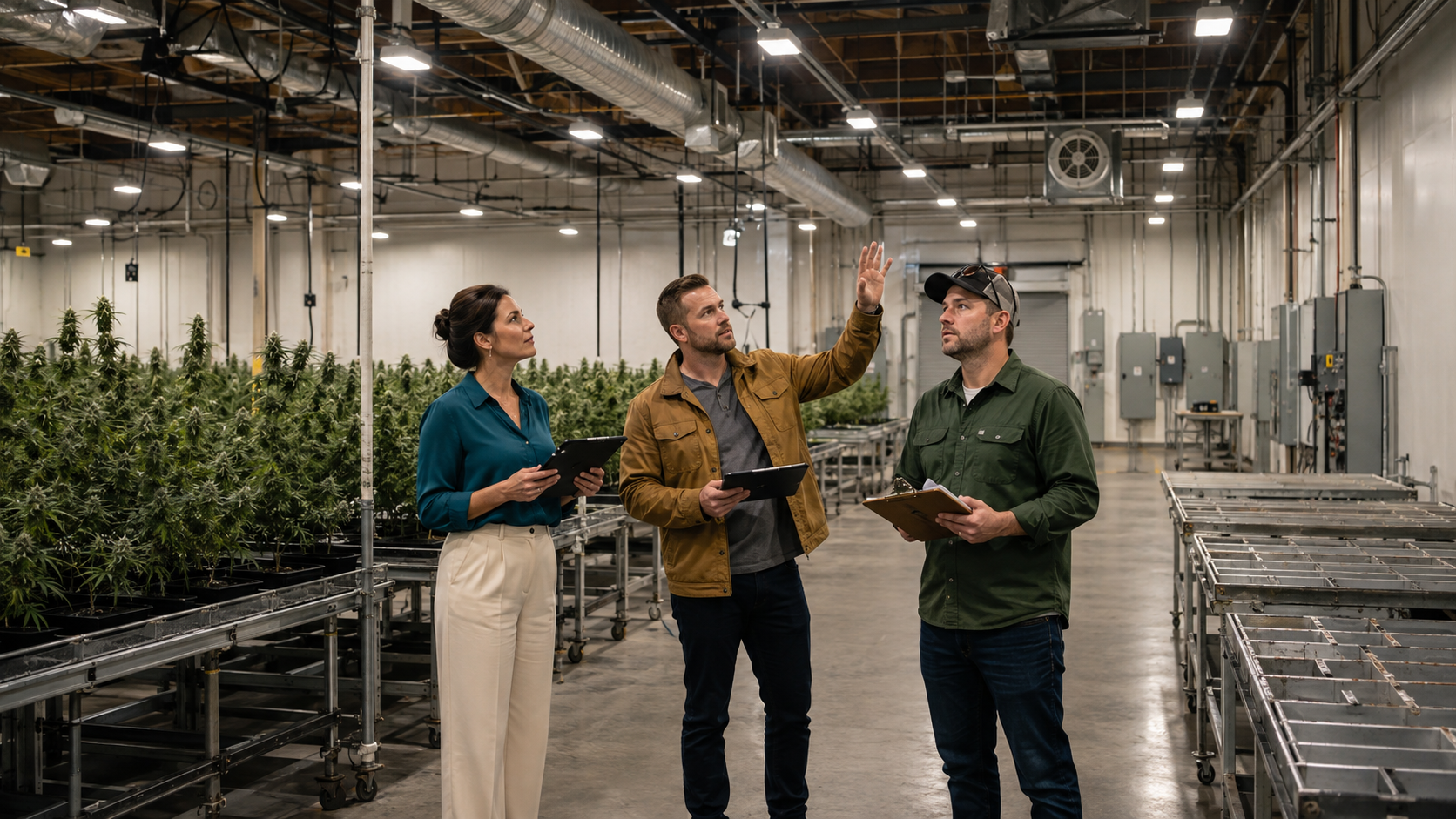
Cannabis grow facility undergoing power and HVAC assessment
You might also like

SOURCES
MJBizDaily, Are AI Data Centers Coming For Cannabis Cultivation Real Estate?, August 19, 2026
https://mjbizdaily.com/news/are-ai-data-centers-coming-for-cannabis-cultivation-real-estate/617451/
MJBizDaily reports on growing data center interest in distressed cultivation facilities, infrastructure overlap, conversion obstacles, geographic opportunities, and the Harbor Farmz property in Michigan.
NewLake Capital Partners, Second Quarter 2026 Financial Results, August 5, 2026
NewLake reported that rental income was affected by three properties that became available for lease during 2025, illustrating the carrying costs and real estate pressure associated with unused cannabis properties.
MLive, Kalamazoo Cannabis Company Wants To Sell Its Property To A Data Center Developer, June 2026

Trulieve and Cronos have each gained roughly 27 percent in 2026 while reporting stronger operating results. The broader signal is that public market attention is increasingly rewarding cash generation, improving margins, liquidity, and measurable revenue growth.