

Idaho medical cannabis petition records being packed and archived
Idaho remains one of the toughest cannabis access states in the country, and the latest medical cannabis ballot effort will not move forward. Cannabis Business Times reports that supporters of the Idaho Medical Cannabis Act will not challenge the state’s decision to reject 61 percent of petition signatures. The Natural Medicine Alliance of Idaho said it collected more than 150,000 signatures, but election officials found that only 58,024 were valid after county verification, leaving the campaign short of the 70,725 valid signatures needed to qualify for the November 2026 ballot.
Quick facts
• Idaho medical cannabis supporters will not challenge the state’s final signature rejection decision
• Election officials rejected 61 percent of signatures submitted by the Natural Medicine Alliance of Idaho
• The campaign said it collected more than 150,000 signatures before the May 1 deadline
• Idaho Secretary of State Phil McGrane’s office found that 58,024 signatures were valid
• The campaign needed 70,725 valid signatures statewide
• Idaho also required signatures from at least 6 percent of registered voters in at least 18 of 35 legislative districts
• The campaign met the district requirement in only 13 legislative districts
• The Idaho Medical Cannabis Act is now listed as did not qualify for the 2026 ballot
• The universal operator lesson is simple: ballot access rules can stop cannabis market entry before voters ever see the question
If Idaho market timing is affecting your growth plan, complete our quick Cannashield intake form so you can map legalization, enforcement, compliance, and insurance exposure before political risk becomes a wasted market entry strategy.
Why this petition failure matters
This failure matters because Idaho remains one of the most restrictive cannabis states in the country. While surrounding states and regional markets continue to debate or expand medical and adult use access, Idaho still has no legal statewide cannabis market. For patients, that means no regulated medical access pathway. For operators and investors, it means no licensing timeline, no retail channel, no cultivation structure, and no compliant market entry route.
The petition effort was important because it represented one of the few possible paths around legislative resistance. If the measure had qualified, voters could have decided whether to create a medical cannabis program. Instead, the campaign never reached the ballot.
That is the core business lesson. Some markets do not fail because consumer demand is missing. They fail because the political and election process blocks access first.
Why signature validation is a serious barrier
The signature rejection rate is the central issue. Cannabis Business Times reported that election officials rejected 61 percent of the campaign’s signatures, a rate the campaign’s attorney called unusually high. The state’s final determination raised concerns around missed deadlines, circulator documentation, payment disclosures, and petition materials.
For advocacy groups and future market participants, this shows how important ballot mechanics are. A campaign needs more than public support. It needs trained circulators, clean documentation, county level coordination, deadline control, payment reporting, legal review, and a plan for challenging questionable rejections.
This is the universal operator lesson. Cannabis reform is not only about policy support. It is also about process discipline.
Why HJR 4 raises the stakes
The next issue to watch is Idaho HJR 4. The official Vote Idaho page says a “yes” vote would give only the Idaho Legislature authority to legalize cannabis, narcotics, or other psychoactive substances, and would remove the ability for citizens to initiate state statutes that legalize those substances. A “no” vote would preserve the citizen initiative path.
That makes Idaho especially important for cannabis access advocates. If voters approve HJR 4, future cannabis reform efforts could face an even harder path because the citizen initiative route would be limited. In a state where the Legislature has resisted cannabis reform, losing that path would matter.
For operators and investors, this means Idaho should be treated as a long horizon market, not a near term opportunity.
Why operators should not overread demand
Idaho may have patient demand, consumer interest, and advocacy energy, but none of that creates a market by itself. A state can have public support and still block reform through ballot rules, signature review, legislative control, or political resistance.
That is why operators should be careful with early real estate, brand planning, partnerships, or lobbying spend in restricted states. Until there is a real legal pathway, the risk is not just delay. The risk is building a strategy around a market that cannot open.
If you need to organize legalization tracking, advocacy, compliance, and insurance records before evaluating restricted states, use the Cannashield intake form to identify weak points and build a clearer market entry file.
Conclusion
Idaho’s failed medical cannabis petition effort is a reminder that cannabis market access can be blocked long before licensing, taxation, retail operations, or compliance rules come into play. The campaign collected a large number of signatures, but the final validation process left it short of the legal threshold.
For operators, investors, compliance teams, consumers, and advocacy groups, the message is simple. Idaho remains closed, and future reform may become even harder if voters approve the constitutional amendment limiting citizen initiated cannabis measures. In restricted states, ballot rules can be just as important as public opinion.
Educational note: This article is for education only and is not legal, regulatory, tax, financial, election, political, or insurance advice.
What to do this week
• Track whether Idaho HJR 4 passes or fails in November 2026
• Review ballot access requirements before assuming a voter driven path is realistic
• Watch whether Idaho lawmakers introduce any medical cannabis proposal outside the initiative process
• Avoid committing capital to Idaho cannabis operations before a lawful licensing pathway exists
• Monitor patient advocacy groups and future signature gathering plans
• Build a short internal memo on Idaho market access, ballot risk, political resistance, and enforcement exposure
FAQ
What happened to Idaho’s medical cannabis petition?
The petition failed to qualify for the 2026 ballot after state election officials found the campaign did not submit enough valid signatures.
Will supporters challenge the decision?
No. Cannabis Business Times reported that supporters do not plan to pursue a legal challenge.
How many valid signatures were needed?
The campaign needed 70,725 valid signatures statewide.
How many signatures did officials find valid?
The Idaho Secretary of State’s office found that 58,024 signatures were valid.
Why did the campaign fall short?
The state cited issues including missed deadlines, insufficient circulator documentation, payment disclosures, and petition materials.
What is the biggest operator takeaway?
Idaho remains a blocked market, and ballot access rules can stop cannabis reform before voters ever decide.
What this means for operators
Cannabis business news can quickly become an insurance, compliance, contract, renewal, or claims issue. If this topic could affect your operation, review your insurance setup before pressure shows up from a landlord, lender, carrier, contract partner, regulator, or claim.
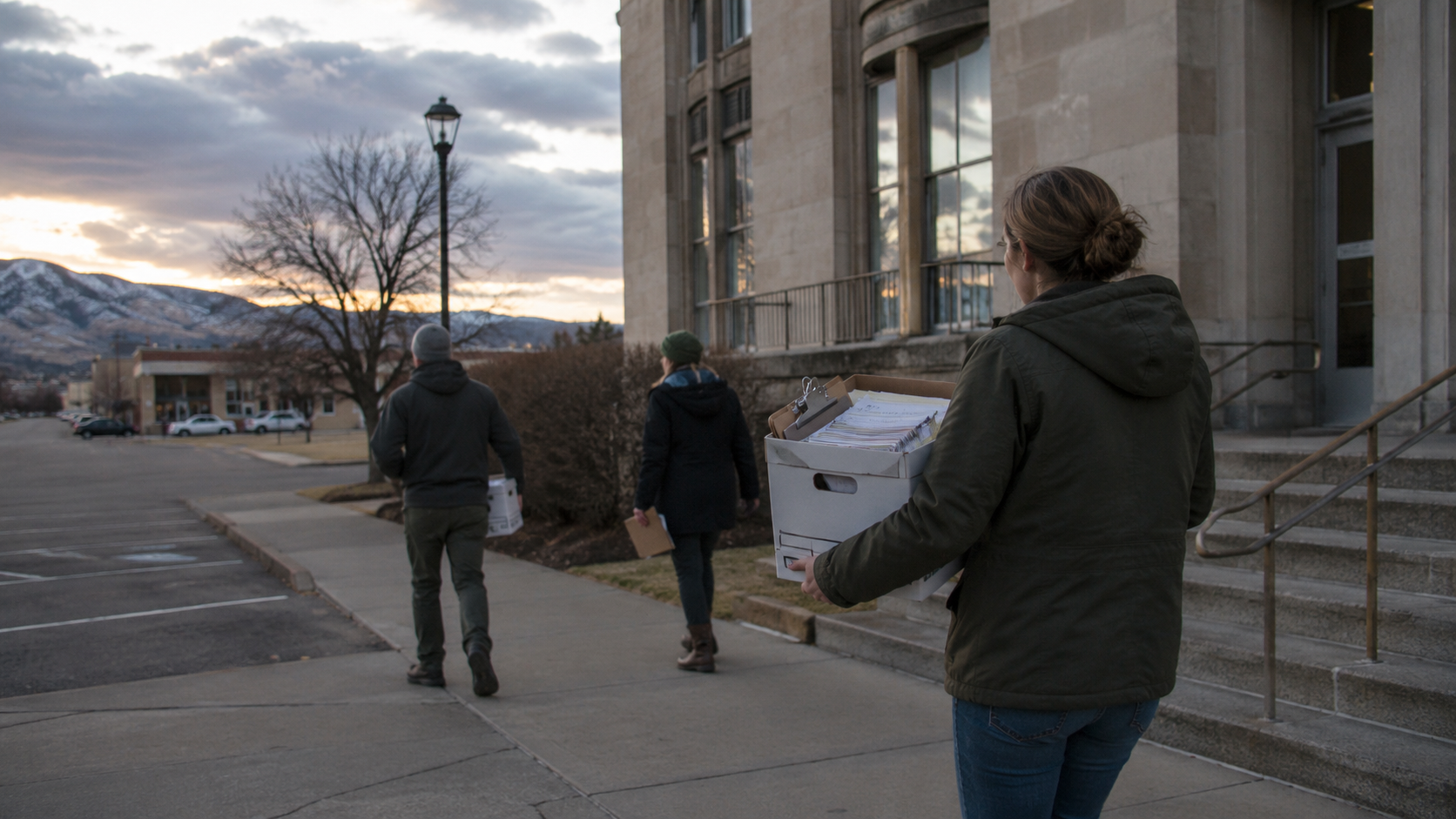
Cannabis petition signatures delivered for verification in Idaho
You might also like


SOURCES
Cannabis Business Times, Idaho Cannabis Activists Won’t Challenge State’s Disqualification of Petition Signatures
https://www.cannabisbusinesstimes.com/us-states/idaho/news/15831034/idaho-cannabis-activists-wont-challenge-states-disqualification-of-petition-signatures
Vote Idaho, Initiatives and Amendments
https://voteidaho.gov/initiatives-amendments/
Idaho Capital Sun, Medical cannabis initiative fails to qualify for Idaho’s general election ballot
https://idahocapitalsun.com/2026/07/14/medical-cannabis-initiative-fails-to-qualify-for-idahos-general-election-ballot/

Trulieve and Cronos have each gained roughly 27 percent in 2026 while reporting stronger operating results. The broader signal is that public market attention is increasingly rewarding cash generation, improving margins, liquidity, and measurable revenue growth.