
Cannabis Pesticide Compliance Risk Does Not Stop at State Licensing
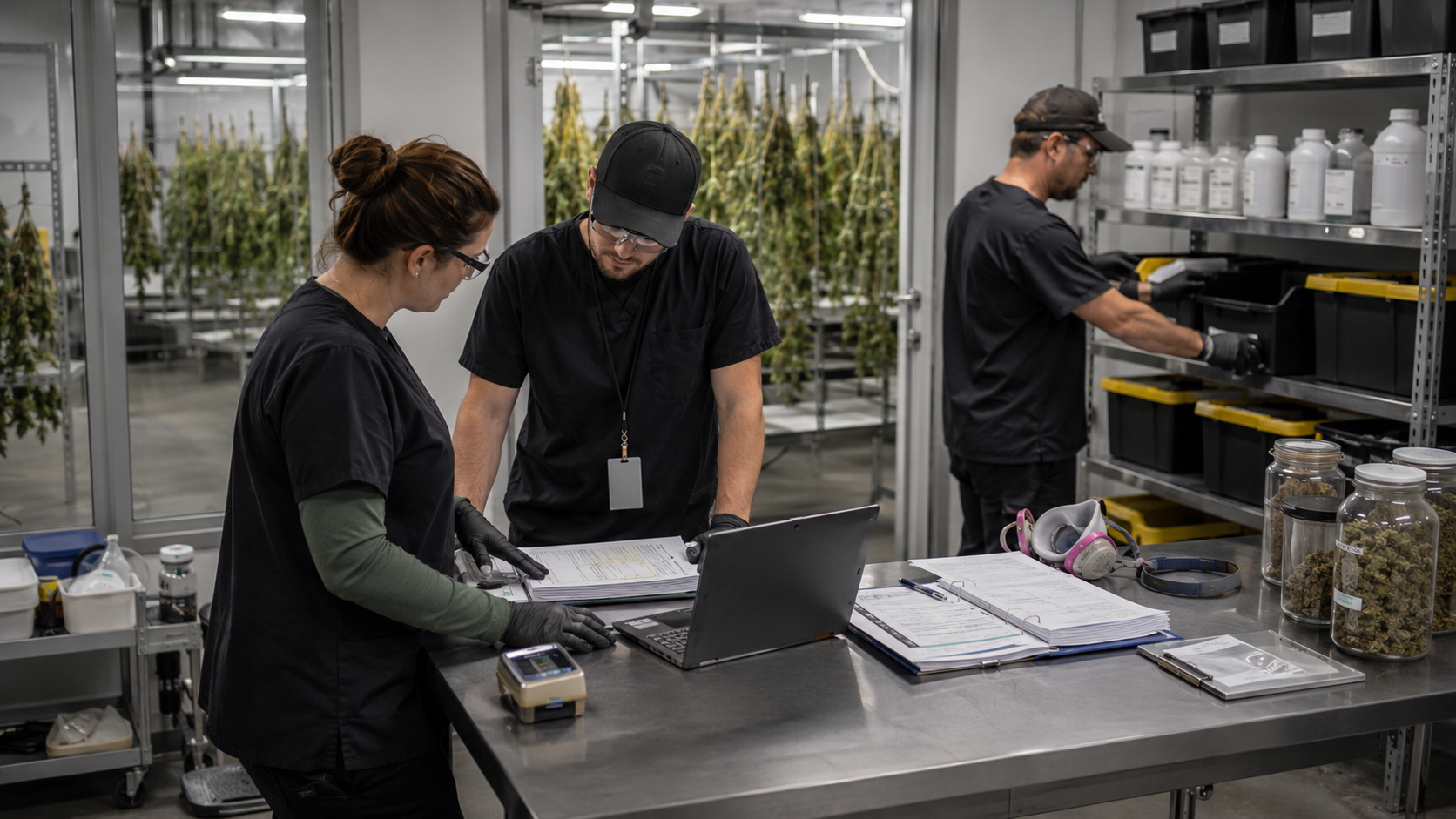
Cannabis team reviews pesticide logs and worker safety compliance files.
Cannabis pesticide compliance can expose a licensed cultivation operation to far more than a failed laboratory test.
Federal prosecutors recently announced charges against two employees of a state registered Oklahoma cultivation operation related to the alleged import, distribution, and sale of unregistered and misbranded pesticides. Industry reporting states that the case involved approximately 40 pounds of pesticide products allegedly imported from Hong Kong. The charges remain allegations, and the defendants are presumed innocent unless proven guilty.
The operator lesson is larger than one cultivation site.
A state cannabis license does not replace federal pesticide requirements. It also does not eliminate the need for verified vendors, approved chemical lists, application records, employee training, batch traceability, worker protection, and a documented response plan if a product or chemical is questioned.
Cannashield helps operators understand the risk, organize the right questions and records, and connect with a qualified professional when deeper guidance is needed.
Quick facts
Story classification: High impact state
What happened: Federal authorities announced charges connected to allegedly unregistered and misbranded pesticides at a state registered Oklahoma cultivation operation.
Agencies involved: The investigation was led by the Environmental Protection Agency, Customs and Border Protection, the Department of Homeland Security, and Homeland Security Investigations.
Primary operator risk: A chemical purchasing or application decision can create federal, state, worker safety, product compliance, recall, contract, and insurance questions at the same time.
Universal lesson: Every pesticide used inside a licensed cannabis operation should be supported by an approved product list, complete label, purchase record, application log, and responsible employee.
What cannabis pesticide compliance means for operators
A state license is only one layer
Cannabis businesses operate under state licensing systems, but pesticide sale, distribution, labeling, records, and certain application requirements can also fall under federal law.
The Environmental Protection Agency states that no person may distribute or sell an unregistered pesticide unless a valid exemption applies. Federal rules also address labeling, required records, inspections, worker protection, storage, disposal, and restricted use products.
This creates a layered compliance problem.
A cultivation team may believe a product is acceptable because it was purchased locally, recommended by another grower, sold through an online marketplace, or used successfully in the past. None of those facts establish that the product is approved for the intended use.
The container, registration information, active ingredients, application instructions, state rules, crop use, and employee qualifications still need review.
The vendor file matters as much as the product
Operators should know who supplied every pesticide, nutrient, cleaning chemical, growth input, and pest control product used at the facility.
An invoice alone may not be enough.
The vendor file should include the legal supplier name, contact details, product label, safety data sheet, registration information, lot information when available, purchase date, quantity, and the employee who approved the purchase.
When a product arrives with incomplete labeling, unfamiliar language, altered packaging, missing registration information, or directions that do not match the intended use, the product should be isolated until a qualified professional confirms the next step.
The goal is not to create paperwork for the sake of paperwork. The goal is to preserve a reliable chain of decisions.
The risk can travel through the supply chain
A questionable pesticide decision does not necessarily stay inside the cultivation room.
It can affect harvested material, testing, processor relationships, wholesale transfers, finished products, customer complaints, recall preparation, waste costs, and contractual obligations.
A downstream manufacturer or retailer may ask which batches received material from the cultivation site. A regulator may request application records. A testing result may require a wider trace review. A business partner may ask whether the operator followed its own written procedures.
That is why the application log should connect the product, date, room, crop, batch, quantity, applicator, and supporting label instructions.
Without that connection, management may know what was purchased but still be unable to show where it was used.
Worker protection should not be separated from product compliance
Pesticide controls also affect employees.
Federal worker protection requirements can address training, personal protective equipment, ventilation, entry restrictions, emergency response, and access to safety information for agricultural workers.
A strong program should clearly identify:
☐ Who may purchase chemical products
☐ Who may approve them
☐ Who may apply them
☐ What training is required
☐ What protective equipment must be used
☐ When employees may reenter treated areas
☐ How exposure concerns are reported
☐ Who contacts emergency, medical, regulatory, and management personnel
The insurance file should match the operating file
Cannabis insurance applications and renewal reviews may ask about cultivation methods, chemical use, product testing, recalls, worker safety, loss history, contracts, and compliance controls.
Insurance does not approve pesticide use or replace legal and compliance review.
The practical goal is consistency. The operation described to the regulator, laboratory, business partner, attorney, compliance advisor, and insurance professional should match what is actually happening at the facility.
If the written procedure says only approved products may be used, the purchasing records and application logs should prove that the procedure is being followed.
What to do this week
☐ Create one approved pesticide and chemical list for the entire operation.
☐ Confirm every listed product has complete label and registration information.
☐ Compare the approved list against current storage rooms, mixing areas, and employee workstations.
☐ Isolate any product with missing, altered, foreign, or unclear labeling until it is reviewed.
☐ Centralize invoices, safety data sheets, labels, application records, and training records.
☐ Connect every application to the affected room, crop, harvest batch, date, quantity, and applicator.
☐ Review vendor approval procedures and prohibit unauthorized purchases.
☐ Confirm employee training, protective equipment, reentry, ventilation, and emergency procedures.
☐ Test how quickly the team can identify every batch connected to one chemical application.
☐ Review recall, contract notice, incident reporting, and insurance notice procedures with the appropriate professionals.
FAQ
1. Does a state cannabis license make every agricultural product legal to use?
No. State licensing does not automatically approve every pesticide or chemical product. Operators should confirm federal requirements, state rules, label directions, intended use, and any applicable exemptions with qualified professionals.
2. What records should a cultivation operation maintain?
A practical file may include purchase invoices, vendor information, complete labels, safety data sheets, registration information, approval records, application logs, training records, protective equipment procedures, batch references, incident reports, and disposal records.
3. What should happen when an employee brings in an unfamiliar product?
Do not use it automatically. Isolate the product, preserve the packaging, document where it came from, and have the product reviewed by the responsible compliance, cultivation, legal, or pesticide professional.
4. Can laboratory testing replace application records?
No. Testing can provide important product information, but it does not replace purchasing controls, label review, application logs, employee training, or proof that the operation followed approved procedures.
5. Why should retailers and manufacturers care about cultivation pesticide records?
The material may move downstream. A question at the cultivation level can affect testing records, supplier agreements, batch traceability, finished inventory, customer communication, and recall preparation.
6. Where does insurance enter the issue?
Insurance may become relevant when there is an alleged injury, product complaint, recall expense, property event, worker exposure, regulatory investigation, or claim. Actual coverage depends on the policy language, facts, exclusions, conditions, and timely notice. Operators should review the issue with qualified legal, compliance, and insurance professionals.
Conclusion
The Oklahoma case is a reminder that cannabis pesticide compliance is not limited to passing a laboratory test or holding an active state license.
The real control begins before a product enters the facility.
Operators should know who approved it, who supplied it, what the label permits, where it was stored, who applied it, which batches were affected, and how the records would be produced if questions arrived.
The strongest response is not panic. It is a clean operating file that connects purchasing, application, employee safety, batch tracking, product testing, contracts, and incident response.
If this issue touches your operation, Cannashield can help you understand the risk, organize the right records, and determine which qualified professionals should be involved.
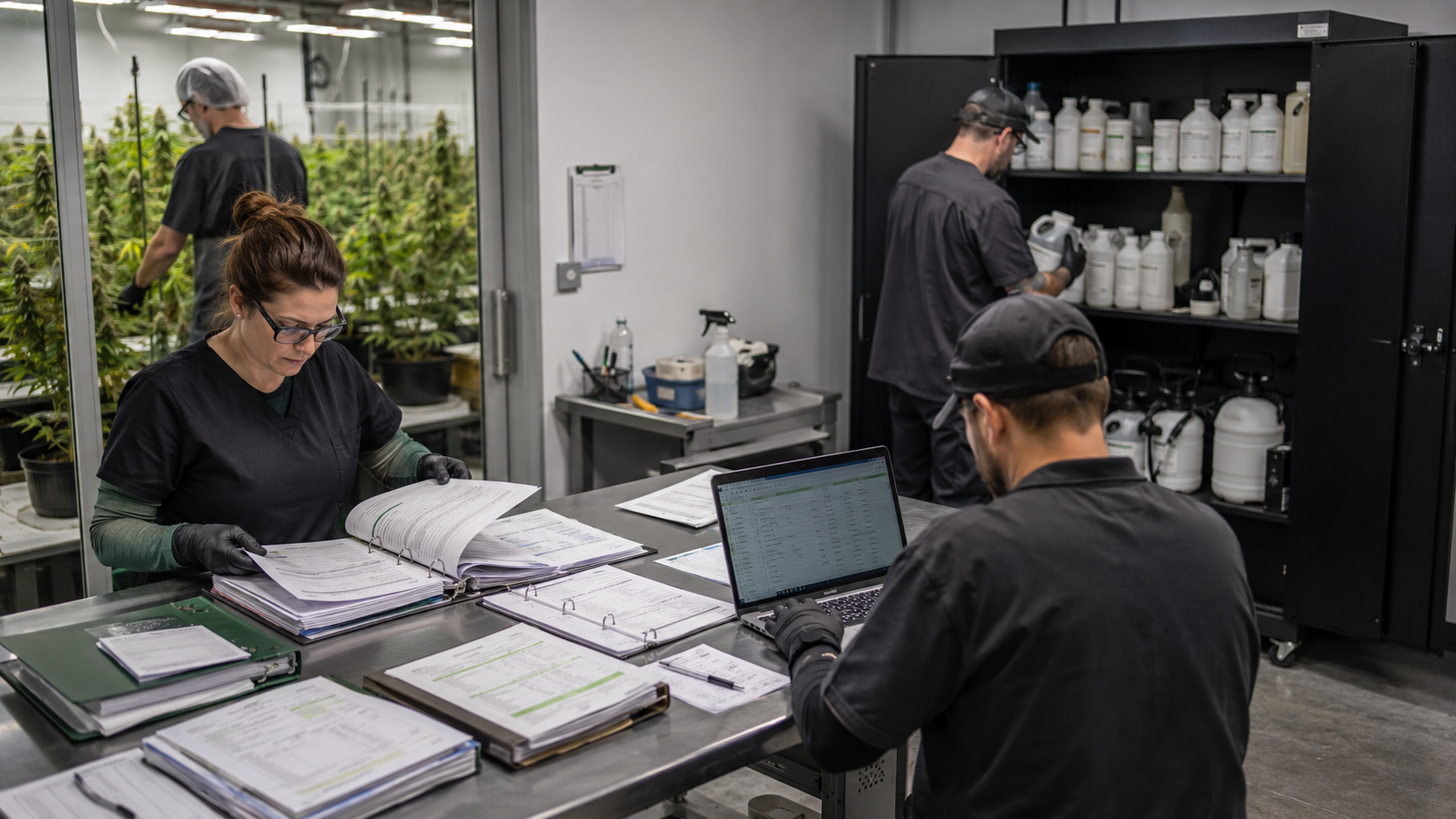
Cannabis staff review chemical vendor records and pesticide approvals.
Educational note
This article is for educational purposes only. It is not legal, regulatory, pesticide, environmental, product safety, medical, financial, or insurance coverage advice. Cannabis operators should consult qualified professionals before making decisions.
You might also like


SOURCES
Primary source: United States Department of Justice, Eastern District of Oklahoma, federal indictment announcement, July 9, 2026
https://www.justice.gov/usao-edok/pr/seminole-county-marijuana-farm-employees-indicted-federal-charges-relating-illegal
Supporting source: MJBizDaily, pesticide charges involving Oklahoma cultivation employees, July 16, 2026
https://mjbizdaily.com/news/pesticides-lead-to-federal-charges-for-oklahoma-medical-marijuana-cultivation-employees/616951/
Federal compliance source: United States Environmental Protection Agency, FIFRA compliance and enforcement overview
https://www.epa.gov/enforcement/federal-insecticide-fungicide-and-rodenticide-act-fifra-and-federal-facilities

Trulieve and Cronos have each gained roughly 27 percent in 2026 while reporting stronger operating results. The broader signal is that public market attention is increasingly rewarding cash generation, improving margins, liquidity, and measurable revenue growth.