

Tariff Volatility Is Hitting Cannabis Supply Chains And Operators Need A Plan
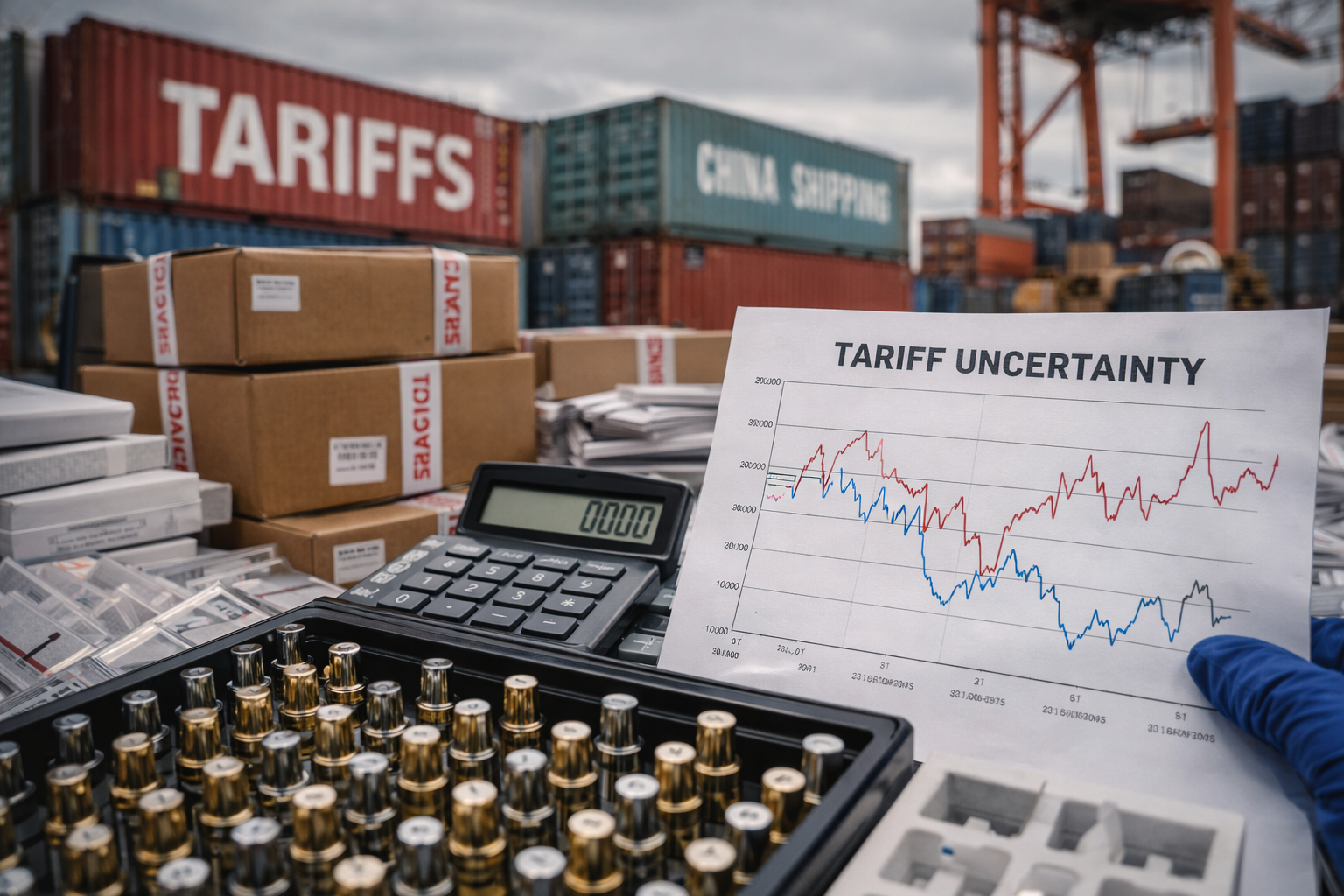
Cannabis supply chain manager reviewing tariff affected vape hardware shipments and packaging costs in a warehouse
Tariff volatility is turning cannabis supply chain risk management into a daily discipline. New tariff moves are hitting the exact inputs operators depend on most: vape hardware, compliant packaging, and production equipment, and the bigger problem is not just higher cost, it is the unpredictability that makes planning feel like a coin flip.
Quick facts
• MJBizDaily reports a layered tariff environment impacting vape hardware, cultivation equipment, and packaging, with operators calling out uncertainty and volatility as the core problem
• MJBizDaily reports a new global 10 percent duty is being layered on top of existing 25 percent Section 301 tariffs on many China sourced inputs used by cannabis businesses, including vaporizer hardware and mylar bags
• Reuters reports the US began collecting a temporary 10 percent global import tariff under Section 122 of the Trade Act of 1974 for 150 days, with the administration discussing a potential increase to 15 percent
• The US Supreme Court held that IEEPA does not authorize the President to impose tariffs, which helps explain why the legal and policy ground is shifting quickly
• One packaging company cited by MJBizDaily said its tariff cost per container previously jumped from roughly $2,000 to $4,000 to roughly $15,000 to $20,000, showing how fast landed cost math can change
If tariff volatility is affecting your purchasing plan, Start with our quick Cannashield intake form so you can map exposure across vendors, inventory, and contracts.
Why Cannabis Gets Hit Harder Than Other Industries
Most industries can pass cost increases through pricing, at least partially. Cannabis operators often cannot. You are competing with illicit pricing, you are operating inside tight state rules, and you are usually carrying thin margins already. That is why MJBizDaily framed the impact as pressure landing directly on operators with limited ability to raise retail prices.
Tariffs also hit cannabis at the worst possible layer: the compliance layer. Packaging is not optional. Testing and labeling rules mean you cannot simply swap to whatever is cheapest this week. Vape hardware has regulatory sensitivity too, so changing components can require rework in process, documentation, and vendor qualification. Even cultivation equipment is not just a capital purchase, it is a downtime risk if replacement parts get delayed.
Universal operator lesson: when an input is tied to compliance or safety, volatility becomes operational risk, not just a cost problem.
Where The Cost Shows Up First
The pattern is consistent across markets.
Vape hardware: Cartridges, batteries, and related components are often manufactured overseas. MJBizDaily notes many common items are produced in China, and layered duties can stack quickly.
Packaging: Mylar bags, tubes, child resistant containers, labels, and inserts are easy to underestimate until your reorder hits a new landed cost. A packaging vendor in the MJBizDaily piece described policy whiplash and said SKU rationalization becomes critical in periods like this.
Equipment: Cultivation and manufacturing equipment can be exposed through imported parts, replacement components, and longer lead times. Even if pricing does not move dramatically, uncertainty forces you to carry more inventory or accept more downtime risk.
Universal operator lesson: the first place tariffs hurt is the inputs you cannot easily substitute.
The Real Enemy Is Forecasting
Tariffs are bad. Unpredictable tariffs are worse.
When the rules shift quickly, you get three ugly outcomes:
Cash gets trapped in inventory because you order heavier to hedge against future increases.
Lead times get longer because everyone rushes to buy ahead of changes.
Pricing decisions get sloppy because you are reacting instead of following a plan.
Reuters describes the current global tariff as temporary and tied to a legal and policy pivot, which is exactly what creates the uncertainty operators hate.
This is why the smartest operators separate two things: unit cost and planning certainty. Sometimes paying a slightly higher base price to lock supply and timing is a win because it protects cash flow predictability.
If uncertainty is affecting how you budget or negotiate vendor terms, Complete our Cannashield questionnaire to pressure test your supply chain exposure and documentation.
A Tariff Ready Playbook For Operators
You do not need to predict policy to win. You need a system.
Build an input risk map
List your top 25 inputs by revenue impact and compliance sensitivity. Flag what is imported, what is China sourced, and what has no easy substitute.Create two vendor lanes for every critical input
One primary supplier and one backup supplier with documentation ready. The backup can be domestic or in a different sourcing region. The goal is options.Tighten SKU count
If a packaging vendor is telling you SKU rationalization is the unsexy move that matters, listen. Fewer SKUs means fewer packaging variations, fewer reorder surprises, and fewer things to run out of.Add tariff clauses to purchasing
Negotiate clarity on how price changes are triggered, how long quotes hold, and what happens if tariff rates change between order and arrival. Your goal is fewer surprises.Protect your reorder calendar
Stop buying based on panic. Buy based on a schedule and a buffer that you choose deliberately. That is how you avoid ordering at the peak of chaos.
If you want a tariff readiness checklist and vendor clause template you can hand to your operations lead, use our Cannashield intake form to request it.
Conclusion
Tariffs are a cost problem, but the bigger issue for cannabis is unpredictability. When duties shift, operators are forced to make fast decisions on packaging, hardware, and equipment without the pricing power most industries rely on. The winners in 2026 will be the operators who treat supply chain volatility like a controllable system: fewer SKUs, better vendor options, tighter contracts, and cleaner planning discipline.
Educational note: This article is for education only and is not legal, tax, or financial advice.
What To Do This Week
• List your top 25 imported inputs and rank them by compliance sensitivity
• Identify one backup supplier for each top 10 item and collect documentation now
• Reduce SKU count in at least one category where packaging complexity is hurting you
• Update purchase orders with quote hold time and price change language
• Build a 90 day reorder calendar with a buffer you control
• Run a margin stress test assuming another landed cost increase
FAQ
Why are tariffs hitting cannabis so hard right now
Because cannabis relies on imported packaging, hardware, and equipment, and operators have limited ability to raise prices in highly competitive markets.What does layered tariffs mean
It means multiple duties can apply to the same input, such as a general duty layered on top of Section 301 tariffs on certain imports.What is the current global tariff situation
Reuters reports the US began collecting a temporary 10 percent global import tariff under Section 122 for 150 days, with discussion about a possible increase to 15 percent.Why is the legal situation adding uncertainty
The US Supreme Court held that IEEPA does not authorize the President to impose tariffs, which has pushed policy toward other legal authorities and shifting timelines.What is the fastest operator fix
SKU reduction and vendor backups, because they reduce the number of things that can break at once.Should operators switch to domestic suppliers immediately
Not automatically. The goal is optionality and planning certainty, not a rushed switch that creates compliance and quality surprises.