
Medical Cannabis Use In Hospitals Is Expanding And Compliance Is Catching Up
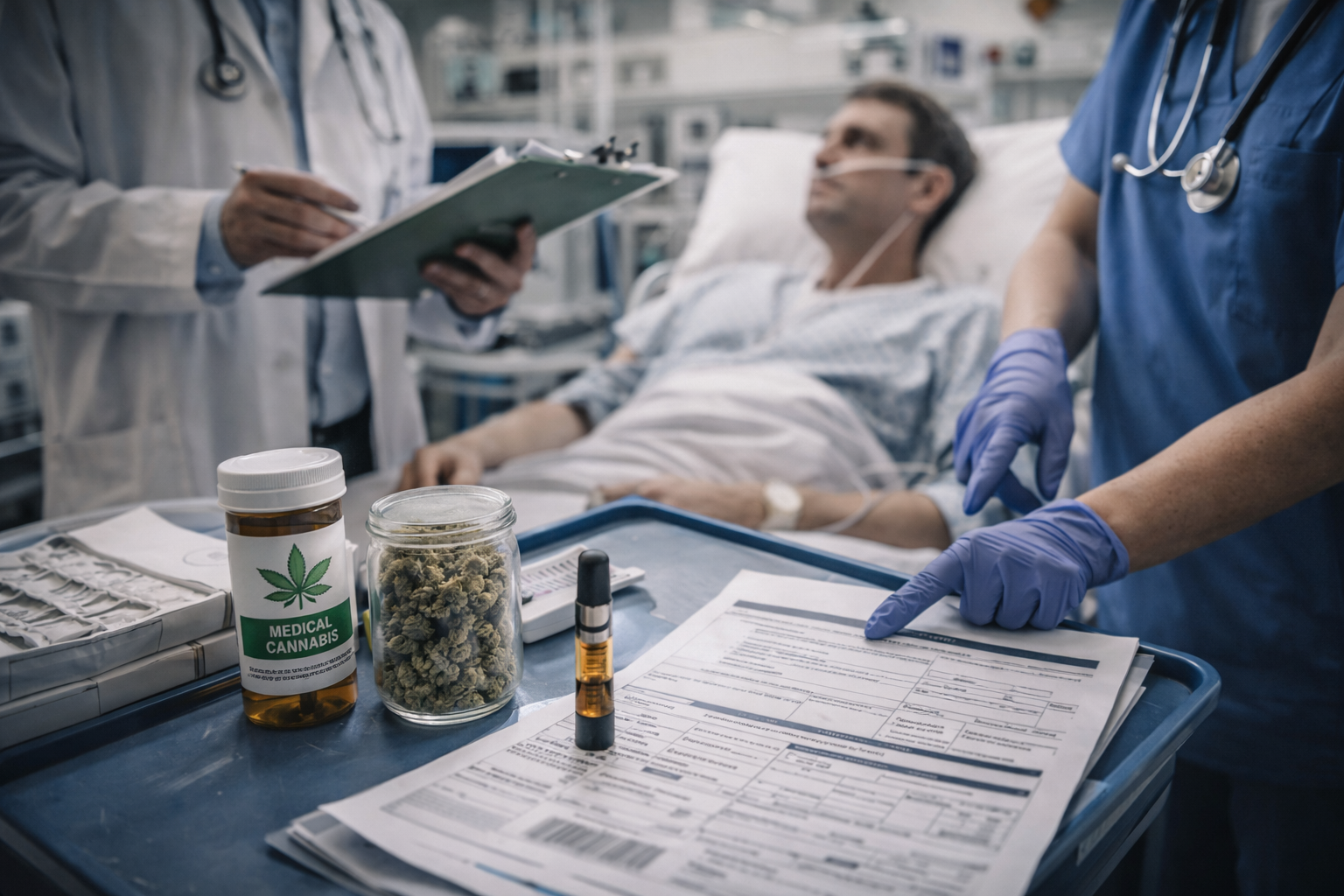
Nurse and hospital staff reviewing medical cannabis documentation at bedside with products nearby
Medical cannabis in hospitals is becoming a real policy lane in 2026. Multiple states are advancing bills that would let qualified patients use medical cannabis inside hospitals and other healthcare facilities, a move often framed as dignity and comfort for seriously ill patients. The signal for operators is bigger than access. It is that facility rules, documentation, and compliance expectations are about to get sharper.
Quick facts
• This policy trend is often referred to as Ryans Law style reform, focused on allowing medical cannabis use in healthcare facilities for certain patients
• Action is moving in several states, including Washington, while another proposal has stalled in Mississippi
• Washington HB 2152 would require specified healthcare facilities to allow terminally ill patients to use medical cannabis, while requiring facility policies and medical record documentation
• Oregon HB 4142 shows a narrower version that focuses on hospices and residential facilities and explicitly exempts hospitals, while still requiring written policy and staff education
• Common guardrails across bills include no smoking or vaping, secure storage, and clear responsibility on the patient or caregiver rather than facility staff
If hospital use rules are part of your medical program planning, Start with our quick Cannashield intake form so you can map facility requirements and documentation before the rules tighten.
Why States Are Moving On Hospital Use Now
Most medical cannabis programs were built for home use. The moment a patient enters a hospital, nursing facility, hospice, or similar setting, the rules get messy. Facilities worry about federal government conflict, liability, medication interactions, and staffing boundaries. Patients worry about losing a regimen that helps them stay comfortable.
That is why these bills keep reappearing. They are trying to close the gap between legal patient access and the reality of facility policies. Even when lawmakers disagree on details, the direction is consistent: states want medical cannabis to behave more like a normal part of patient centered care, with clear boundaries and predictable documentation.
Universal operator lesson: medical normalization always comes with paperwork. The more care settings get involved, the more documentation becomes part of the product.
The Common Blueprint: Policy, Storage, And Proof
Across states, the shape of these bills is similar.
First, they narrow the allowed forms. Smoking and vaping are typically prohibited in facilities, pushing patients toward oils, tinctures, edibles, capsules, or topicals.
Second, they define who does what. Many proposals place acquisition and administration responsibility on the patient or caregiver, not hospital staff. That is a key liability and workflow line.
Third, they require secure storage. Locked containers and controlled access show up repeatedly, because facilities are trying to prevent diversion while still allowing access.
Fourth, they force the paperwork to exist. Written facility policies, staff training, and medical record notations are the real operational change. In Washingtons HB 2152, for example, facilities would need to establish a formal policy and note a patients use in medical records.
Universal operator lesson: the core risk is not the product. The core risk is uncontrolled handling. These bills are pushing the system toward controlled handling.
Where Operators Will Feel The Compliance Pressure
This trend affects three parts of the medical pipeline.
Manufacturers and product teams will feel it through format and consistency. Facilities prefer predictable dosing formats and packaging that is easy to store securely. Anything that creates confusion, looks like candy, or lacks clear serving guidance becomes harder to defend in a hospital setting.
Dispensaries and distributors will feel it through verification and chain of custody expectations. When a facility requests documentation, you need a clean file fast. Patient authorization, caregiver permissions, batch and lot records, and clear labeling all become part of a friction free handoff.
Service providers will feel it through training and SOP demand. Facilities do not want vibes. They want written policy, staff education, escalation paths, and an audit trail.
If uncertainty is affecting how you plan or negotiate medical partnerships, Complete our Cannashield questionnaire to pressure test your documentation, labeling discipline, and facility readiness.
State Signals To Watch In 2026
Washington is the clearest hospital signal because HB 2152 is explicitly written around allowing terminally ill patient use in specified facilities, with policy and recordkeeping requirements.
Universal operator lesson: when hospitals come into scope, recordkeeping becomes mandatory, not optional.
Oregon is a reminder that some states may start narrower. HB 4142 focuses on hospices and residential facilities and exempts hospitals, but still requires written policy and staff training.
Universal operator lesson: even limited facility access still triggers formal policy and training requirements.
Mississippi shows the friction point. A proposal advanced through one chamber but hit a committee roadblock tied to liability and clinical concerns.
Universal operator lesson: do not build a one outcome plan. Facility access reforms can stall even when they seem common sense.
How To Prepare Without Overreacting
Treat this as a readiness project.
Build a facility use packet. It should include patient verification steps, suggested storage practices, product form guidance, and a simple documentation checklist your team can fulfill quickly.
Standardize your medical product selections for facility settings. Focus on predictable formats and clear serving guidance, not novelty.
Create a compliance calendar and watchlist. These bills move quietly and then suddenly. Your advantage is early notice.
If you want a facility readiness checklist and documentation pack your team can implement this month, use our Cannashield intake form and request the Medical Facility Use Toolkit.
Conclusion
Medical cannabis use in hospitals and healthcare facilities is another step toward normalization, but it is also a step toward tighter facility level rules and more documentation pressure. Operators who win this phase will treat compliance as part of care access: clear formats, clean records, and a facility ready process that reduces friction for patients and providers.
What To Do This Week
• Identify which of your medical products fit facility settings, focusing on non smokable formats
• Build a one page documentation checklist for patient verification and product proof
• Standardize COA and batch record storage so you can retrieve it fast
• Draft a simple caregiver handoff SOP for facility settings
• Add hospital use bills to your policy watchlist and review weekly during session months
• Train your team on how to explain medical product use without making promises
FAQ
What is Ryans Law in cannabis policy
It refers to state laws that allow certain patients to use medical cannabis in healthcare facilities, often focused on terminally ill patients.Does this mean hospitals have to give cannabis to patients
Most proposals focus on allowing use and setting boundaries. Many place responsibility on the patient or caregiver, not hospital staff.Will smoking be allowed in hospitals
Typically no. Bills often prohibit smoking and vaping in facilities and focus on other formats.What kind of documentation will facilities want
Expect patient authorization confirmation, secure storage procedures, written policies, and medical record notes where required.How does the federal government factor in
Many proposals include suspension language tied to potential federal government enforcement or guidance affecting facilities.What is the practical operator move right now
Build a facility ready documentation packet and standardize formats and labeling so your medical pipeline can operate under stricter rules.