

Carpinteria Cannabis Farm Burglaries Show High Value Theft Risk
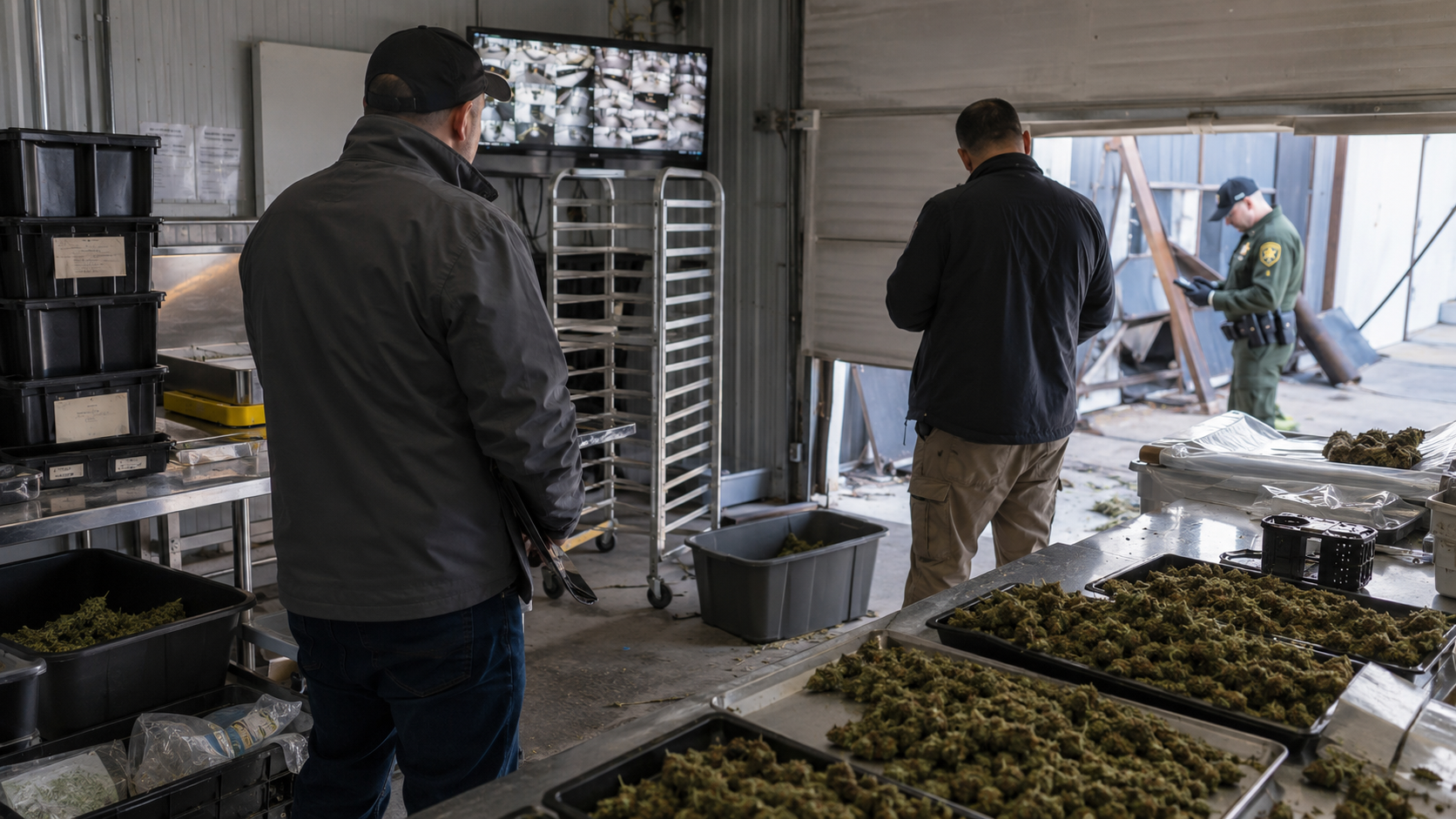
Investigators documenting cannabis inventory after a Carpinteria burglary
California cannabis operators remain exposed to serious theft risk, especially at cultivation sites holding large amounts of harvest, biomass, finished flower, equipment, and vehicles. KCLU reports that Santa Barbara County authorities are searching for 18 suspects connected to two large burglaries at a Carpinteria cannabis farm. The same farm on Foothill Road was hit on January 17 and February 4, with about 2,000 pounds of cannabis valued at more than $500,000 stolen. Investigators identified suspects from the Los Angeles area and arrest warrants were issued.
Quick facts
• Santa Barbara County authorities are searching for 18 suspects connected to two Carpinteria cannabis farm burglaries
• The same farm on Foothill Road was hit on January 17 and February 4, 2026
• About 2,000 pounds of cannabis was stolen
• The stolen cannabis was valued at more than $500,000
• Investigators originally identified 19 suspects, including two juveniles
• KCLU reported that one suspect was murdered shortly after the second burglary
• The suspects are reportedly from the Los Angeles area
• Arrest warrants have been issued
• The universal operator lesson is simple: cannabis theft is not just a security issue, it is an inventory, insurance, law enforcement, and business continuity issue
If cannabis theft or site security is affecting your operation, complete our quick Cannashield intake form so you can map inventory, security, claims, and insurance exposure before a burglary turns into a larger financial loss.
Why this burglary case matters
This case matters because the theft volume was large enough to affect more than one day of operations. Two thousand pounds of cannabis is not a minor retail loss. It can affect cash flow, wholesale commitments, production planning, sales timing, tax records, insurance claims, and investor confidence.
Cultivation sites are especially exposed because product can be concentrated in predictable locations during harvest, curing, drying, storage, and transfer windows. If criminals know where product is stored and when it is most valuable, the risk increases. A remote or agricultural site may also have slower response times, more perimeter exposure, and more access points than a traditional retail store.
For operators, the lesson is clear. A cultivation facility cannot rely only on cameras and gates. It needs layered security and documented inventory control.
Why organized theft changes the risk profile
The number of suspects matters. This was not a single person stealing a small amount of product. Authorities are looking for 18 suspects after identifying a larger group connected to the burglaries. That suggests operators need to think about coordinated theft crews, vehicle access, insider information, and repeat targeting.
Repeat targeting is one of the most important details. The same farm was hit twice within weeks. That should get every operator’s attention. After one burglary, the next risk is not automatically over. In some cases, a site becomes more vulnerable if attackers learned the layout, response time, camera placement, storage practices, and product movement patterns.
This is the universal operator lesson. After a theft, the first job is not only filing a claim. It is changing the conditions that made the theft possible.
Why insurance teams need clean documentation
A cannabis theft claim can become complicated quickly. Insurers may ask for inventory records, surveillance footage, police reports, alarm history, access logs, seed to sale data, storage procedures, employee rosters, vendor records, and proof of value. If those records are incomplete, delayed, or inconsistent, the claim can become harder to support.
That is why inventory controls matter before a loss. Operators need to know what was on site, where it was stored, what stage it was in, how it was valued, and whether records match the track and trace system. Cannabis is a high value product, but the claim only becomes stronger when the records are strong.
Security plans should also match reality. If the written security plan says one thing and the site operates another way, the gap can create problems after a burglary.
Why site hardening should be reviewed now
Santa Barbara County’s Cannabis Compliance Team says it reviews site security plans and background checks for county cannabis business licensing and renewals. That local role matters because security is not only an operator preference. It is part of the licensing and compliance environment.
Operators should review fencing, lighting, camera placement, alarm coverage, access control, locks, gate systems, visitor logs, vehicle access, storage areas, and after hours procedures. They should also review how quickly law enforcement can be notified and whether surveillance footage can be preserved and shared without delay.
For landlords and investors, security should be treated as part of asset protection. A cannabis farm with weak security may create rent risk, property risk, insurance risk, and reputational risk.
If you need to organize security, inventory, police report, and insurance records before a loss occurs, use the Cannashield intake form to identify weak points and build a cleaner claims readiness file.
Conclusion
The Carpinteria cannabis farm burglaries are a serious reminder that California cannabis operators still face high value theft and organized burglary risk. When $500,000 in product can be stolen across two incidents, security planning needs to be treated as a core business function.
For cultivators, landlords, investors, compliance teams, security teams, and insurance teams, the message is simple. Do not wait for a loss to test your security plan. Review the site, harden the weak points, tighten inventory records, and make sure claims documentation is ready before the next incident.
Educational note: This article is for education only and is not legal, regulatory, tax, financial, security, claims, law enforcement, or insurance advice.
What to do this week
• Review perimeter fencing, gate controls, lighting, cameras, alarms, and after hours access
• Compare inventory records against physical product, storage areas, and track and trace data
• Confirm surveillance footage is retained, timestamped, backed up, and easy to share with law enforcement
• Update emergency contacts, law enforcement coordination procedures, and incident response workflows
• Review theft coverage, inventory valuation method, exclusions, limits, and claim reporting timelines
• Build a short internal memo on site hardening, inventory control, organized theft risk, and claims readiness
FAQ
What happened at the Carpinteria cannabis farm?
Santa Barbara County authorities are searching for 18 suspects connected to two burglaries at the same cannabis farm on Foothill Road.
How much cannabis was stolen?
KCLU reported that about 2,000 pounds of cannabis was stolen.
What was the estimated value of the stolen product?
The stolen cannabis was valued at more than $500,000.
When did the burglaries happen?
The farm was hit on January 17 and February 4, 2026.
Where were the suspects reportedly from?
KCLU reported that the suspects are from the Los Angeles area.
What is the biggest operator takeaway?
Cannabis farms need layered security, clean inventory records, law enforcement coordination, and insurance claim readiness before a theft occurs.
What this means for operators
Cannabis business news can quickly become an insurance, compliance, contract, renewal, or claims issue. If this topic could affect your operation, review your insurance setup before pressure shows up from a landlord, lender, carrier, contract partner, regulator, or claim.
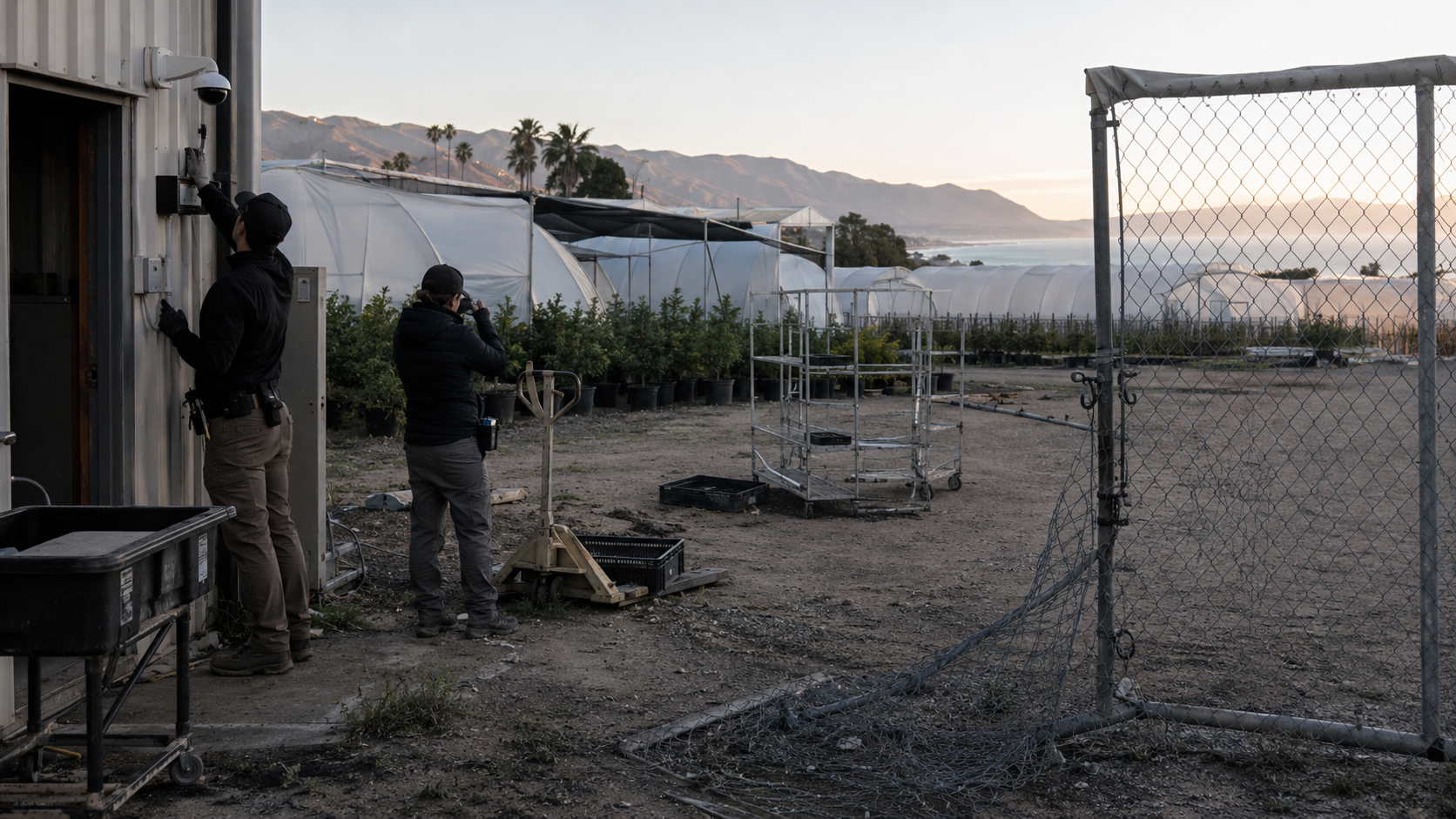
Investigators inspecting security damage at a Carpinteria cannabis farm
You might also like


SOURCES
KCLU, Eighteen suspects sought in burglaries at a Carpinteria cannabis farm
https://www.kclu.org/2026-07-27/eighteen-suspects-sought-in-burglaries-at-a-carpinteria-cannabis-farm
Santa Barbara County Sheriff’s Office, Cannabis Compliance Team
https://www.sbsheriff.org/cannabis-compliance-team/
California Department of Cannabis Control, Compliance Action Records
https://www.cannabis.ca.gov/cannabis-laws/compliance-action-records/

Houston misdemeanor cannabis possession arrests have risen nearly 1,200 percent, from an average of about 35 per year from 2021 through 2023 to roughly 440 annually during the current mayoral administration. The surge comes as voters prepare to decide whether low level cannabis possession should become HPD's lowest enforcement priority.