
Colorado Cannabis Recall After Retesting Finds Chlorfenapyr
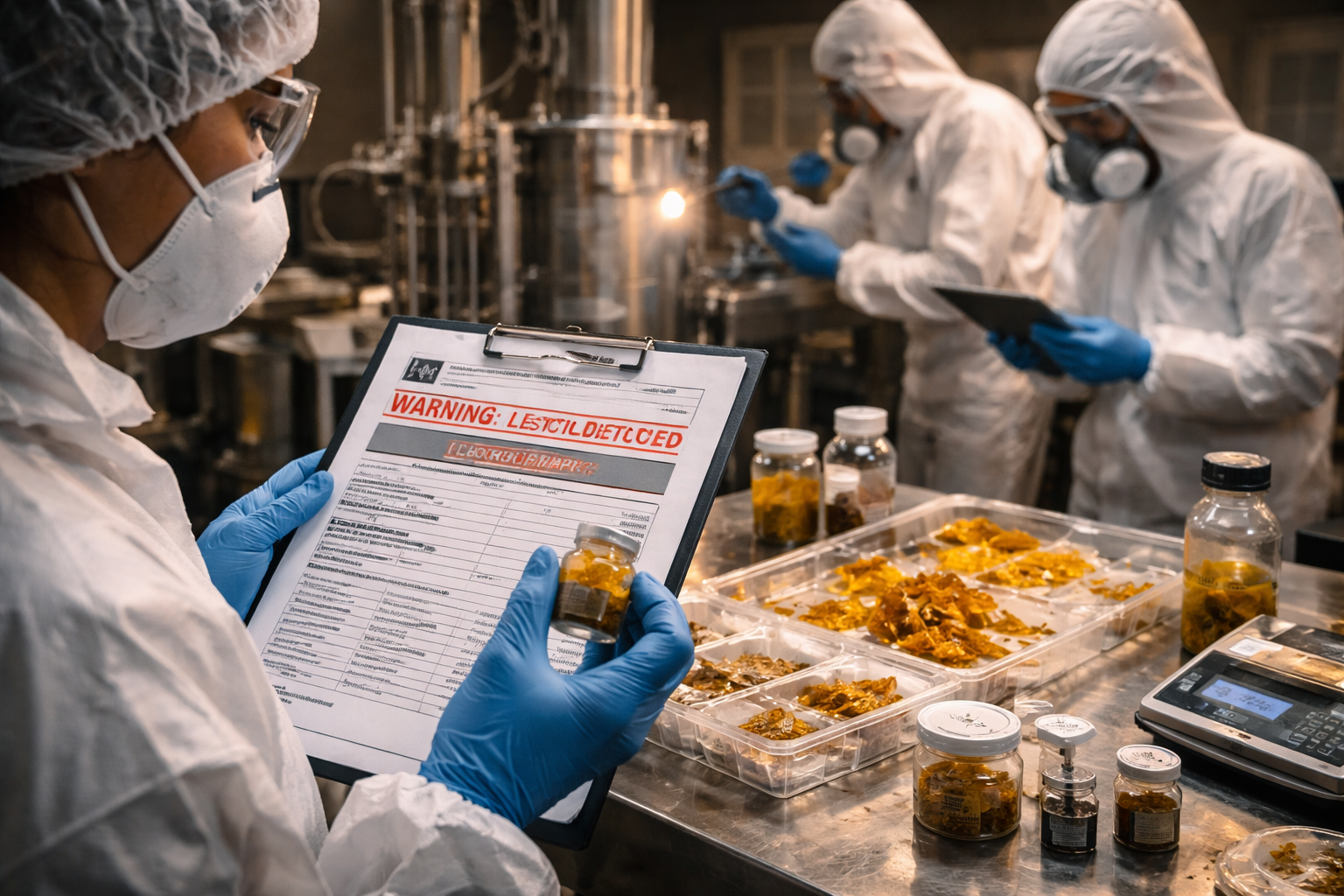
Cannabis concentrate containers and compliance paperwork during a pesticide retesting recall review in Colorado
Colorado cannabis recall risk is not just a cultivation problem. It is a wholesale and retail problem that can hit fast when a product passes initial compliance testing, then fails later after retesting. Colorado regulators issued a health and safety advisory tied to a cannabis concentrate batch from Timberline Extracts after retesting identified chlorfenapyr above state limits, prompting a voluntary recall that reached dozens of retail locations.
Quick facts
• Colorado regulators said a Timberline Extracts concentrate batch initially passed testing, then later testing found chlorfenapyr above limits
• The recall applied to one production batch and products sold at 32 dispensaries statewide
• Reported sales window: September 4, 2025 through March 10, 2026
• Consumers were told to destroy or return affected product and seek medical attention if they experienced adverse effects
If a recall like this would stress your operation, Start with our quick Cannashield intake form so you can pressure test your lab controls, documentation, and recall response plan.
Why This Recall Matters Even If You Never Touched That Batch
Recalls are a supply chain stress test. The moment a health advisory lands, the blast radius spreads beyond the original producer.
Retailers must pull product, answer customer questions, and document what they removed. Distributors and wholesalers must trace movement and confirm where product went. Producers and manufacturers must verify inputs, batch records, and lab results for anything even remotely similar.
This is why lab credibility equals operational risk. When testing outcomes change after a product already passed, everyone loses time and margin at the same moment.
Universal operator lesson: your ability to prove what you sold and where it went is the difference between a controlled response and chaos.
The Retesting Problem: Passing Once Does Not Mean Safe Forever
The key signal in this Colorado event is simple: the product reportedly passed compliance testing, then later testing found a banned pesticide above allowable limits.
That creates three realities operators need to accept.
First, postmarket monitoring is real. A passing result is not the end of oversight. Regulators can act when new information surfaces.
Second, your lab program must assume verification, not blind trust. If a batch fails later, you need a clear internal story for why you believed it was compliant when it shipped.
Third, liability and trust move faster than your paperwork. Customers will not separate one batch from your entire menu. They just hear recall.
Universal operator lesson: if your quality system cannot survive a retest event, it is not a quality system. It is a hope system.
If you want a simple lab oversight checklist that your manager can run weekly, Complete our Cannashield questionnaire and request the Lab Risk pack.
The Operator Playbook For The First 48 Hours
When an advisory hits, your job is speed with proof.
• Identify affected inventory by production batch number and any linked identifiers
• Quarantine immediately and restrict access so staff cannot accidentally sell it
• Pull movement history from your tracking and receiving records and reconcile it against what is on hand
• Start a recall log with dates, counts, storage location, and who handled the product
• Document disposition steps, including return coordination or disposal proof as required by your state rules
• Train staff on one factual script for customers and avoid speculation
Colorado reporting about this event says the affected products were sold at 32 dispensaries and that consumers were instructed to destroy or return product and report adverse events.
Universal operator lesson: recall readiness is not a binder on a shelf. It is a repeatable muscle.
Build A Lab Verification Program That Survives Scrutiny
If you operate in a state where pesticide enforcement is active, your lab program should be built like a control system, not a vendor relationship.
Vendor discipline
Use labs with clear escalation contacts and a documented retest pathway. Your team should know who answers the phone when something looks off.COA storage and batch discipline
Store COAs and batch records in one place with a naming standard that ties batch, date, and product type together. Retrieval should take minutes.Intake rules for concentrates
Concentrates are high impact because small amounts move far. You need clean inbound documentation and consistent records for every input.Pesticide use documentation at cultivation level
Colorado requires pesticide application documentation and safety data sheets for agricultural chemicals used or stored at cultivation facilities. Treat those records as part of your compliance stack, not optional paperwork.
If you want a copy and paste folder structure for COAs, batch records, and vendor documents, use the Cannashield intake form and request the Documentation Stack template.
Conclusion
Colorado’s health advisory and voluntary recall tied to chlorfenapyr is a reminder that compliance can change after product has already moved through the chain. The operators who stay standing are the ones who can trace product fast, quarantine without confusion, and prove their decisions with clean records when retesting shifts the story.
Educational note: This article is for education only and is not legal, medical, or compliance advice.
What To Do This Week
• Run a concentrate inventory audit and confirm every batch has a retrievable COA
• Create a quarantine and hold tag process for any recalled or embargoed product
• Standardize a recall log template and require it for every product hold event
• Review lab vendor escalation contacts and document retest procedures
• Confirm pesticide documentation and safety data sheets are current where applicable
• Run a mock recall drill and time your team’s trace and quarantine process
FAQ
What triggered this Colorado recall
State reporting says retesting found chlorfenapyr above allowable limits in a cannabis concentrate batch that initially passed testing.How many retail locations were impacted
Reporting described sales through 32 dispensaries statewide.Does a voluntary recall still require action by licensees
Yes. Even when a recall is voluntary, retailers and distributors still need to pull affected inventory, stop transfers, and document disposition.Why is retesting such a big operational risk
Because it can turn previously compliant inventory into recalled inventory, forcing rapid product pulls and customer communication.What should customers do if they think they bought affected product
Regulators advised destroying or returning it to the store and seeking medical attention for adverse effects.What is the simplest prevention step for operators
Build a traceable documentation stack so any batch can be verified quickly, including COAs, invoices, and movement records.