

Virginia Draft Cannabis Rules Set Market Shape

Virginia cannabis retail license and buildout planning.
Virginia is moving from adult use cannabis legalization into the harder work of designing the commercial market. The Virginia Cannabis Control Authority has released its first draft regulations for retail sales expected to begin July 1, 2027. The proposed framework includes a statewide cap of 350 retail stores, limits on the largest cultivation facilities, significant licensing fees for larger operators, and a lower cost microbusiness pathway. The rules remain preliminary, but they give operators their clearest picture yet of how competition, capital, cultivation capacity, and market access may be structured.
Quick facts
• Virginia adult use cannabis retail sales are scheduled to begin July 1, 2027
• The market is capped at 350 licensed retail stores
• The largest cultivation tier would allow up to 35,000 square feet of cannabis canopy
• Only five licenses would be available in that largest cultivation tier
• Draft retailer licensing fees are $40,000
• Draft cultivation licensing fees range from $20,000 to $50,000 depending on facility size
• Proposed microbusiness licensing fees are $2,500
• Microbusinesses would allow smaller vertically integrated cannabis operations
• Virginia also plans licenses for processors, testing laboratories, transporters, delivery operators, and other market participants
• Some application processes must open by February 1, 2027
• The Cannabis Control Authority must issue certain initial licenses by May 1, 2027
• Regulators have emphasized that the draft rules can still change before final adoption
• The universal operator lesson is simple: early market entry depends as much on capital, property, licensing strategy, and execution as it does on consumer demand
If Virginia market entry is part of your growth plan, complete our quick Puro Risk intake form so you can map licensing, property, construction, capital, compliance, and insurance exposure before application deadlines create unnecessary pressure.
Why the 350 store cap matters
Virginia will not be an unlimited retail market.
A cap of 350 stores means retail access itself can become a scarce asset. That can increase competition during licensing and make location strategy more important.
Operators should avoid thinking only about whether a city or region has enough consumer demand.
They also need to evaluate zoning, property availability, nearby competition, lease economics, local approvals, traffic patterns, and how much capital will be tied up before revenue begins.
A limited license can have strategic value, but only if the underlying store can operate profitably.
Why cultivation limits could shape supply
Virginia's cultivation framework also creates different economic tiers.
The largest proposed cultivation category permits up to 35,000 square feet of canopy, but only five of those licenses would be available.
Smaller cultivation facilities would operate under lower tiers with different fees and production limits.
That structure could prevent unlimited large scale cultivation capacity from entering the market immediately.
It could also make production rights valuable while creating pressure around yield, operating efficiency, wholesale pricing, and supply agreements.
If cultivation is part of your Virginia strategy, use the Puro Risk intake form to organize facility assumptions, property, equipment, production costs, insurance, and capital before committing to a specific license tier.
Why licensing fees change entry strategy
The proposed fees create a meaningful gap between full scale operators and microbusinesses.
A retail license would carry a proposed $40,000 licensing fee. Cultivation licenses would range from $20,000 to $50,000 depending on scale.
Microbusiness licensing would cost $2,500.
That lower fee can improve access for smaller operators, but it does not eliminate startup costs.
Property, buildout, security, equipment, employees, professional services, inventory, insurance, and working capital can still require significant funding.
Why microbusinesses deserve attention
Microbusinesses could become one of the more important pathways into Virginia's market.
The model is intended to support smaller vertically integrated operations rather than requiring entrepreneurs to build large standalone cultivation, manufacturing, or retail businesses.
For smaller operators, vertical integration can create more control over margins and product supply.
It also creates more operational responsibilities.
A business handling several parts of the supply chain needs strong procedures across cultivation, processing, inventory, retail, security, product compliance, and accounting.
If a microbusiness is your preferred entry route, complete the Puro Risk intake form to identify which activities, property needs, licenses, contracts, and insurance policies need to work together before opening.
Conclusion
Virginia's draft regulations make the state's adult use market much more tangible.
Retail access will be limited. Large cultivation licenses will be scarce. Full scale operators will face meaningful licensing costs, while microbusinesses may receive a lower cost pathway into the market.
The rules are still drafts and can change before final adoption.
The universal operator lesson is straightforward. Operators should use the draft period to prepare rather than speculate.
The businesses that understand property, licensing, capital, operations, insurance, and compliance before applications open will be better positioned when Virginia begins awarding licenses.
Educational note: This article is for education only and is not legal, regulatory, tax, financial, investment, licensing, real estate, construction, or insurance advice.
What to do this week
• Decide which Virginia license type fits your capital and operating model
• Map potential properties before application demand increases
• Compare full scale license costs with the microbusiness pathway
• Build a realistic startup budget beyond licensing fees
• Track changes between the draft and final regulations
• Prepare ownership, funding, property, compliance, and insurance records before applications open
FAQ
When will Virginia adult use cannabis sales begin?
Virginia plans to begin regulated adult use cannabis retail sales on July 1, 2027.
How many cannabis retail stores will Virginia allow?
The market is capped at 350 licensed retail stores.
How many large cultivation licenses will be available?
The largest cultivation tier is limited to five licenses and allows up to 35,000 square feet of cannabis canopy.
How much will a retail license cost?
The current draft proposes a $40,000 licensing fee for retail stores.
How much would a microbusiness license cost?
The draft proposes a $2,500 microbusiness licensing fee.
What is the biggest operator takeaway?
Virginia will be a structured limited access market. Operators should solve license strategy, property, capital, compliance, and operating economics before application windows open.
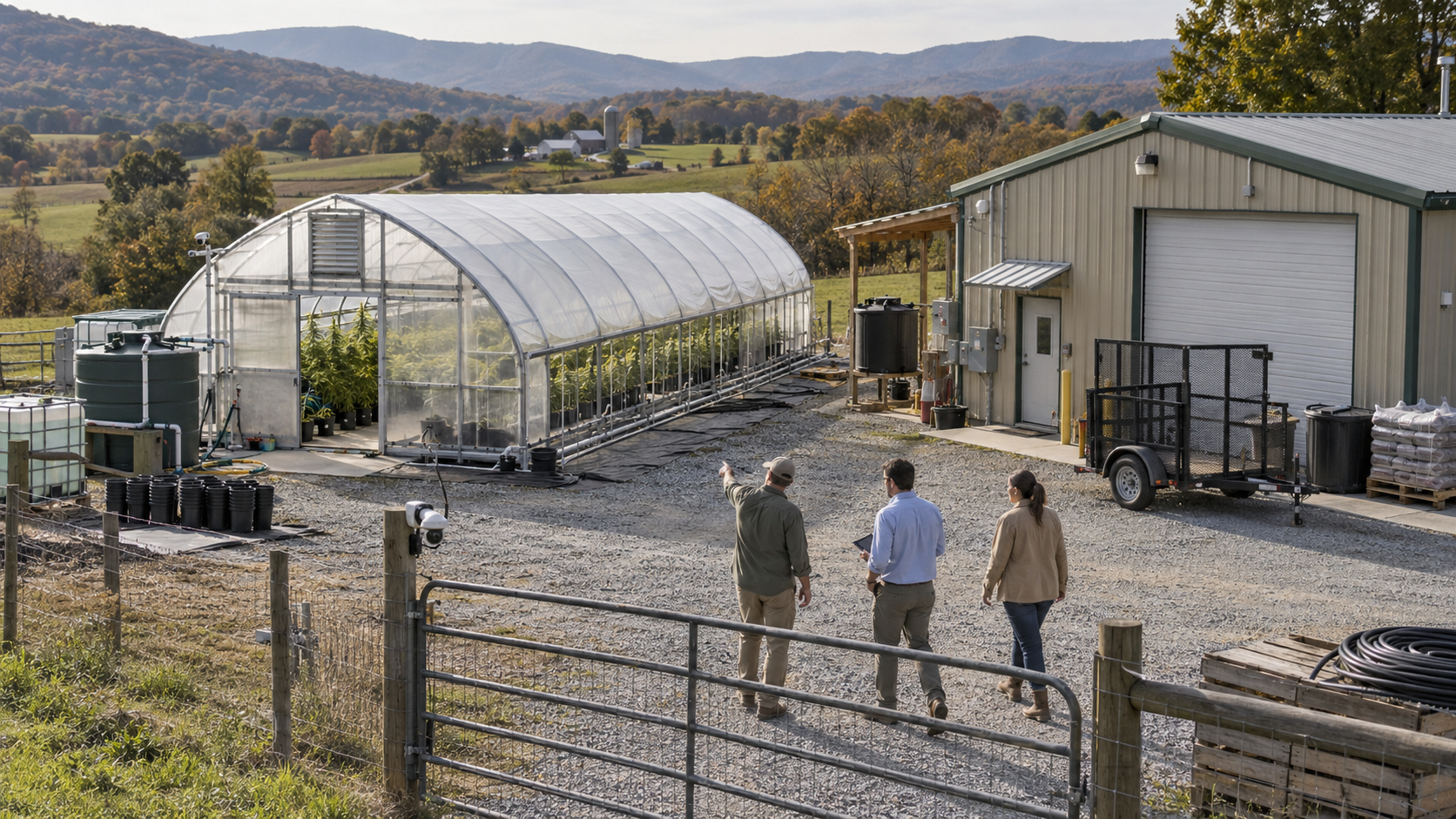
Virginia cannabis cultivation license planning.
You might also like

SOURCES
Ganjapreneur, Virginia Releases Draft Rules for Adult Use Cannabis Market, September 16, 2026
https://ganjapreneur.com/virginia-releases-draft-rules-for-adult-use-cannabis-market/
The report summarizes the 350 store cap, five license limit for the largest cultivation tier, proposed licensing fees, microbusiness structure, and July 1, 2027 sales launch.
Virginia Cannabis Control Authority, Retail Marijuana Market
https://cca.virginia.gov/retailmarijuanamarket
The Cannabis Control Authority confirms the implementation timeline, available license categories, expected January 2027 regulations, application milestones, and July 1, 2027 retail launch.
Virginia Cannabis Control Authority, Board of Directors, September 9, 2026
The Board's September meeting materials include the initial Draft Retail Marijuana Market Regulations and confirm that the regulatory process is still underway.

Virginia has released draft adult use cannabis rules featuring a 350 store cap, limited large scale cultivation licenses, significant full scale licensing fees, and a lower cost microbusiness pathway. The draft gives operators their clearest look yet at how licensing, capital, property, cultivation, and market entry could work before sales begin in July 2027.