
Federal Hemp Restrictions Put Cannabis Genetics At Risk
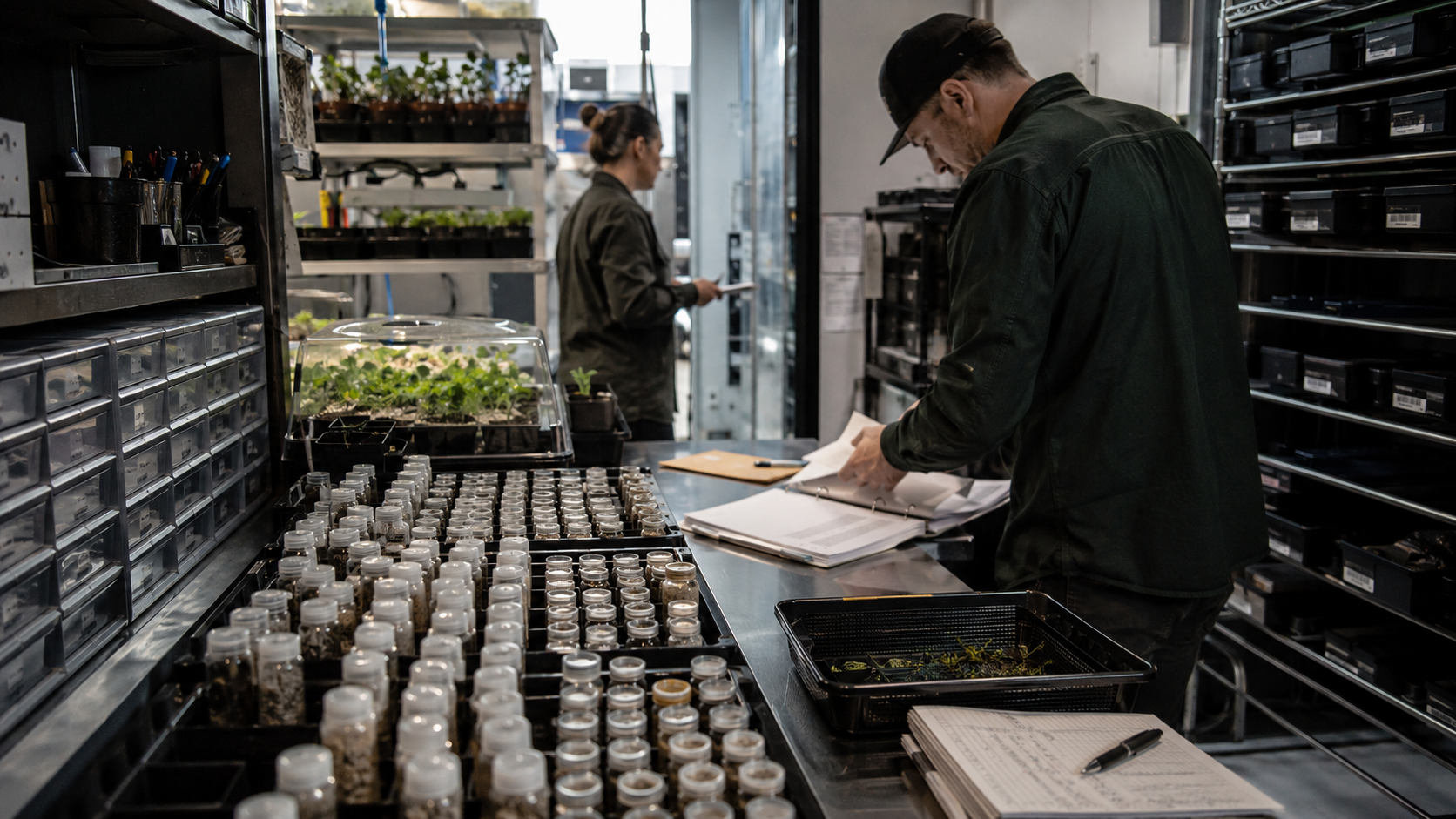
Cannabis seed bank workers reviewing genetics records
Cannabis seed banks, clone sellers, and genetics companies are facing a new compliance problem that reaches deeper than finished hemp products. MJBizDaily reports that new federal hemp restrictions taking effect November 12, 2026 could disrupt interstate commerce for many cannabis seeds and genetics. The issue is tied to a revised hemp definition that excludes viable seeds from cannabis plants exceeding 0.3 percent total THC, including THCA, on a dry weight basis. For cultivators, manufacturers, retailers, investors, and compliance teams, this is not just a seed bank story. It is a supply chain, breeding, strain preservation, and long term cultivation strategy issue.
Quick facts
• New federal hemp restrictions take effect November 12, 2026
• The revised hemp definition excludes viable seeds from cannabis plants exceeding 0.3 percent total THC, including THCA, on a dry weight basis
• MJBizDaily reports that most cannabis seeds and genetics may become illegal to ship across state lines
• Seed banks and breeders are reviewing how to preserve strain libraries and continue serving state legal markets
• Some genetics companies are diversifying into state specific operations, clones, tissue culture, branding, preservation, and intellectual property protection
• Cultivators may face fewer genetics options if interstate seed access narrows
• Banks and investors may ask harder questions about whether genetics revenue is lawful after the deadline
• The universal operator lesson is simple: genetics are not just inputs, they are the foundation of cultivation, product consistency, and future market differentiation
If federal hemp restrictions are affecting your cultivation or genetics strategy, complete our quick Cannashield intake form so you can map seed, clone, supply chain, compliance, and insurance exposure before the November deadline creates a larger operational problem.
Why this genetics issue matters
Most conversations around the federal hemp restriction have focused on intoxicating hemp products, beverages, delta 8, THCA flower, gummies, and vapes. That makes sense because those categories are visible at retail. But the genetics issue may be just as serious for licensed cannabis operators.
Seeds, clones, and tissue culture are how cultivators preserve strain libraries, refresh production, develop new products, stabilize supply, and differentiate brands. If interstate seed movement becomes restricted, cultivators may lose access to the same range of genetics they use today. That could affect product variety, breeding programs, clone availability, research, and long term planning.
For seed banks, the threat is direct. MJBizDaily reports that businesses built around seed sales are now reviewing whether they need state specific operations, better documentation, or new business models to stay compliant.
Why the definition creates pressure
The revised hemp definition creates pressure because it looks at total THC, including THCA, and excludes viable seeds from cannabis plants that exceed the 0.3 percent total THC threshold. That changes the compliance story for seed businesses that relied on the old federal hemp framework.
Before this change, many seed companies treated cannabis seeds as federally lawful hemp if the seed itself contained little or no THC. The new language creates a different risk because the seed may be evaluated based on the plant it can produce or the plant it came from. That matters for genetics tied to high THC cannabis cultivars.
This is the universal operator lesson. Compliance is moving upstream from finished product into the genetics supply chain.
Why documentation now matters more
Seed banks and genetics companies need to get serious about records. That means inventory lists, breeder records, lineage documentation, certificates, seed lot information, cannabinoid data, terpene data, source records, customer records, and state channel documentation. If the business cannot explain where genetics came from, what they produce, and where they can legally move, the risk increases.
Cultivators should do the same. A grower that depends on out of state genetics needs to know which lines are exposed, which sources may shut down, which alternatives exist inside the state, and whether clone or tissue culture options can help reduce disruption. Waiting until November to review genetics supply is too late.
Banks and investors may also become more cautious. If a seed bank sells drug type genetics after the deadline, it may need to show a lawful state cannabis pathway rather than relying on the hemp definition.
Why cultivators should care now
Cultivators should care because genetics disruption can affect the whole production plan. A business may have cultivation rooms, staff, equipment, and retail demand, but if genetics access narrows, future menus can become less diverse. Breeding projects may slow. New strain development may become harder. Retailers may see fewer product options.
This also affects operators trying to prepare for compliant cultivation pathways. If federal or state rules shift, breeders and cultivators need genetics that can fit the new framework. That requires planning before the deadline, not after supply is already constrained.
If you need to organize genetics, breeder, supplier, and insurance records before federal rules tighten, use the Cannashield intake form to identify weak points and build a clearer cultivation strategy file.
Conclusion
The federal hemp restriction is no longer only a finished product problem. It now threatens the genetics layer that cultivators, seed banks, breeders, and retailers rely on to keep the legal market diverse and competitive. Seeds, clones, tissue culture, breeder records, and strain libraries are becoming compliance issues.
For operators, cultivators, manufacturers, investors, and compliance teams, the message is simple. Review genetics now. The November 12 deadline could reshape seed sales, clone distribution, breeding programs, supply planning, and long term cultivation strategy across state legal markets.
Educational note: This article is for education only and is not legal, regulatory, tax, financial, cultivation, intellectual property, product safety, or insurance advice.
What to do this week
• Inventory all seed lines, clone sources, breeder records, and genetics suppliers
• Identify which genetics are tied to plants that exceed 0.3 percent total THC, including THCA
• Review whether interstate seed purchases or shipments are part of your current supply plan
• Build state specific backup options for seeds, clones, and tissue culture
• Organize lineage, cannabinoid, terpene, and chain of custody records before November
• Build a short internal memo on genetics exposure, supply disruption, and compliant cultivation pathways
FAQ
Why does the federal hemp restriction affect cannabis seeds?
The revised hemp definition excludes viable seeds from cannabis plants that exceed 0.3 percent total THC, including THCA, on a dry weight basis.
When does the new federal hemp restriction take effect?
The effective date is November 12, 2026.
Why are seed banks at risk?
Many seed banks rely on interstate sales, and MJBizDaily reports that seeds tied to high THC cannabis cultivars may no longer be lawful to ship across state lines after the deadline.
Do clones and tissue culture face the same issue?
MJBizDaily reported that some businesses are exploring clones and tissue culture because those may have a different risk profile than seeds under the new language, but operators still need legal review.
Why should cultivators care?
Cultivators depend on genetics for product quality, menu variety, breeding, consistency, and long term cultivation planning.
What is the biggest operator takeaway?
Genetics are becoming a compliance issue, so operators need better records, supplier review, backup sourcing, and state specific planning before November.
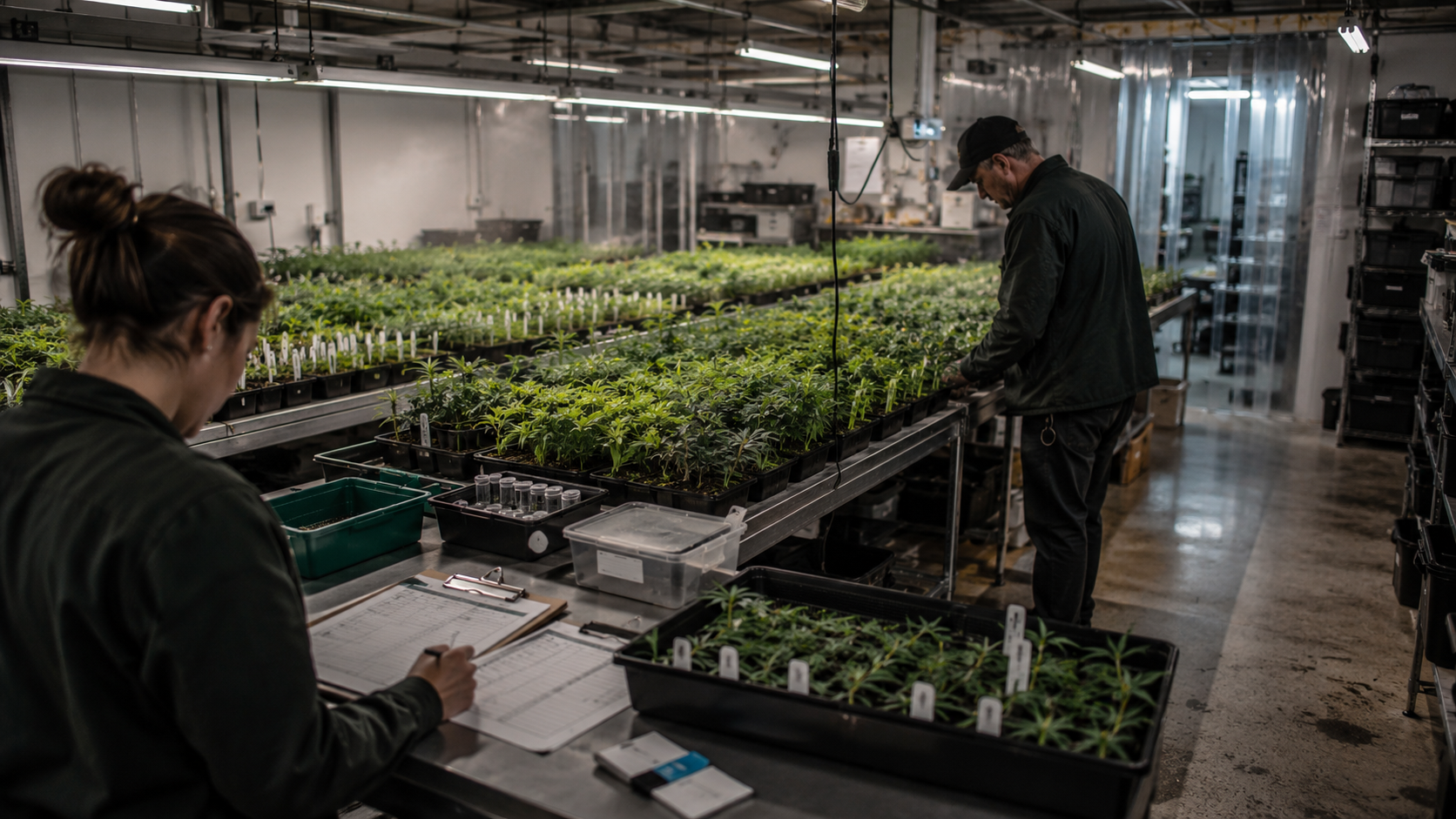
Cannabis workers reviewing clone and genetics compliance
You might also like


SOURCES
MJBizDaily, Why the federal hemp ban threatens cannabis seed banks and your favorite genetics
https://mjbizdaily.com/news/why-the-federal-hemp-ban-threatens-cannabis-seed-banks-and-your-favorite-genetics/617027/
Congressional Research Service, Changes to the Statutory Definition of Hemp and Issues for Congress
https://www.congress.gov/crs-product/IF13136
Congressional Research Service, Changes to the Federal Definition of Hemp: Legal Considerations Under the Controlled Substances Act
https://www.congress.gov/crs-product/LSB11381

Trulieve and Cronos have each gained roughly 27 percent in 2026 while reporting stronger operating results. The broader signal is that public market attention is increasingly rewarding cash generation, improving margins, liquidity, and measurable revenue growth.