
Pre Hire Cannabis Testing Is Losing Ground
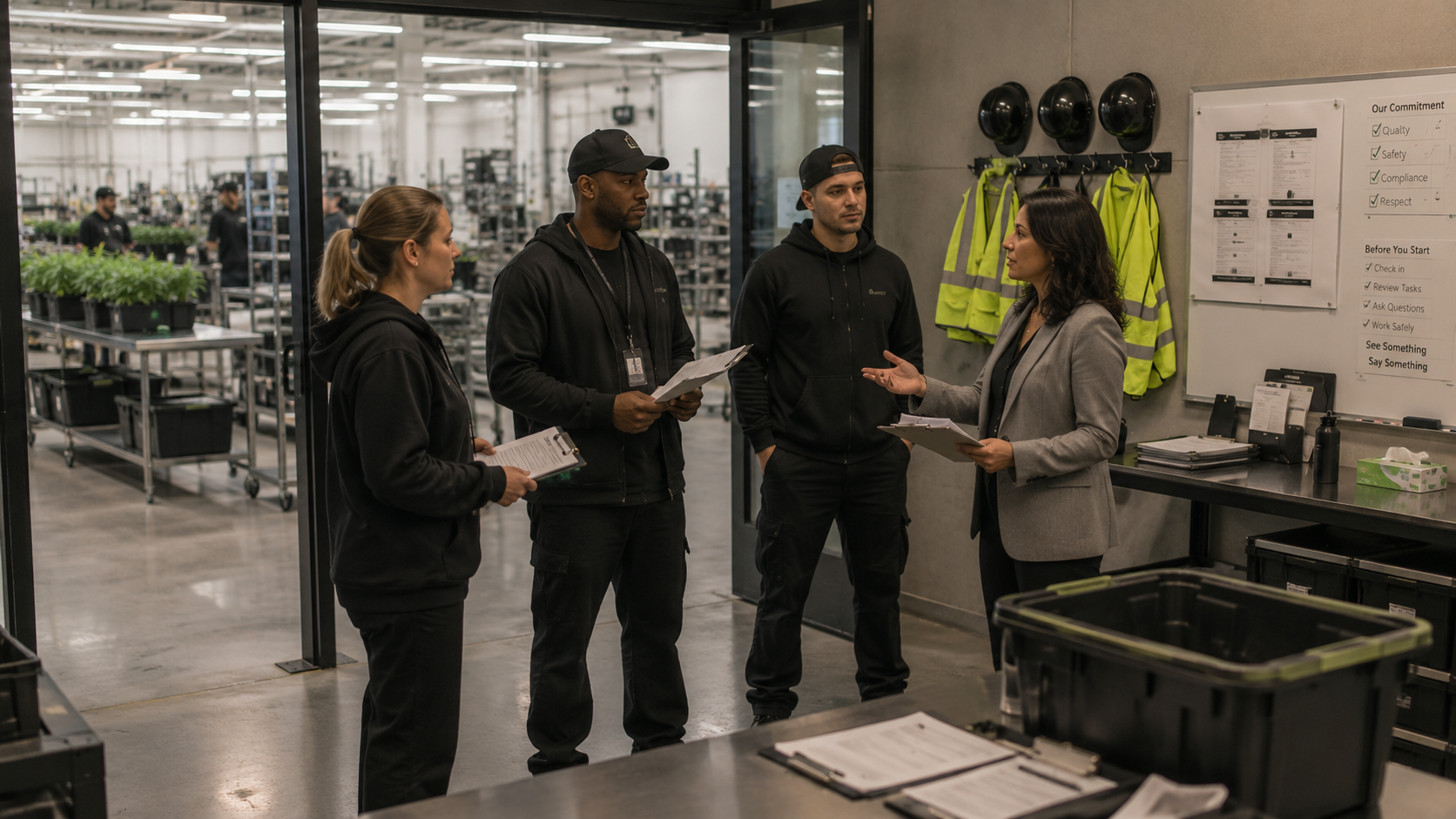
Employees receiving a workplace cannabis safety briefing
Employment cannabis testing is moving into a new phase. NORML reported that nearly half of employers no longer screen job applicants for cannabis exposure before hiring. The story reflects a broader workplace shift where employers are moving away from pre hire testing policies that detect past cannabis use rather than active impairment. For operators, employers, compliance teams, HR teams, workers, and consumers, this is a practical signal. Hiring policies are starting to catch up with legalization, labor shortages, state employment protections, and the limits of urine based testing.
Quick facts
• NORML reported that nearly half of employers no longer screen pre hire applicants for cannabis
• The underlying Fisher Phillips survey found that 48 percent of employers do not test for cannabis during the pre hire process
• The survey included 989 employer responses
• 12 percent of employers test for cannabis only for some jobs, such as safety sensitive roles or legally required roles
• 40 percent of employers still test all applicants for cannabis at the pre hire stage
• 44 percent of employers that test for cannabis reported recruiting challenges tied to that policy
• 22 percent of employers that test applicants for cannabis said they are considering softening their policy
• NORML noted that urine screens detect inactive metabolites, not active impairment
• The universal operator lesson is simple: cannabis hiring policy is moving from past use detection toward impairment based workforce management
If cannabis testing policy is affecting hiring, safety, or compliance, complete our quick Cannashield intake form so you can map HR, workplace, and insurance exposure before outdated rules create legal or staffing risk.
Why this workplace shift matters
This shift matters because pre hire cannabis testing has become less useful in many workplaces. In states where medical or adult use cannabis is legal, a positive cannabis test may say more about off duty conduct than job readiness. That creates a problem for employers that need qualified applicants but are still using policies built for an older legal environment.
The recruiting issue is real. Fisher Phillips found that 44 percent of employers that continue pre hire cannabis testing have faced difficulty recruiting qualified candidates because of the policy. That is one reason employers are reconsidering the practice. If a test screens out otherwise qualified workers without showing current impairment, the business may be hurting its own hiring pipeline.
This does not mean every employer should drop testing. Safety sensitive roles, federal contracts, transportation rules, healthcare settings, construction, and regulated positions may still require stricter policies. The point is that employers need role specific rules, not one outdated blanket policy.
Why urine testing is the problem
Cannabis testing is different from alcohol testing. A urine screen can detect cannabis metabolites long after the intoxicating effects have worn off. NORML notes that these tests identify past exposure rather than the active psychoactive substance itself. That means an applicant can test positive even if they are not impaired during the interview, onboarding, or workday.
That distinction matters for employers. A policy designed to detect past use may not meaningfully improve workplace safety. It may only identify lawful off duty conduct. As more states protect off duty medical or adult use activity, that becomes a bigger legal and HR problem.
This is the universal operator lesson. Workplace safety programs should focus on impairment, fitness for duty, and job risk, not only old test results.
Why safety sensitive roles still need careful rules
The move away from pre hire cannabis testing does not erase employer responsibility for safety. Some jobs require special attention because impairment could create serious harm. Drivers, equipment operators, emergency responders, healthcare workers, construction crews, manufacturing staff, and employees under federal testing rules may need stricter controls.
The difference is policy design. Employers should separate safety sensitive roles from lower risk roles. They should also separate pre hire testing from reasonable suspicion testing, post incident testing, random testing where lawful, and fitness for duty procedures. A clean policy explains when testing applies, why it applies, who is covered, how impairment is evaluated, and what happens after a result.
That clarity protects workers and employers. It also helps managers avoid inconsistent decisions.
Why operators and HR teams should update policies now
Cannabis operators are not the only businesses affected. Any employer with workers in states where cannabis is legal should review hiring standards, employee handbooks, job descriptions, and drug testing vendors. Multistate employers need extra care because employment protections vary by state.
The Fisher Phillips survey also showed regional differences. Employers in New England and Pacific states were less likely to test pre hire applicants for cannabis, while employers in parts of the South were more likely to keep testing. That kind of variation creates compliance risk for companies using one national hiring policy across many states.
If you need to organize workplace policies, drug testing rules, safety procedures, and insurance records before changing your hiring approach, use the Cannashield intake form to identify weak points and build a cleaner compliance file.
Conclusion
The decline in pre hire cannabis testing is a major workplace signal. Employers are recognizing that old testing policies can shrink applicant pools, detect past lawful conduct, and fail to measure actual impairment. At the same time, safety sensitive workplaces still need serious rules.
For operators, HR teams, compliance officers, employers, and workers, the message is simple. Cannabis policy is becoming a workforce policy issue. The best approach is not no rules. It is better rules. Employers need hiring standards that reflect state law, role risk, workplace safety, impairment procedures, and modern labor realities.
Educational note: This article is for education only and is not legal, employment, HR, labor, workplace safety, medical, financial, or insurance advice. Employers should consult qualified counsel before changing hiring or drug testing policies.
What to do this week
• Review whether your pre hire cannabis testing policy still matches state law and business needs
• Separate safety sensitive roles from lower risk roles before changing testing rules
• Update job descriptions, offer letters, handbooks, and drug testing notices
• Train managers on reasonable suspicion, impairment signs, and documentation
• Review vendor testing panels and confirm whether cannabis is included
• Build a short internal memo on hiring risk, workplace safety, testing limits, and compliance updates
FAQ
What did NORML report?
NORML reported that nearly half of employers no longer screen job applicants for cannabis exposure before hiring.
What did the Fisher Phillips survey find?
The survey found that 48 percent of employers do not test for cannabis during the pre hire process.
Why are employers dropping pre hire cannabis testing?
Many employers are responding to legalization, hiring challenges, state law changes, and the fact that many tests detect past use rather than current impairment.
Does this mean employers cannot test for cannabis?
No. Employers may still test in many situations, especially for safety sensitive roles, federally regulated jobs, or roles where testing is legally required.
Why is urine testing controversial?
Urine testing can detect inactive cannabis metabolites long after impairment has ended, so it may not show whether someone is unsafe at work.
What is the biggest operator takeaway?
Employers need updated policies that focus on role risk, state law, reasonable suspicion, fitness for duty, and actual impairment rather than blanket pre hire cannabis screening.

HR leaders reviewing cannabis hiring and impairment policies
You might also like


SOURCES
NORML, Report: Nearly Half of Employers No Longer Screen Pre Hires for Cannabis
https://norml.org/blog/2026/07/20/report-nearly-half-of-employers-no-longer-screen-pre-hires-for-cannabis/
Fisher Phillips, FP Flash Survey Reveals Half of Employers Don’t Test Applicants for Cannabis
https://www.fisherphillips.com/en/insights/insights/fp-flash-survey-reveals-half-dont-test-applicants-for-cannabis
Quest Diagnostics, 2026 Drug Testing Index workplace testing release
https://ir.questdiagnostics.com/press-releases/press-release-details/2026/One-in-Five-American-Workers-Tested-Had-a-Positive-Hair-Drug-Test-in-2025-Signaling-Persistent-Long-Term-Substance-Use-Patterns/default.aspx

Trulieve and Cronos have each gained roughly 27 percent in 2026 while reporting stronger operating results. The broader signal is that public market attention is increasingly rewarding cash generation, improving margins, liquidity, and measurable revenue growth.