
Fluent’s New York Closure Shows Growth Does Not Always Mean Profitability
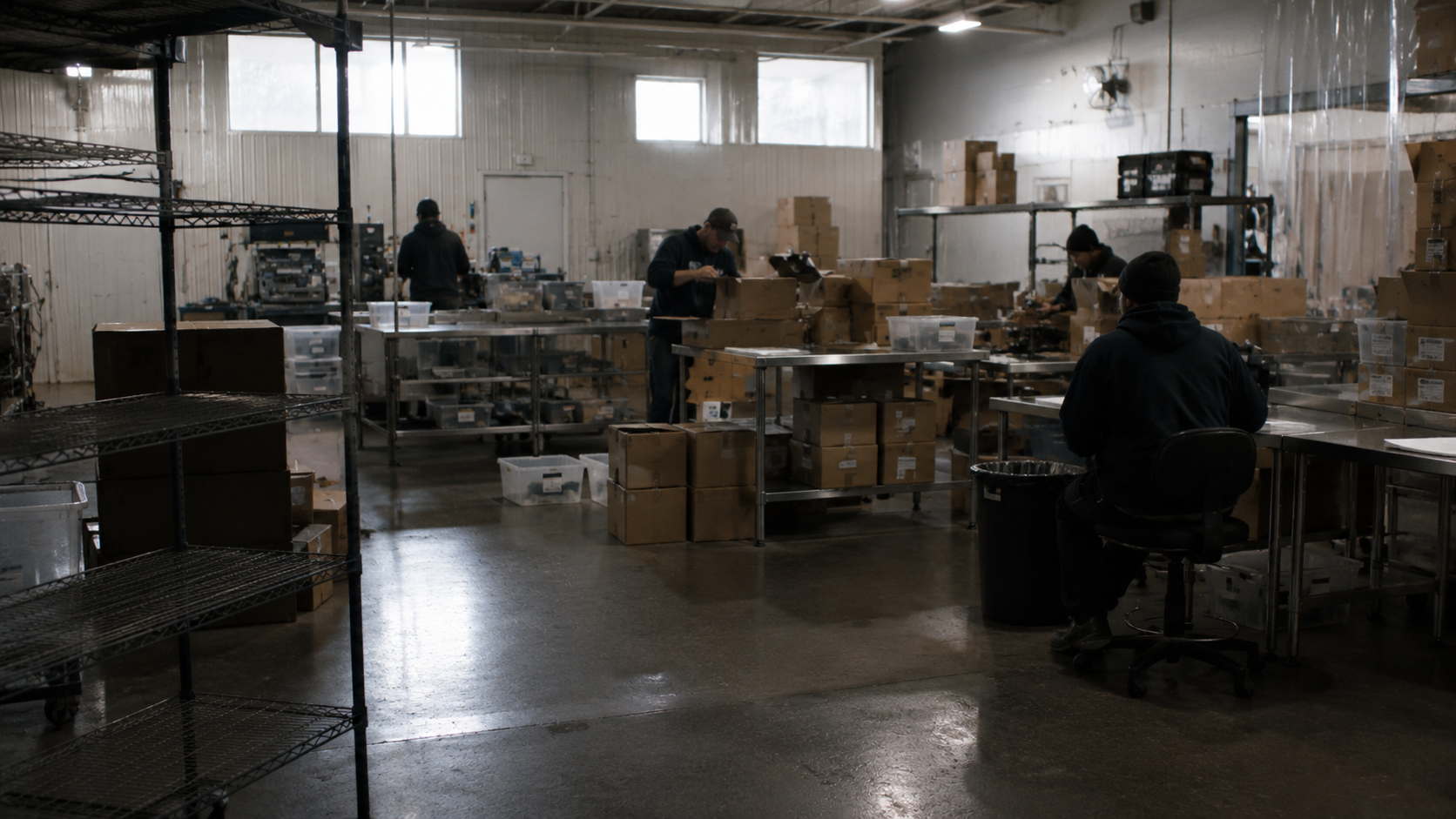
Workers in a scaled back New York cannabis warehouse during consolidation and cost cutting.
New York cannabis is still growing on paper, but operators are already cutting costs behind the scenes. MJBizDaily reports that Etain, owned by Fluent, will close its cannabis cultivation and packaging facility in Chestertown on August 3, with 37 workers losing their jobs. The closure comes ahead of Vireo Growth’s planned all stock acquisition of Fluent, and it sends a clear message to operators, investors, landlords, lenders, and compliance teams. Expansion does not always mean profitability.
Quick facts
• Etain will close its Chestertown cultivation and packaging facility on August 3
• The closure affects 37 workers
• The official WARN notice reportedly lists the reason as economic
• Etain became part of Fluent after Fluent acquired RIV Capital in December 2024
• Vireo Growth announced plans to acquire Fluent on April 30
• Fluent has been looking to streamline operations, sell noncore assets, cut costs, and improve cash flow
• The universal operator lesson is simple: market growth does not protect a weak cost structure
If New York market pressure is affecting your growth plan, Start with our quick Cannashield intake form so you can map operational, property, and insurance exposure before cost pressure forces harder decisions.
What the closure signals right now
The important part of this story is not just one facility closing. It is the timing. Fluent is preparing for a pending acquisition by Vireo Growth, and the company has already been talking about streamlining operations, selling noncore assets, cutting costs, and improving cash flow.
That tells you where the market is. Operators are not just chasing licenses and retail growth anymore. They are looking at what assets actually make sense, what facilities are too expensive to keep open, and where cash is being trapped.
New York may still be adding stores and growing legal sales, but that does not mean every cultivation or packaging asset is safe. A market can expand at the retail level while operators upstream still face margin pressure, operational overlap, facility costs, and investor pressure to clean up the business.
Why growth on paper can be misleading
Cannabis operators love to talk about new stores, more sales, bigger markets, and future upside. That sounds good in a pitch deck, but the actual business lives in the details. Rent, payroll, utilities, labor, taxes, packaging, compliance, security, repairs, insurance, wholesale pricing, and cash flow decide whether growth is real or just expensive movement.
That is the lesson from this Fluent and Etain story. A company can own retail stores, wholesale channels, cultivation sites, and recognized market assets and still decide that parts of the operation need to be cut. That does not mean the market is dead. It means the market is getting more selective.
For cultivators and manufacturers, the warning is direct. Being in a growing state does not automatically protect your facility. If the numbers do not work, the facility becomes a target for closure, sale, or consolidation.
If uncertainty around facility costs, staffing, or production planning is affecting how you operate, Complete our quick Cannashield intake form to pressure test where your exposure may already be building.
Why investors, landlords, and lenders should pay attention
This story matters to more than operators. Landlords should pay attention because a cannabis tenant with a license and public company connection is not automatically stable. Lenders should pay attention because cost cutting can change collateral value, lease assumptions, and repayment plans. Investors should pay attention because expansion headlines can hide the operational cleanup happening underneath.
When a facility closes, the impact spreads. Workers lose jobs. Vendors lose orders. Landlords may lose tenant stability. Lenders may need to reassess risk. Operators may need to transfer production, wind down inventory, or manage compliance obligations tied to shutdown.
This is why cannabis due diligence has to look past market size. A state can be attractive and still contain struggling assets.
The operator lesson
The temptation is to treat this as one company trimming one facility before a deal closes. The smarter read is that consolidation pressure is forcing operators to prove which assets deserve to stay open.
That is the new cannabis market reality. If a facility is not helping cash flow, not strengthening market position, or not supporting a clear strategy, it may become expendable. That is especially true when an acquisition is pending and the buyer wants a cleaner operating structure.
If you need to organize your property, staffing, compliance, and insurance records before a facility decision or renewal conversation, Complete our quick Cannashield intake form to identify weak points and build a clearer risk picture.
You might also like


Conclusion
Fluent’s decision to close Etain’s Chestertown facility is a reminder that cannabis growth and cannabis profitability are not the same thing. New York may still be expanding, but operators are already being forced to make hard decisions behind the scenes.
For cannabis businesses, the lesson is simple. Do not let market optimism hide operational weakness. Know your costs, know your margins, know which assets carry the business, and know which ones could become a liability when the market tightens.
Educational note: This article is for education only and is not legal, regulatory, financial, employment, or insurance advice.
What To Do This Week
• Review which facilities are profitable and which are only staying open because of future expectations
• Track payroll, rent, utilities, insurance, taxes, and production costs by location
• Identify whether any asset depends on a pending deal, capital raise, or market expansion to make sense
• Review lease obligations, worker notice requirements, and shutdown procedures
• Organize property, equipment, inventory, and insurance records in one place
• Build a short internal plan for cost cutting, consolidation, or asset sale scenarios
FAQ
What happened in New York?
Etain, owned by Fluent, will close its Chestertown cannabis cultivation and packaging facility on August 3.
How many workers are affected?
The closure affects 37 workers.
Why is the facility closing?
MJBizDaily reports that the WARN notice listed the reason as economic.
How does this connect to Vireo?
Vireo Growth announced plans to acquire Fluent in an all stock transaction, and Fluent has been looking to streamline operations and improve cash flow.
Does this mean New York cannabis is failing?
No. It means growth does not protect every operator or facility from cost pressure, consolidation, and margin discipline.
What is the biggest operator takeaway?
A growing market does not guarantee a profitable operation. Facility costs and cash flow need constant review.
SOURCES
MJBizDaily, Fluent trims New York cannabis operations ahead of Vireo deal
https://mjbizdaily.com/news/fluent-trims-new-york-cannabis-operations-ahead-of-vireo-deal/615982/
Vireo Growth, Vireo Growth to Acquire FLUENT in All Stock Transaction
https://investors.vireogrowth.com/news/news-details/2026/Vireo-Growth-to-Acquire-FLUENT-in-All-Stock-Transaction/default.aspx
New York Office of Cannabis Management, New York State Cannabis Control Board approves new adult use licenses as market continues to scale statewide
https://cannabis.ny.gov/may2026ccbrelease

Trulieve and Cronos have each gained roughly 27 percent in 2026 while reporting stronger operating results. The broader signal is that public market attention is increasingly rewarding cash generation, improving margins, liquidity, and measurable revenue growth.