
Georgia Medical Cannabis Expansion Creates A More Serious Limited License Market
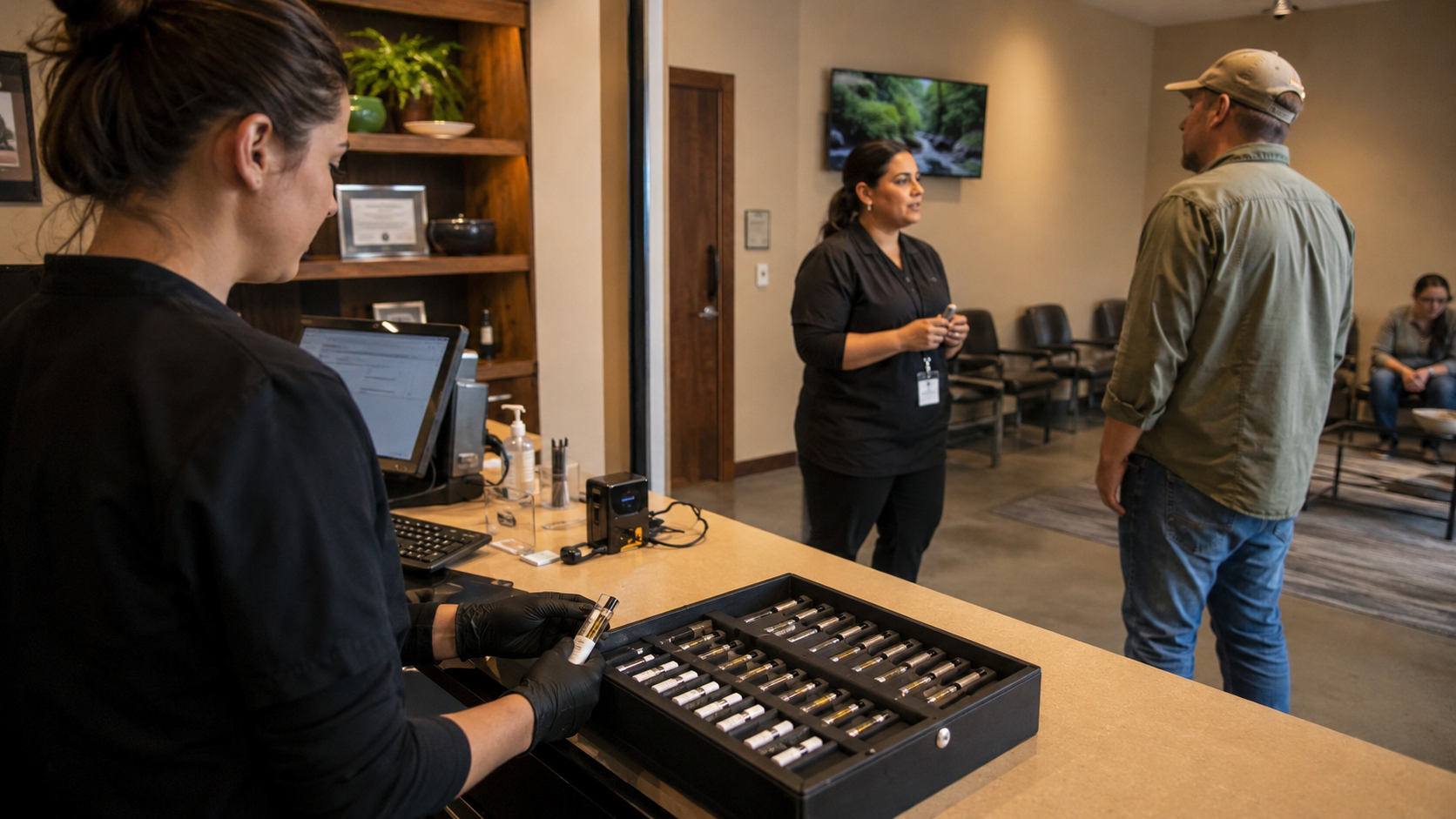
Dispensary staff handling vape cartridges in Georgia’s limited license medical cannabis market.
Georgia medical cannabis market expansion is no longer just a patient access story. Cannabis Business Times reports that Gov. Brian Kemp signed Senate Bill 220, expanding Georgia’s medical cannabis program by allowing vaping, adding qualifying conditions, and replacing the former 5 percent THC cap with a 12,000 milligram THC possession limit. For operators, manufacturers, retailers, investors, compliance teams, and lenders, the bigger signal is clear. Georgia is creating a more serious medical market without opening the floodgates.
Quick facts
• Gov. Brian Kemp signed Senate Bill 220 into law on May 12
• The bill allows medical cannabis vaping for patients 21 years and older
• Public vaping remains prohibited
• Smokable flower and pre rolls remain prohibited
• The former 5 percent THC cap is replaced with a 12,000 milligram THC possession limit
• The bill adds qualifying conditions and removes some restrictive condition language
• Georgia remains a limited license market with two large production licensees and four smaller production licensees
• The universal operator lesson is simple: even modest medical expansion can create major positioning pressure in a tightly controlled market
If Georgia market changes are affecting your growth plan, Start with our quick Cannashield intake form so you can map licensing, product, and insurance exposure before patient demand shifts.
What Georgia changed
Senate Bill 220 moves Georgia away from one of the most restrictive medical cannabis structures in the country. The state’s previous program was built around low THC oil, with tight limits on product format and potency. The new law broadens the framework by allowing alternative medical cannabis formats, including vaporization for patients who are at least 21 years old.
That matters because product format can change patient behavior. A patient who did not find oil, capsules, lotions, or patches useful may respond differently when another delivery method becomes legal. That does not mean Georgia is becoming a wide open cannabis market. It means the state is giving its medical program more practical room to work.
Why the THC limit matters
Replacing the 5 percent THC cap with a 12,000 milligram possession limit is a major structural change. The old cap focused on product concentration. The new framework gives the market more flexibility across medical cannabis product types while still keeping possession controlled.
For operators, this changes the product planning conversation. Manufacturers need to review formulation. Retailers need to understand patient education and inventory mix. Compliance teams need to watch packaging, labeling, dosage language, and how product categories are defined under final rules and guidance.
This is the universal operator lesson. When a state modernizes THC rules without fully opening the market, operators need to plan carefully. The opportunity grows, but so does the need for product discipline.
If uncertainty around THC limits, vapor products, or packaging rules is affecting how you plan or negotiate, Complete our quick Cannashield intake form to pressure test your exposure before the market becomes more competitive.
Why qualifying conditions matter for demand
The bill also expands patient access by adding conditions such as lupus, severe arthritis, and severe insomnia. It also removes certain restrictive language from other qualifying conditions. That could increase patient participation, especially in a state where the program has historically grown slowly.
For investors and lenders, this matters because patient count is one of the clearest demand signals in a medical only market. More qualifying conditions can mean more potential patients, more retail visits, more product demand, and more pressure on operators to maintain reliable inventory.
But there is a catch. Access growth does not automatically mean easy profit. A limited license market still rewards the operators who can execute inside tight rules. Patient demand may rise, but the businesses that benefit most will be the ones that stay compliant, educate carefully, and manage supply without overextending.
The limited license lesson
Georgia remains a controlled market. Cannabis Business Times reports that the state is still controlled by two large production licensees and four smaller production licensees, with 18 dispensaries operating in the state. The Georgia Access to Medical Cannabis Commission license verification page also shows the active production structure, including two Class 1 production licenses and four Class 2 production licenses.
That is the real business story. Georgia is becoming more meaningful, but access remains limited. In that kind of market, existing licensees may gain more from patient growth than outside operators waiting for new openings. Investors and lenders should understand that the market opportunity is tied to scarcity, compliance, and state controlled expansion.
The operator lesson
The temptation is to treat Georgia as a small medical update. That misses the point. A state does not need to legalize adult use cannabis to become more important. Sometimes a narrow medical change can shift product demand, patient access, and license value without changing the broader political posture.
Operators should watch vapor product rules, age restrictions, qualifying condition growth, physician certification requirements, packaging standards, and whether patient registry growth supports more retail locations over time.
If you need to organize product, licensing, and insurance documents before Georgia’s program becomes more active, Complete our quick Cannashield intake form to identify weak points and build a cleaner strategy.
You might also like


Conclusion
Georgia’s Senate Bill 220 creates a more serious medical cannabis market while keeping the state’s limited license structure intact. That combination matters. The market is expanding, but not opening completely.
For operators, investors, lenders, and compliance teams, the message is simple. Georgia is worth watching closely. Patient access is improving, product formats are expanding, and existing license positioning may become even more valuable as the program grows.
Educational note: This article is for education only and is not legal, regulatory, medical, financial, or insurance advice.
What To Do This Week
• Review Georgia’s new vapor product rules and age restrictions
• Track how the 12,000 milligram THC possession limit affects product planning
• Watch updates from the Georgia Access to Medical Cannabis Commission
• Review packaging, labeling, dosage, and patient education materials
• Monitor patient registry growth after the qualifying condition expansion
• Build a short internal memo on licensing, product, and demand scenarios
FAQ
What did Georgia change?
Georgia expanded its medical cannabis program through Senate Bill 220, allowing vaping, adding qualifying conditions, and replacing the former 5 percent THC cap.
Can Georgia patients vape medical cannabis now?
Yes, but Cannabis Business Times reports that vaporization is limited to patients 21 years and older and is prohibited in public places.
Are smokable flower and pre rolls allowed?
No. The law still prohibits smokable or combustible formats such as raw flower and pre rolls.
What replaced the 5 percent THC cap?
The law replaces the former cap with a 12,000 milligram THC possession limit.
Why does this matter to operators?
Because product format changes, condition expansion, and THC limit changes can affect demand, inventory, labeling, and compliance planning.
What is the biggest operator takeaway?
Georgia is becoming a more serious medical cannabis market, but it remains tightly controlled and limited license.
SOURCES
Cannabis Business Times, Georgia Legalizes Medical Cannabis Vaping, Replaces Restrictive THC Cap
https://www.cannabisbusinesstimes.com/us-states/georgia/news/15825048/georgia-legalizes-medical-cannabis-vaping-replaces-restrictive-thc-cap
Georgia Department of Public Health, Low THC Oil Registry
https://dph.georgia.gov/low-thc-oil-registry
Georgia Access to Medical Cannabis Commission, Verify A License
https://www.gmcc.ga.gov/licensing/verify-a-license

Trulieve and Cronos have each gained roughly 27 percent in 2026 while reporting stronger operating results. The broader signal is that public market attention is increasingly rewarding cash generation, improving margins, liquidity, and measurable revenue growth.