
Guam Issues First Cannabis Business Permit
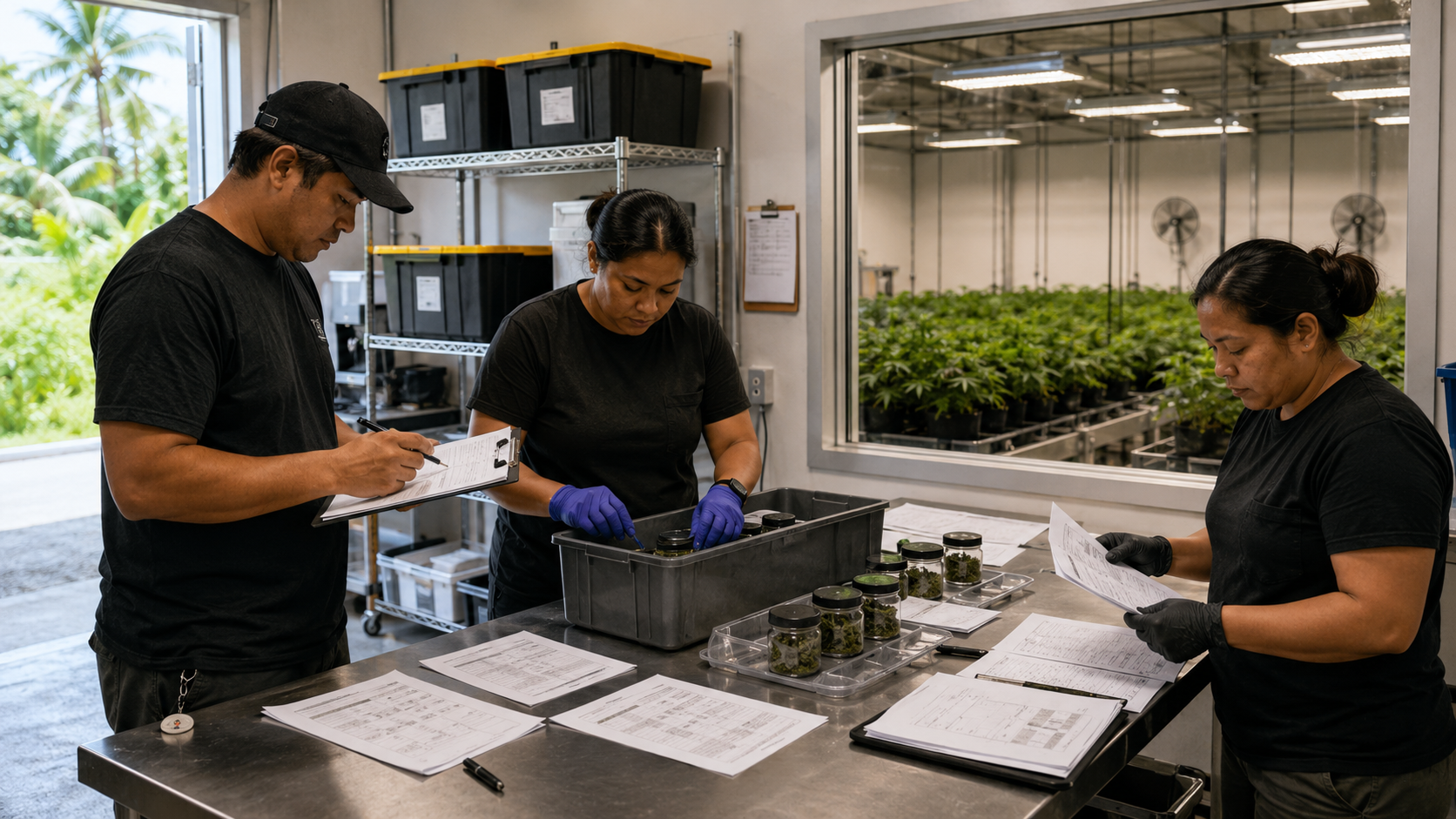
Guam cannabis team reviewing compliance and permit workflow
Guam’s regulated cannabis market has finally moved from licensing theory into real operator activity. Public Radio Guam reports that the Guam Cannabis Control Board issued its first permit to operate to Guam Real Deal LLC, doing business as Deep Green Guam. The cultivator received conditional license approval on February 25, 2026, and has now been cleared to begin operations after inspections and compliance review. For operators, cultivators, investors, and compliance teams, this is a major signal that Guam’s cannabis rollout is entering the execution phase.
Quick facts
• The Guam Cannabis Control Board issued its first permit to operate on June 24, 2026
• Guam Real Deal LLC, doing business as Deep Green Guam, received the permit
• Deep Green Guam is a cannabis cultivation business
• The company received conditional license approval on February 25, 2026
• The Department of Revenue and Taxation Compliance Branch recommended approval after inspections
• Board members voted unanimously to issue the permit
• Guam legalized adult use cannabis in April 2019
• No cannabis business had previously been approved by the Cannabis Control Board until this year
• The universal operator lesson is simple: a cannabis market does not truly launch until inspections, permits, and operator readiness all line up
If Guam market timing is affecting your growth plan, complete our quick Cannashield intake form so you can map licensing, inspection, facility, and insurance exposure before the next operator approval creates more competition.
Why this permit matters
This permit matters because it marks the first real operating step in Guam’s regulated cannabis market. Legalization happened years ago, but legalization alone does not build a functioning industry. Businesses still need licenses, inspections, facility approvals, compliance systems, and permission to begin operations.
Deep Green Guam’s approval shows that the Cannabis Control Board is now willing to move from conditional licensing into operating permits. That is an important shift. For years, Guam’s market has been defined by rulemaking, delays, uncertainty, and hemp derived THC activity outside the fully regulated cannabis channel. A permitted cultivator changes the conversation because it starts the local supply chain.
Cultivation is usually the first real pressure point in a new market. Without legal cultivation, manufacturers, retailers, and consumers do not have a stable regulated source of product.
Why inspections are the real gate
The most important detail in the report is the inspection process. Public Radio Guam reported that the Department of Revenue and Taxation’s Compliance Branch conducted inspections, worked closely with the applicant, and recommended approval. The company also went through inspections from various government agencies and a thorough walk through of the establishment.
That is the real operator lesson. In emerging markets, a conditional license is not the finish line. It is the beginning of a deeper review. Operators need to prove the facility is ready, records are organized, security is in place, staff understand procedures, and the business can operate under the rules.
A company that wins a license but cannot pass inspections may still be stuck. A company that prepares early can move faster when regulators are ready.
If uncertainty around inspection readiness, facility buildout, or compliance documentation is affecting how you plan, complete our Cannashield questionnaire to pressure test your exposure before a regulator walk through determines your launch timing.
Why local zoning and property issues matter
The article also highlights a separate property owner inquiry involving a possible cannabis retail tenant and a church on the same property. Rev and Tax Director Marie Lizama said the clearance should come from the Department of Land Management, which typically provides drug free school zone clearances for cannabis establishments.
That detail matters because local site issues can slow cannabis markets even after licensing begins. Operators need to understand where a facility can be located, what nearby uses create concern, whether minors may be present, and which agency controls final clearance. For landlords and investors, this means cannabis real estate cannot be evaluated like normal retail or industrial space.
A good site is not just a building. It is a building that can survive zoning, clearance, inspection, security, and community review.
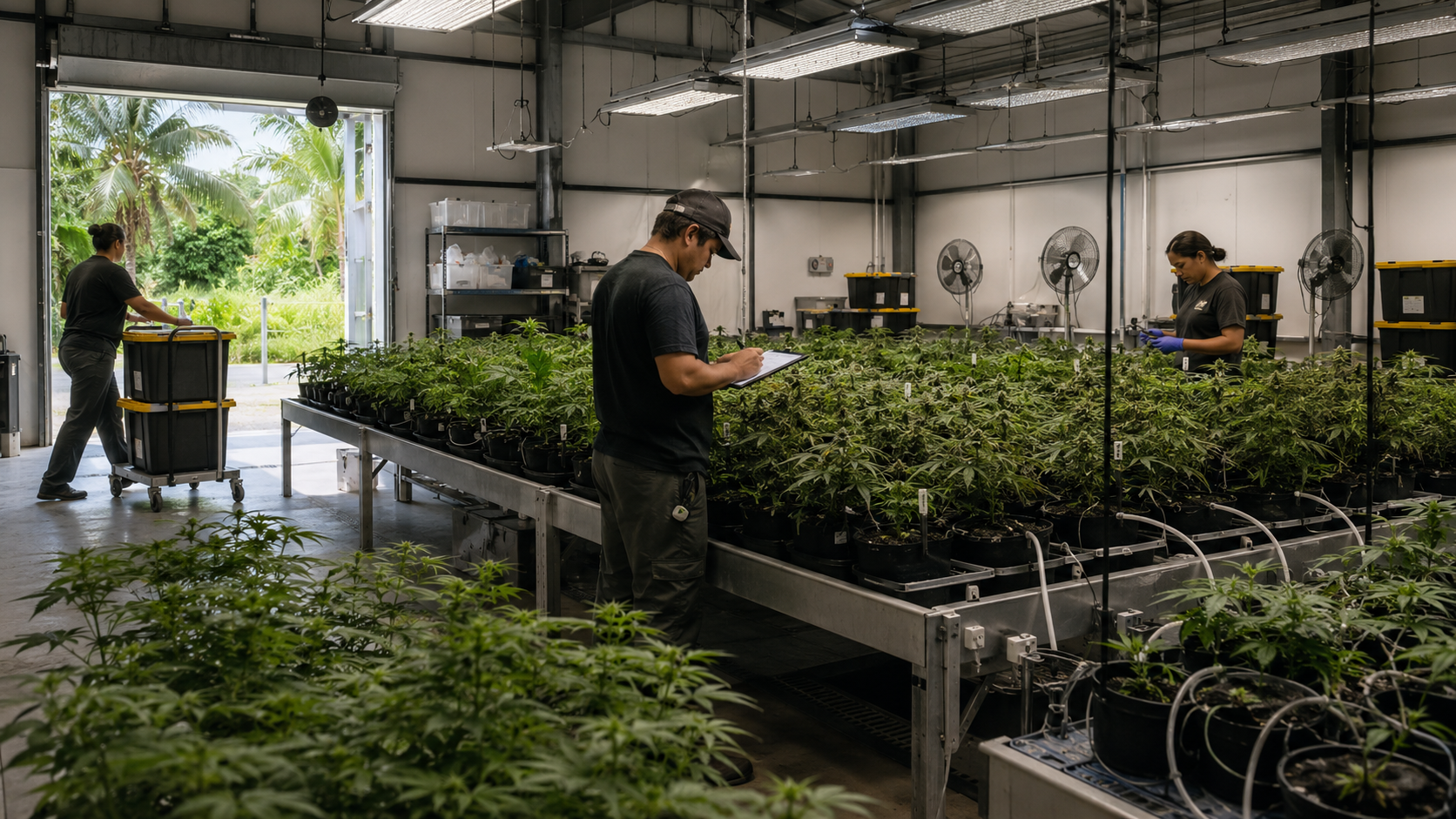
Guam cannabis grow facility operations and oversight
Why Guam’s next phase deserves attention
Guam’s first operating permit does not mean the market is fully built. It means the first piece is moving. The next questions are practical. How quickly will cultivation produce usable supply. When will manufacturing and retail activity follow. How will product testing, transport, inventory tracking, and sales rules work in practice. Will hemp derived THC sellers face new competition or new enforcement as the regulated market develops.
Investors and operators should watch how many conditional licensees move into operating status, how inspections are handled, and whether Guam creates enough supply chain infrastructure to support retail access. A single cultivator can start the market, but a durable market needs multiple compliant pieces working together.
If you need to organize licensing, facility, inspection, and insurance records before Guam expands further, use the Cannashield intake form to identify weak points and build a cleaner operating file.
You might also like


Conclusion
Guam’s first cannabis business permit is a meaningful milestone. Deep Green Guam’s approval shows that the island is moving beyond adult use legalization on paper and into regulated cultivation activity. That shift matters for operators, investors, and compliance teams watching emerging markets.
For Guam, the next phase will depend on inspection discipline, local site approvals, supply chain development, and whether more businesses can move from conditional approval to active operations. The market is still early, but the first permit means it is no longer just theoretical.
Educational note: This article is for education only and is not legal, regulatory, tax, financial, real estate, zoning, or insurance advice.
What To Do This Week
• Review Guam cannabis license categories and operating permit requirements
• Track whether additional conditional licensees move into active operating status
• Prepare facility records, security plans, inspection files, and compliance procedures before final review
• Confirm zoning, drug free school zone clearance, and agency approval before signing cannabis property agreements
• Watch how cultivation approvals affect future manufacturing, retail, and product availability
• Build a short internal memo on Guam market timing, inspection risk, and supply chain readiness
FAQ
What did Guam approve?
The Guam Cannabis Control Board issued its first permit to operate to Guam Real Deal LLC, doing business as Deep Green Guam.
What type of business is Deep Green Guam?
Deep Green Guam is a cannabis cultivation business.
When did Deep Green Guam receive conditional approval?
The company received conditional license approval on February 25, 2026.
Why is this permit important?
It moves Guam’s cannabis market from rulemaking and conditional licensing into actual operator activity.
Who recommended approval?
The Department of Revenue and Taxation’s Compliance Branch recommended approval after inspections and review.
What is the biggest operator takeaway?
Guam’s market is starting to operate, but businesses still need strong inspection readiness, zoning clearance, facility controls, and compliance documentation.
SOURCES
Public Radio Guam, Cannabis Control Board issues its first permit for a Guam cannabis business
https://www.islapublic.org/news/2026-06-24/cannabis-control-board-issues-its-first-permit-for-a-guam-cannabis-business
Guam Department of Revenue and Taxation
https://www.guamtax.com/about/index.html
Guam Legislature
https://guamlegislature.com/

Trulieve and Cronos have each gained roughly 27 percent in 2026 while reporting stronger operating results. The broader signal is that public market attention is increasingly rewarding cash generation, improving margins, liquidity, and measurable revenue growth.