
THC Testing After Birth Raises Child Welfare Risk

New mother waiting during postpartum THC case processing
THC testing after childbirth is creating major legal and family consequences for new mothers. CBS News and The Marshall Project reported that more than a thousand mothers in Idaho were placed on a child abuse registry after testing positive for THC following childbirth. The investigation raises difficult questions about cannabis legality, CBD and hemp products, hospital testing, child welfare referrals, parental rights, unequal enforcement, and what happens when healthcare systems become the entry point into state punishment.
Quick facts
• CBS News and The Marshall Project reported that THC tests have landed new mothers on child abuse registries
• Idaho was highlighted as a state where more than a thousand mothers were affected
• The investigation found that parents in at least 70,000 cases across 21 states were referred to law enforcement over substance use allegations during pregnancy
• Many referrals began with hospital drug tests after childbirth
• The Marshall Project reported that some positive THC tests involved legal CBD, hemp products, prescribed medication, or unclear product sources
• Idaho rules place some mothers on the Child Protection Central Registry for a minimum of 10 years after substantiated prenatal controlled substance use
• Child welfare consequences can affect employment, custody, family stability, and future background checks
• Health agencies still recommend avoiding cannabis during pregnancy and breastfeeding because of potential risks
• The universal operator lesson is simple: cannabis legality does not protect patients unless healthcare, child welfare, and state enforcement rules are aligned
If cannabis policy, patient disclosure, or healthcare enforcement risk is affecting your organization, complete our quick Puro Risk intake form so you can map legal, compliance, education, documentation, and insurance exposure before a testing policy creates preventable harm.
Why this story matters
This story matters because cannabis legalization is not reaching every system equally. A person may live in or visit a state where cannabis, hemp, CBD, or medical cannabis is legal in some form, but a positive THC test after childbirth can still trigger hospital reporting, child welfare involvement, law enforcement referral, registry placement, or criminal exposure depending on the state.
That is the gap. Cannabis policy may move toward legalization, while child welfare, medical testing, and hospital reporting rules continue operating under older enforcement assumptions.
For consumers and patients, that gap can be life changing. For healthcare providers, it creates a duty to understand testing consent, reporting duties, patient communication, and the limits of drug screen interpretation. For policymakers, it raises a basic question: when is the goal child safety, and when does the process become punishment without enough evidence of harm.
Why THC testing creates legal confusion
THC testing does not always answer the question people think it answers. A positive result may show exposure, but it does not automatically prove impairment, unsafe parenting, timing, dose, product type, or harm to the infant. CBS News and The Marshall Project reported cases where legal CBD products, hemp products, or unclear product exposure played a role.
That matters because THC can be found in products that consumers do not always understand, especially CBD, hemp, edible, topical, and cross state products. A patient may think they used a legal product, but a hospital test may only show THC exposure. The legal system may then treat that result as evidence of abuse or neglect.
This is the universal operator lesson. Testing without context can turn a health question into a legal event.
Why Idaho became the warning sign
Idaho is central to the story because its registry system can create long term consequences. Idaho Administrative Code lists prenatal use of a controlled substance, except as prescribed by a medical professional, as a Level Two basis for placement on the Child Protection Central Registry. The rule says a Level Two designation remains on the registry for a minimum of 10 years.
That is not a small penalty. Registry placement can affect jobs involving children, vulnerable adults, licensing, volunteer roles, and family stability. It can also follow a parent long after childbirth.
A federal court case, Rossow v. Jeppesen, has challenged Idaho’s use of prenatal controlled substance findings to place mothers on the registry. Court records state that the named plaintiffs were substantiated for child abuse after testing positive for THC following childbirth and placed on the registry for at least 10 years.
Why healthcare providers need clear policies
Healthcare providers are in a difficult position. Public health guidance warns that cannabis use during pregnancy and breastfeeding may create risks, and CDC encourages pregnant and breastfeeding women to avoid cannabis use. That health message matters.
But health guidance is different from automatic punishment. A positive THC test should not be treated as a complete child safety investigation by itself. Medical teams need clear policies around informed consent, test type, confirmatory testing, documentation, patient communication, reporting obligations, and whether the infant shows signs of harm or withdrawal.
Healthcare providers should also know what happens after a report leaves the hospital. In some states, child welfare may refer cases to law enforcement even when there is no later finding of abuse or neglect. The Marshall Project reported that, across verified data, about 55 percent of cases referred to law enforcement involved situations where child welfare agencies did not find child abuse or neglect occurred.
Why this creates unequal punishment risk
The investigation also raises inequality concerns. The Marshall Project reported that mothers of Black newborns were more likely than mothers of White newborns to be referred to law enforcement over pregnancy substance use allegations in the states studied. It also reported that hospital testing and reporting patterns may help explain the disparity.
That matters because unequal testing creates unequal punishment. If some patients are more likely to be tested, reported, investigated, or referred to police, then the policy is not being applied evenly. That weakens trust in healthcare and may discourage patients from being honest with providers.
If you need to organize healthcare, policy, compliance, education, and insurance records before reviewing cannabis related testing procedures, use the Puro Risk intake form to identify weak points and build a cleaner risk file.
Conclusion
THC testing after childbirth is exposing a major conflict between cannabis legality, healthcare, child welfare, and state enforcement. The issue is not whether cannabis should be used during pregnancy. Public health guidance remains cautious and recommends avoiding cannabis during pregnancy and breastfeeding. The issue is whether a test result alone should trigger registry placement, police referral, criminal exposure, or long term family consequences without enough context.
For consumers, healthcare providers, compliance teams, advocacy groups, and policymakers, the message is simple. Cannabis policy is not complete until healthcare and child welfare systems are updated too. Testing rules, consent practices, reporting duties, legal protections, patient education, and due process need to match the reality of modern cannabis access.
Educational note: This article is for education only and is not legal, medical, regulatory, healthcare, child welfare, pregnancy, parental rights, employment, criminal, or insurance advice. Pregnant or breastfeeding patients should speak with qualified healthcare providers before using cannabis, CBD, hemp, or THC products.
What to do this week
• Review hospital and clinic policies for cannabis screening, consent, confirmatory testing, and documentation
• Make sure patient education explains that legal cannabis, hemp, or CBD products may still create child welfare risk
• Confirm state reporting rules before assuming a THC result requires the same response everywhere
• Separate medical guidance from automatic punitive action when reviewing policy language
• Review whether testing and reporting practices are applied consistently across patient groups
• Build a short internal memo on THC testing, patient rights, reporting obligations, registry exposure, and legal risk education
FAQ
What did CBS News and The Marshall Project report?
They reported that THC testing after childbirth has led some new mothers to be placed on child abuse registries or referred to law enforcement.
Why was Idaho highlighted?
Idaho was highlighted because more than a thousand mothers were reportedly affected after testing positive for THC, with registry placement creating long term consequences.
Does a positive THC test prove child abuse?
No. A positive THC test may show exposure, but it does not automatically prove impairment, unsafe parenting, timing, dose, product type, or harm.
Can legal CBD or hemp products create THC test risk?
Yes. Some CBD and hemp products may contain THC or create testing issues, and patients may not know how a product will appear on a hospital drug screen.
Do health agencies recommend cannabis during pregnancy?
No. CDC says cannabis use during pregnancy may affect infant development and recommends that pregnant and breastfeeding women avoid cannabis use.
What is the biggest takeaway?
Cannabis legality does not eliminate healthcare and child welfare risk, so patients, providers, and policymakers need clearer rules around testing, consent, reporting, and due process.
What this means for operators
Cannabis business news can quickly become an insurance, compliance, contract, renewal, or claims issue. If this topic could affect your operation, review your insurance setup before pressure shows up from a landlord, lender, carrier, contract partner, regulator, or claim.
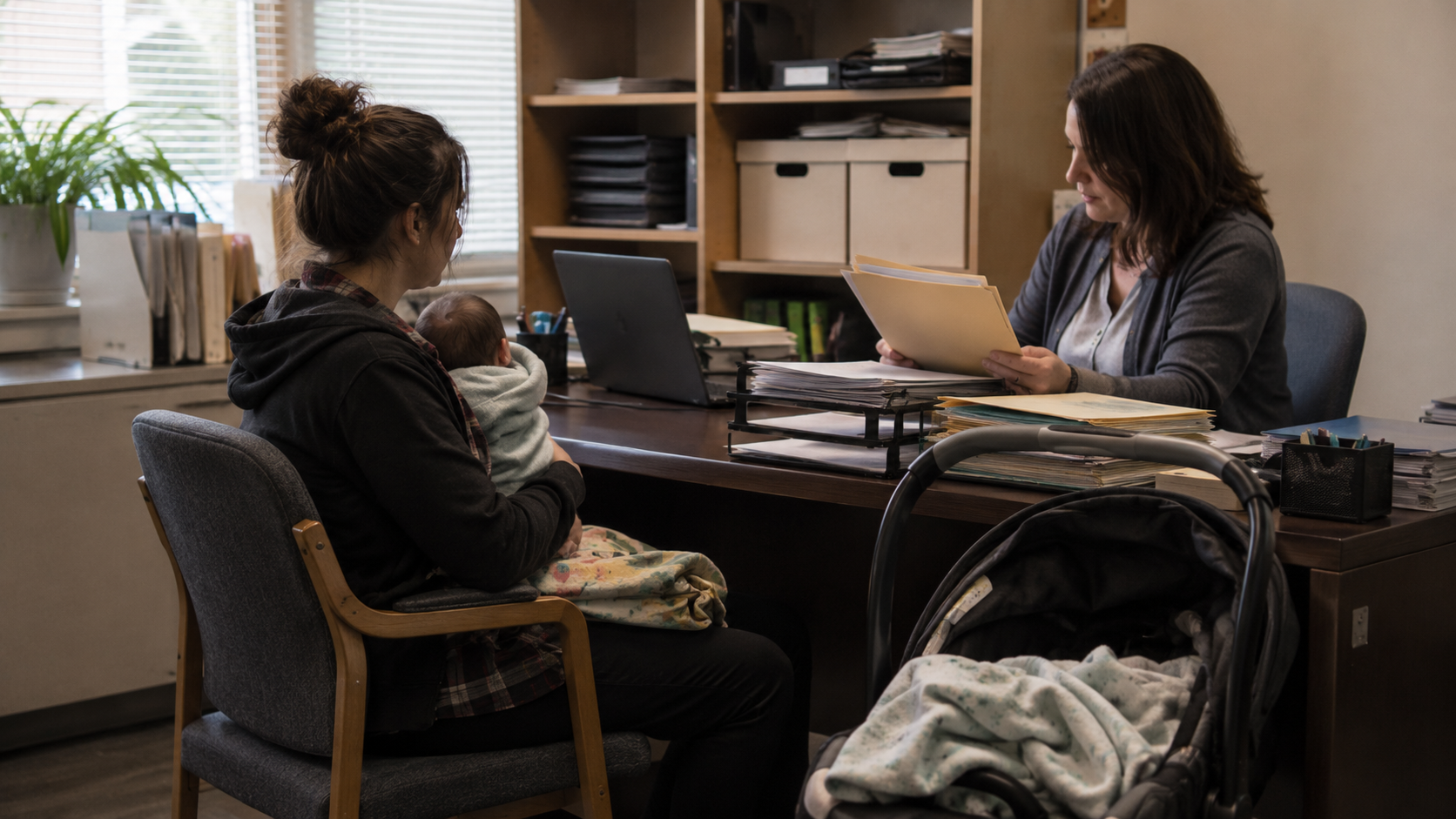
New mother meeting with caseworker after THC testing
You might also like


SOURCES
CBS News, How THC tests have landed new mothers onto child abuse registries
https://www.cbsnews.com/video/how-thc-tests-have-landed-new-mothers-onto-child-abuse-registries/
The Marshall Project, Tens of thousands of mothers were flagged to police over flawed drug tests at childbirth
https://www.themarshallproject.org/2026/02/10/baby-hospital-mom-pregnant-police-drugs
The Marshall Project, How We Counted Referrals to Police About Substance Use During Pregnancy
https://www.themarshallproject.org/2026/02/10/pregnancy-drug-criminal-referrals-methodology
CDC, Cannabis and Pregnancy
https://www.cdc.gov/cannabis/health-effects/pregnancy.html

Trulieve and Cronos have each gained roughly 27 percent in 2026 while reporting stronger operating results. The broader signal is that public market attention is increasingly rewarding cash generation, improving margins, liquidity, and measurable revenue growth.