
Bipartisan Hemp THC Beverage Bill Could Reshape Federal Rules
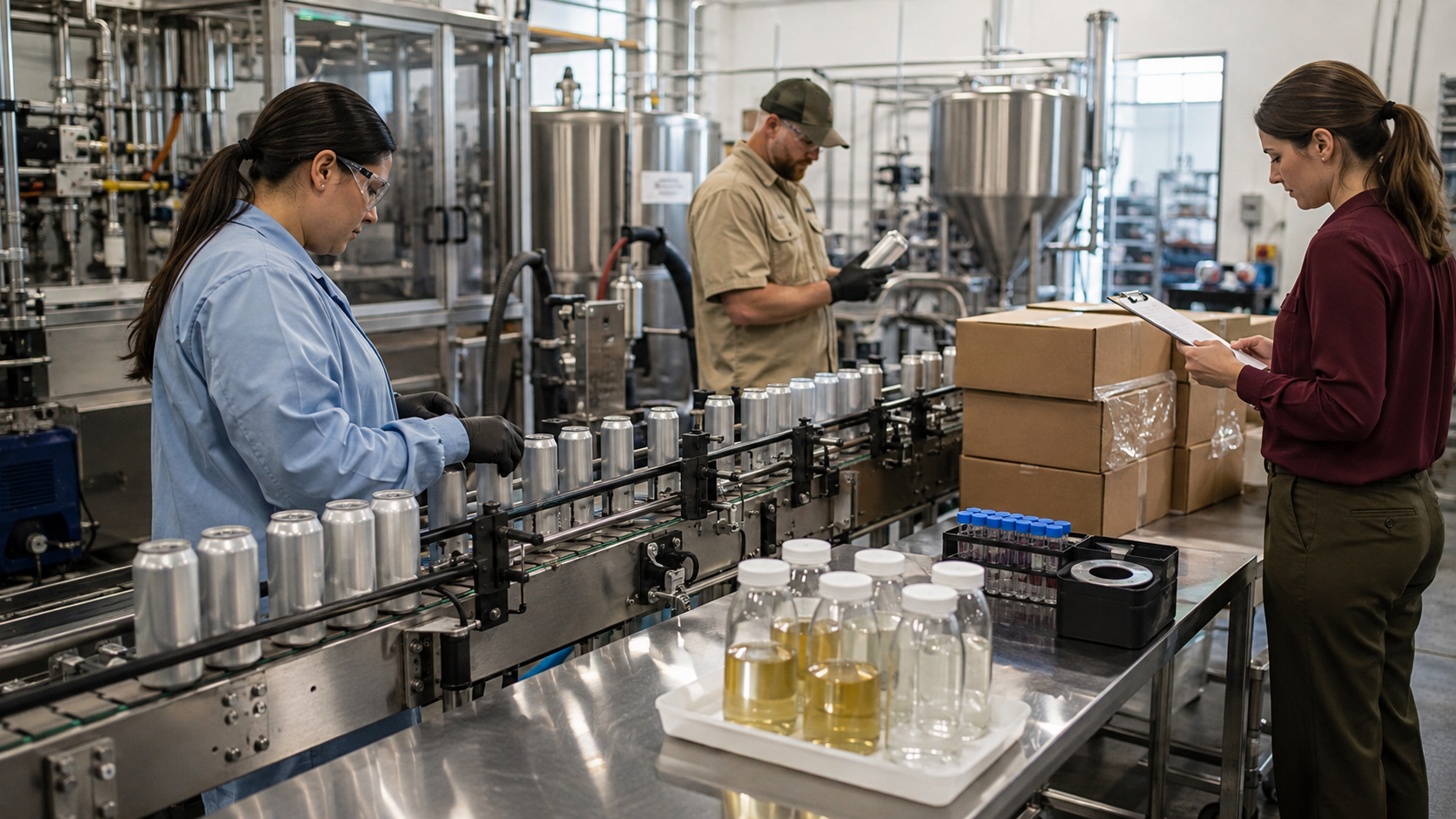
Hemp THC beverage manufacturing and compliance review
A new bipartisan proposal could reshape federal hemp THC beverage regulation by creating a legal pathway for low dose products instead of allowing upcoming federal hemp restrictions to remove much of the category. The Beverage Regulatory Parity Act would establish a three tier distribution system, a 21 and older sales standard, federal permits, product testing, packaging and labeling requirements, THC limits, and a federal excise tax. For cannabis and hemp beverage operators, the bigger question is whether existing products, margins, distribution relationships, compliance systems, and retail strategies could operate successfully under a more formal federal structure.
Quick facts
• Representatives Beth Van Duyne of Texas and Greg Landsman of Ohio introduced the bipartisan Beverage Regulatory Parity Act on August 10, 2026
• The proposal would create a three tier distribution system separating manufacturers, wholesalers, and retailers
• Covered hemp beverages could contain no more than 5 milligrams of total intoxicating THC per serving
• Retail sales would be limited to adults age 21 and older
• Manufacturers and wholesalers would operate under federal permitting requirements
• The proposal includes testing, sourcing, recordkeeping, inspection, packaging, labeling, and consumer warning requirements
• The bill would impose a federal excise tax of 8 cents per milligram of intoxicating THC, equal to 40 cents on a 5 milligram beverage
• States, tribes, and local governments could maintain stricter requirements or prohibit covered hemp beverages within their jurisdictions
• Existing manufacturers selling directly to retailers could face meaningful distribution changes if a separate wholesale tier becomes required
• The universal operator lesson is simple: keeping a product federally legal does not mean keeping the same business model, margins, distribution system, or compliance requirements
If federal hemp THC beverage regulation is affecting your business plan, complete our quick Puro Risk intake form so you can map product, distribution, compliance, tax, contractual, and insurance exposure before regulatory change creates a larger operating problem.
Why this bill matters
The Beverage Regulatory Parity Act matters because the federal hemp market is already approaching a major regulatory change.
Federal legislation enacted in 2025 changed the definition of hemp and created a new threshold affecting certain finished hemp derived cannabinoid products. Unless Congress changes the law again, the amendments are scheduled to take effect in November 2026.
That creates significant uncertainty for hemp THC beverage manufacturers, distributors, retailers, investors, lenders, and compliance teams.
Many beverages currently sold to adults contain substantially more THC than the new finished product threshold would permit. The Beverage Regulatory Parity Act attempts to create a separate legal pathway for qualifying beverages rather than forcing the category under the same limit.
That distinction matters.
The discussion would shift from whether hemp THC beverages can remain federally legal to what companies must do to remain legally and commercially viable.
For operators, federal legality is only one part of the equation. Product formulation, distribution, pricing, taxation, packaging, retailer relationships, supplier documentation, testing, and state specific rules can determine whether the business model still works.
Why three tier distribution matters
One of the most significant operating changes in the proposal is the three tier distribution system.
The bill would generally separate manufacturers, wholesalers, and retailers. Manufacturers would sell covered hemp beverages through permitted wholesalers, while retailers would purchase products through the wholesale tier.
That could materially change the economics for companies currently selling directly to retailers.
Adding another regulated participant to the supply chain can affect distributor margins, wholesale pricing, retail pricing, territory agreements, inventory ownership, freight responsibility, payment terms, promotional spending, recalls, and contractual liability.
It can also change which products are economically viable.
A company that currently earns an acceptable margin selling directly to hundreds of retailers may produce a very different result after distributor margin and federal excise tax are added to the same product.
Operators should therefore model the proposed structure using actual SKU economics.
Why product compliance is the real test
The proposed 5 milligram THC limit may receive most of the attention, but potency is only one part of the compliance picture.
Covered beverages would need to satisfy additional requirements involving cannabinoid composition, sourcing, manufacturing, testing, documentation, packaging, labeling, warnings, and product tracking.
The legislation would also create federal permitting requirements for manufacturers and wholesalers and contemplate standards involving contaminants, laboratory testing, record retention, inspections, and supply chain documentation.
Packaging and labeling could become a major transition issue.
Operators may need to review cannabinoid disclosures, serving information, manufacturer details, warnings, product identity, net contents, age related messaging, and other consumer information.
Products or advertising designed to appeal to children would also face restrictions.
For beverage companies, that means a product that works under today's rules should not automatically be treated as a compliant product under a future federal framework.
Some companies may need reformulation. Others may need new packaging, revised warnings, different testing procedures, stronger supplier records, or changes in how products are advertised and distributed.
The strongest operators will know which SKUs are closest to the proposed standard and which ones would require meaningful changes.
Why operators need readiness
The Beverage Regulatory Parity Act is proposed legislation. It is not current federal law, and the final language could change, be delayed, be replaced, or fail to pass.
Operators should not change legal positions, labels, formulas, contracts, or tax treatment solely because the proposal was introduced.
But scenario planning can begin now.
The proposed federal tax is a good example.
At 8 cents per milligram of intoxicating THC, a 5 milligram beverage would carry 40 cents of proposed federal THC excise tax.
Forty cents may appear manageable on its own. The economics become more complicated when that amount is combined with manufacturing expenses, testing, packaging, freight, distributor margin, retailer margin, promotions, state taxes, regulatory administration, insurance expenses, and normal overhead.
State rules add another layer.
The proposal would preserve the ability of states, tribes, and local governments to impose stricter requirements or prohibit covered hemp beverage activity within their jurisdictions.
That means a federal framework would not necessarily create one uniform national market.
A beverage company selling into several states could face a federal baseline plus different rules for THC limits, licensing, labeling, age verification, distribution, taxation, advertising, retail channels, and product availability.
Operators should know which products remain profitable under different federal scenarios, which states remain attractive, which suppliers can support documentation requirements, and which distribution relationships could survive a three tier system.
If you need to organize product files, supplier documentation, contracts, testing records, distribution exposure, and insurance information before federal rules change, use the Puro Risk intake form to identify weak points and build a cleaner operating file.
Conclusion
The Beverage Regulatory Parity Act offers a different path for the hemp THC beverage market.
Instead of allowing upcoming federal hemp restrictions to eliminate much of the category, the proposal would create a regulated pathway built around low dose products, adult access, federal permits, testing, labeling, distribution controls, taxation, and continued state authority.
For operators, that could be positive, but it would not preserve business as usual.
Manufacturers may need stronger product files. Companies may need new pricing models. Retailers may need tighter age controls. Wholesalers could become more important. Compliance teams may need to manage federal requirements alongside different state rules.
The businesses in the strongest position will be those that understand their formulation, margins, suppliers, distribution relationships, documentation, market exposure, and compliance gaps before Congress determines what the final framework will look like.
Educational note: This article is for education only and is not legal, regulatory, tax, financial, product safety, licensing, investment, enforcement, or insurance advice. The Beverage Regulatory Parity Act is proposed legislation and may be amended, delayed, replaced, or fail to become law. Operators should confirm current federal, state, tribal, and local requirements with qualified legal, tax, regulatory, and other professional advisors before making business decisions.
What to do this week
• Identify every hemp derived beverage SKU and document THC content per serving, cannabinoid inputs, supplier sources, package size, and current sales markets
• Model the proposed 8 cent per milligram federal tax against wholesale price, distributor margin, retailer margin, freight, testing, and current gross profit
• Review direct to retailer relationships and identify what would change if products had to move through a separate wholesale distribution tier
• Audit testing records, certificates of analysis, supplier documentation, labels, warnings, packaging, batch records, and recall procedures
• Map every state where products are manufactured, distributed, shipped, or sold and identify markets with requirements that may be stricter than a future federal baseline
• Build a short internal memo on product formulation, tax pressure, distribution restructuring, state market access, and compliance risk
FAQ
What is the Beverage Regulatory Parity Act?
The Beverage Regulatory Parity Act is bipartisan federal legislation introduced to create a dedicated regulatory system for qualifying hemp derived THC beverages rather than treating the category solely under the upcoming broader federal hemp restrictions.
How much THC would the bill allow in a hemp beverage?
The introduced proposal would generally allow qualifying hemp derived beverages to contain no more than 5 milligrams of total intoxicating THC per serving, subject to the bill's other requirements.
Would hemp THC beverages be limited to adults age 21 and older?
Yes. The proposed framework would establish a 21 and older standard for retail sales of covered hemp derived beverages.
What would the proposed federal THC tax be?
The proposal would impose a federal excise tax of 8 cents per milligram of intoxicating THC. A beverage containing 5 milligrams would therefore carry 40 cents of proposed federal THC excise tax.
Could manufacturers continue selling directly to retailers?
The proposal generally separates manufacturers, wholesalers, and retailers under a three tier structure. That could require manufacturers currently selling directly to retailers to restructure parts of their distribution system.
Would federal regulation override state hemp beverage laws?
No. The proposal would preserve significant state, tribal, and local authority. Jurisdictions could maintain requirements that are stricter than the federal framework or prohibit covered hemp beverage activity.
What this means for operators
Cannabis business news can quickly become an insurance, compliance, contract, renewal, or claims issue. If this topic could affect your operation, review your insurance setup before pressure shows up from a landlord, lender, carrier, contract partner, regulator, or claim.

Retail staff reviewing hemp THC beverage inventory and compliance
You might also like


SOURCES
Marijuana Moment, New Bipartisan Bill In Congress Would Keep Hemp THC Drinks Federally Legal And Regulated Like Alcohol
Office of U.S. Representative Beth Van Duyne, Rep. Van Duyne Introduces Bipartisan Legislation to Bring Regulatory Clarity to Hemp-derived Beverages
Office of U.S. Representative Beth Van Duyne, Beverage Regulatory Parity Act Bill Text
U.S. Government Publishing Office, Public Law 119-37

Trulieve and Cronos have each gained roughly 27 percent in 2026 while reporting stronger operating results. The broader signal is that public market attention is increasingly rewarding cash generation, improving margins, liquidity, and measurable revenue growth.