
Illinois Hemp And Cannabis Reform Raises The Compliance Bar
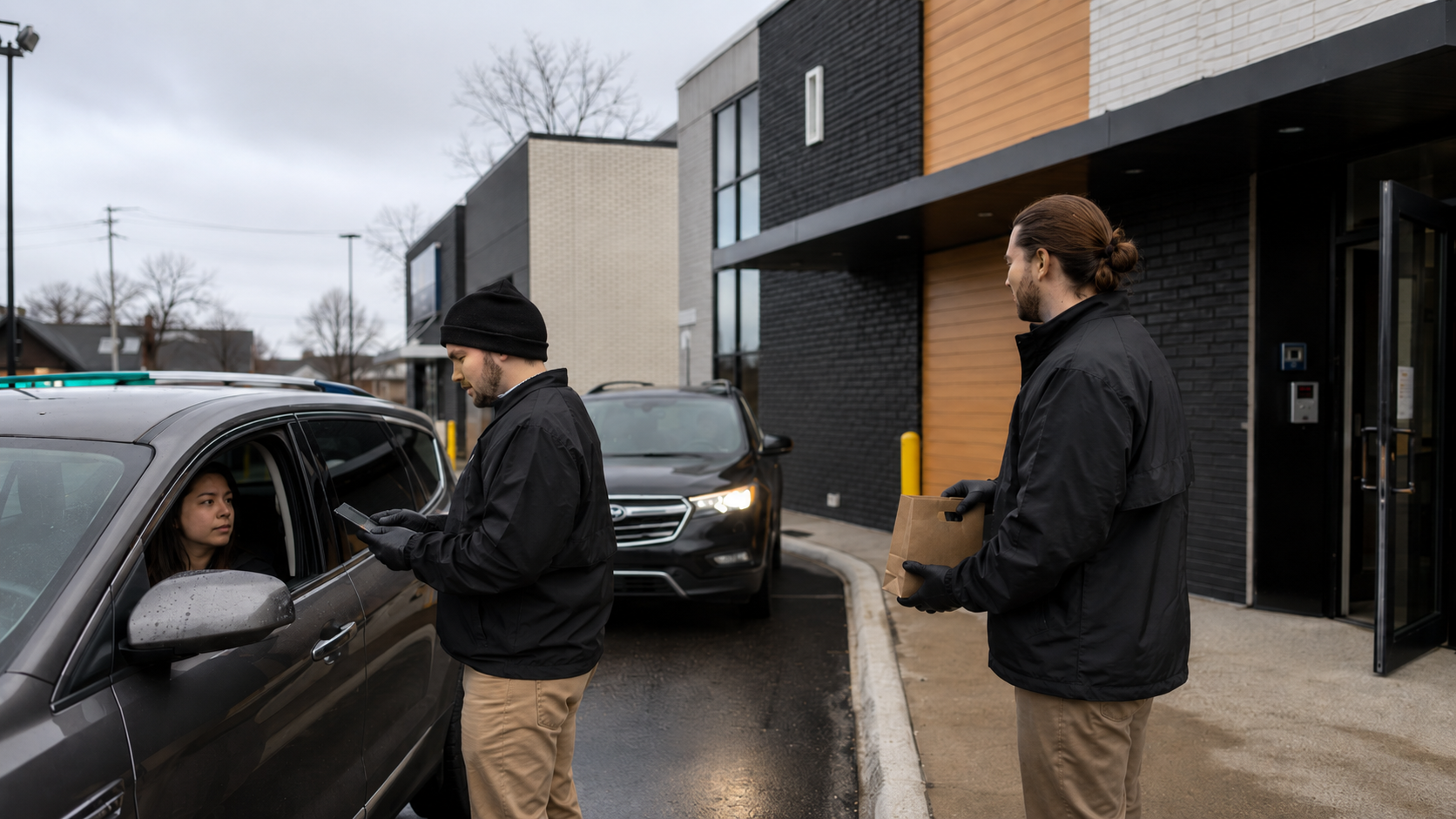
Illinois cannabis drive through ID check and order pickup
Illinois cannabis and hemp operators now have a new compliance timeline to manage. WJOL reports that Gov. J.B. Pritzker signed SB 3222, immediately banning the sale of intoxicating hemp products to anyone under 21 while setting up broader regulation for intoxicating hemp products beginning November 12, 2026. The law also expands medical cannabis access, allows more dispensaries to register for medical sales, permits curbside and drive through service, adds testing lab oversight, and creates new licensing opportunities for infusers. For operators, hemp sellers, retailers, manufacturers, testing labs, and investors, this is not just a hemp bill. It is a market reset.
Quick facts
• Gov. J.B. Pritzker signed Illinois SB 3222 on June 14, 2026
• The law immediately bans intoxicating hemp sales to anyone under 21
• Customers must show identification before buying intoxicating hemp products
• Broader intoxicating hemp regulation begins November 12, 2026
• Intoxicating hemp products will be regulated under the Cannabis Regulation and Tax Act
• Non intoxicating CBD products with less than 0.4 milligrams total THC may remain outside the licensed cannabis market
• The law allows all Illinois dispensaries to register for medical cannabis sales
• The law gives Illinois authority to issue 45 previously unallocated infuser licenses in January 2027
• The universal operator lesson is simple: when hemp and cannabis rules converge, product compliance becomes market access
If Illinois hemp or cannabis rule changes are affecting your growth plan, complete our quick Cannashield intake form so you can map product, licensing, testing, and insurance exposure before the November 2026 shift arrives.
Why this law matters
SB 3222 matters because Illinois is tightening the gap between intoxicating hemp and licensed cannabis. For years, intoxicating hemp products such as delta 8, THC P, and HHC have existed in a confusing space outside the same state framework that governs licensed adult use cannabis. The new law starts by closing the youth access gap immediately, then moves toward broader product regulation next year.
That creates two compliance clocks. The first clock starts now with age verification. Any business selling intoxicating hemp products in Illinois needs to take under 21 restrictions seriously right away. The second clock points to November 12, 2026, when intoxicating hemp products move into the regulated cannabis framework.
Why the November 2026 shift is bigger than age gates
The age restriction is important, but the November 2026 framework is the larger business issue. WJOL reports that products will face requirements tied to testing, safe ingredients, detailed labels, child resistant packaging where required, and restrictions on marketing that targets minors or mimics children’s products.
That means hemp sellers cannot treat this as a simple retail policy update. Product formulas, packaging, labels, testing records, supplier files, marketing copy, and inventory plans all need review. A product that can sit on a shelf today may need a different channel, different documentation, or a different license pathway by November 2026.
This is the universal operator lesson. In regulated cannabis, product status can change faster than inventory moves.
If uncertainty around product classification, testing, or retail placement is affecting how you plan, complete our Cannashield questionnaire to pressure test your exposure before inventory becomes stranded.
Why medical access is part of the same story
The law also expands medical cannabis access. All Illinois dispensaries will now be able to register as medical cannabis dispensaries. Dispensaries may also implement curbside and drive through service for medical and adult use customers, with priority for medical patients. Physicians will be able to certify qualifying conditions by telehealth, and the law expands qualifying conditions to include conditions such as endometriosis and ovarian cysts.
That is important because Illinois is not only restricting hemp. It is also making the licensed cannabis system more useful for patients. If more dispensaries can serve medical patients and telehealth improves access, the legal channel becomes stronger.
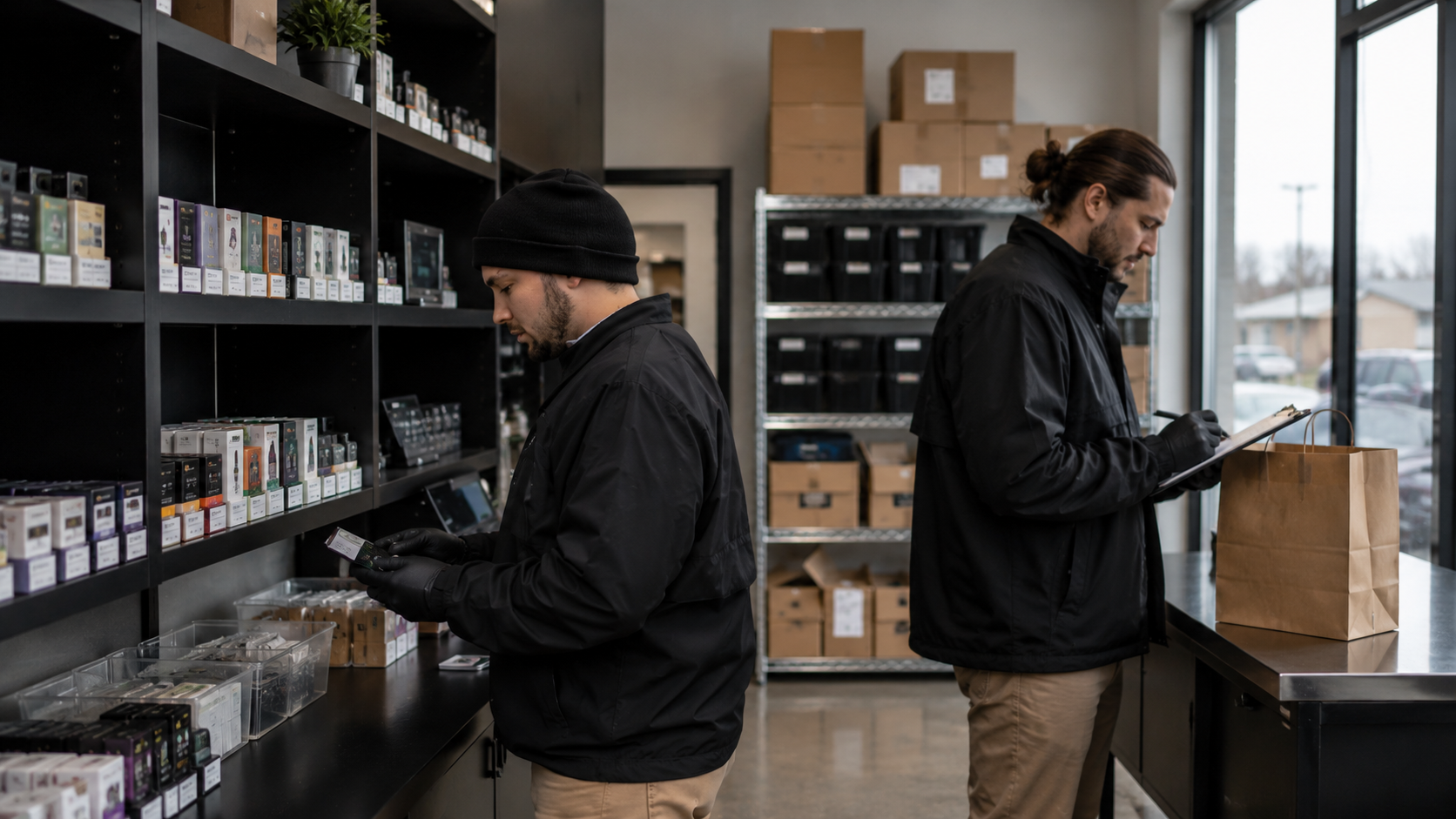
Retail staff reviewing hemp and vape inventory under new Illinois rules.
The licensing and oversight signal
SB 3222 also gives the Illinois Department of Agriculture authority to issue 45 previously unallocated infuser licenses in January 2027 to applicants with previous social equity experience. The law also allows the state to issue 100 additional licenses in 2028 based on demand. At the same time, cannabis testing labs will move from registration to licensing, giving regulators more oversight tools.
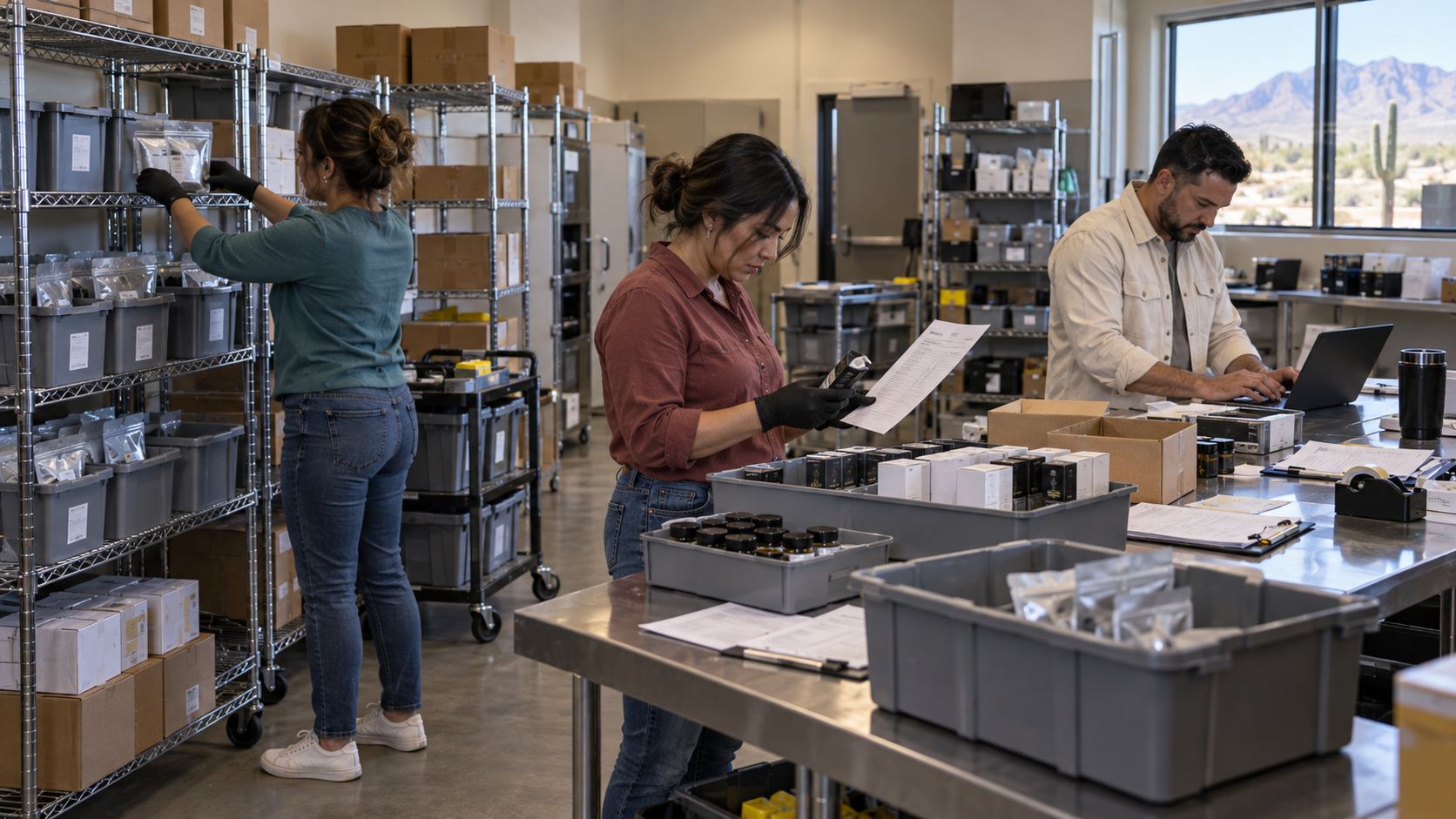
This matters for operators and investors. New licenses can create opportunity, but stronger oversight increases the cost of being sloppy. Testing labs, infusers, craft growers, and retailers should expect more attention on records, ownership, payment practices, badging, product quality, and financial conduct.
If you need to organize licensing, product, testing, and insurance records before Illinois’ next phase, use the Cannashield intake form to identify weak points and build a cleaner operating file.
You might also like

Conclusion
Illinois SB 3222 is a major hemp and cannabis reform law. It protects youth access immediately, prepares intoxicating hemp for stronger regulation in November 2026, expands medical access, creates new license opportunities, and strengthens oversight across the market.
For operators, retailers, hemp businesses, manufacturers, testing labs, and investors, the message is simple. Illinois is raising the compliance bar. The businesses that prepare now will have a better chance of staying inside the legal market when the rules tighten.
Educational note: This article is for education only and is not legal, regulatory, financial, tax, product safety, or insurance advice.
What To Do This Week
• Update age verification procedures for intoxicating hemp products immediately
• Review hemp product labels, testing records, ingredients, and packaging against the coming November 2026 framework
• Identify inventory that may need to move into the licensed cannabis channel
• Review whether your dispensary should register for medical cannabis sales
• Track infuser license opportunities expected in January 2027 and 2028
• Build a short internal memo on product classification, testing, licensing, and market access risk
FAQ
What did Gov. Pritzker sign?
Gov. J.B. Pritzker signed Illinois SB 3222, a cannabis and hemp reform law that changes age access, product regulation, medical access, licensing, and oversight.
What changes immediately?
The sale of intoxicating hemp products to anyone under 21 is immediately prohibited, and customers must show identification before purchase.
What happens on November 12, 2026?
Intoxicating hemp products will become subject to the Cannabis Regulation and Tax Act framework, including stronger product, packaging, testing, and labeling rules.
Can CBD still be sold outside dispensaries?
Non intoxicating CBD products with less than 0.4 milligrams total THC may remain outside the licensed medical and adult use cannabis market.
How does the law affect medical cannabis?
All Illinois dispensaries will be allowed to register for medical cannabis sales, and curbside, drive through, and telehealth certification provisions expand access.
What is the biggest operator takeaway?
Illinois is bringing intoxicating hemp closer to the licensed cannabis system, so businesses need stronger product compliance, age controls, testing records, and licensing strategy.
SOURCES
1340 WJOL, Gov. Pritzker Bans Sale Of Intoxicating Hemp To Minors, Bolsters Equity And Oversight In Cannabis Industry
https://www.wjol.com/gov-pritzker-bans-sale-of-intoxicating-hemp-to-minors-bolsters-equity-and-oversight-in-cannabis-industry/
Illinois General Assembly, Senate Bill 3222 Enrolled
https://www.ilga.gov/documents/legislation/104/SB/PDF/10400SB3222enr.pdf
Illinois Cannabis Regulation Oversight Office
https://cannabis.illinois.gov/

The bipartisan CLAIM Act would protect insurers, brokers, and agents from federal penalties solely for serving state legal cannabis businesses. The proposal could encourage greater carrier participation while leaving underwriting decisions, state regulation, pricing, exclusions, and coverage terms in the hands of insurers.