
Thailand CBD Acne Study Moves Research Into Dermatology
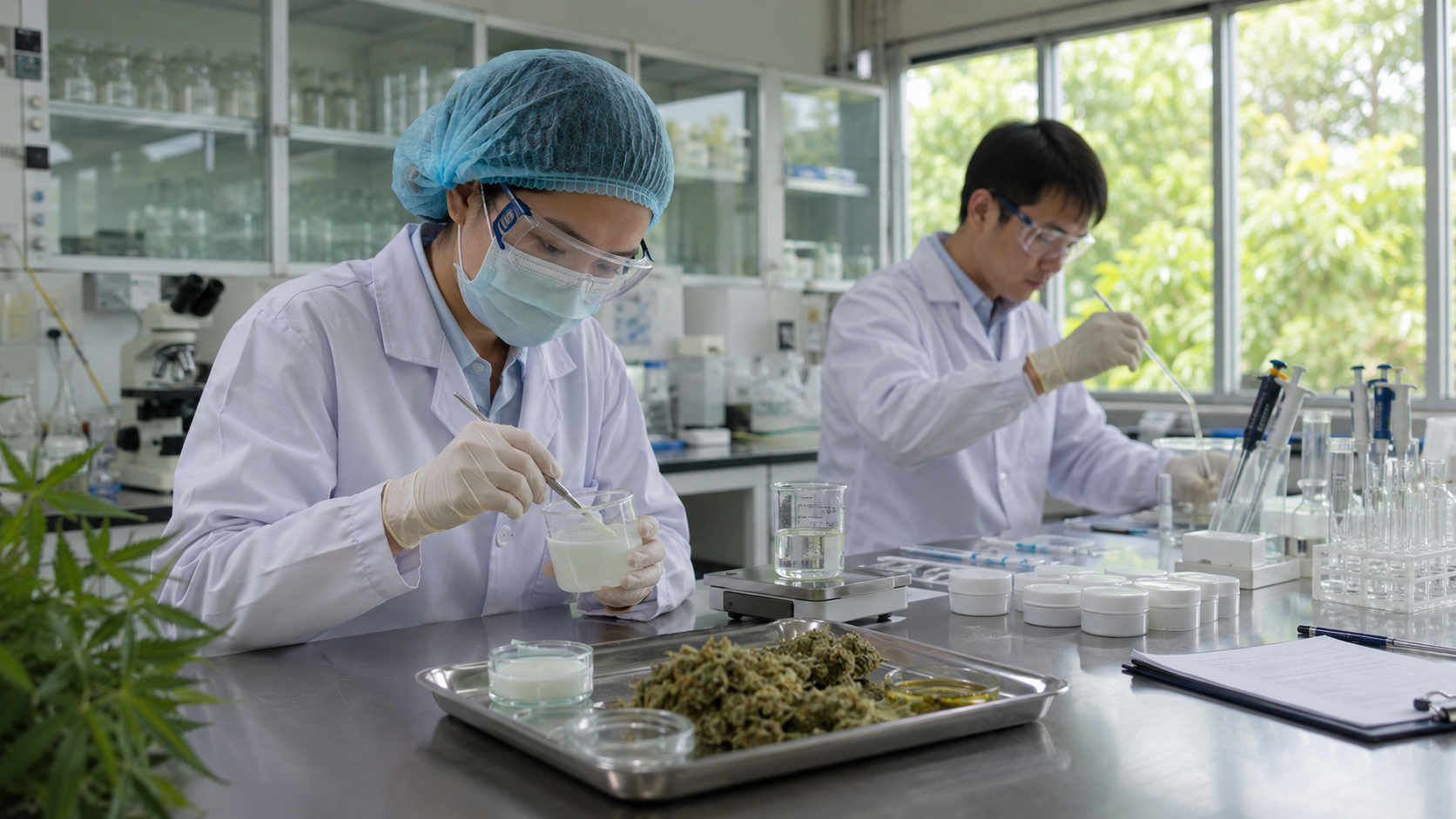
Researchers developing a CBD topical formulation in a lab
CBD research is moving deeper into dermatology and consumer health applications. International Cannabis Business Conference covered a Thailand study from researchers affiliated with Chulalongkorn University that tested a CBD loaded topical gel for acne management. The study found the gel was tolerated by participants and reported a 46 percent reduction in inflammatory lesion size by day seven. The signal is promising, but it is still early. The study was open label, nonrandomized, short term, and involved 22 Asian participants, so larger controlled studies are still needed before companies can treat this as a validated acne product pathway.
Quick facts
• Researchers affiliated with Chulalongkorn University studied a CBD loaded hyaluronic acid based nanogel
• The topical gel was tested for inflammatory acne management
• The study included 22 Asian participants
• Participants applied the gel twice daily for seven days
• Researchers assessed skin tolerance, lesion size, redness, and pigmentation at baseline, day two, and day seven
• The gel was clinically tolerated with no evidence of comedogenic or acnegenic potential
• By day seven, inflammatory lesion size was reduced by 46 percent
• Researchers also reported improvements in redness and post inflammatory pigmentation
• The study authors said larger randomized controlled studies are needed
• The universal operator lesson is simple: early CBD skin research is promising, but product claims must stay disciplined until stronger clinical evidence exists
If CBD topical research is affecting your product strategy, complete our quick Cannashield intake form so you can map formulation, labeling, claim, clinical, compliance, and insurance exposure before early science becomes a marketing risk.
Why this study matters
This study matters because CBD is moving beyond general wellness language and into more specific product development lanes. Acne is a large consumer health category, and topical products already sit at the intersection of beauty, dermatology, pharmacy, and medical claims. A CBD gel that shows measurable improvement in inflammatory acne lesions could attract attention from manufacturers, skincare brands, medical cannabis companies, investors, and healthcare providers.
But the commercial opportunity depends on evidence. A seven day open label study can support further research, but it does not prove that a CBD topical product can treat acne in a broad population. There was no randomized control group, the sample size was small, and the follow up period was short.
That does not make the study unimportant. It means the finding should be treated as a research signal, not a final product claim.
Why formulation is part of the story
CBD has practical formulation challenges. Researchers noted that CBD has anti inflammatory and sebum regulating properties, but poor solubility and stability can limit its use. That is why the delivery system matters. The study tested a CBD loaded hyaluronic acid based nanogel, designed to improve stability, delivery, and skin tolerance.
For manufacturers, this is the business signal. The next phase of CBD skincare may not be about adding CBD to a generic cream and making broad wellness claims. It may be about delivery systems, measured outcomes, ingredient stability, skin penetration, product consistency, and clinical support.
This is the universal operator lesson. In regulated wellness and medical product categories, formulation quality matters as much as the active ingredient.
Why medical claims are the biggest risk
The most important operator risk is claim control. Acne treatment claims can move a product out of simple cosmetic positioning and into drug territory in some regulatory frameworks. In the United States, FDA guidance explains that acne treatments are regulated as drugs, and products marketed to treat or prevent disease can be regulated as drugs based on intended use.
That matters for CBD brands. A product may be sold as a cosmetic moisturizer, soothing gel, or appearance focused skincare product. But if the label, website, influencer content, packaging, sales team, or paid ads claim the product treats acne, prevents breakouts, reduces disease activity, or affects the structure or function of the body, the risk profile changes.
Operators should be careful with words like treats, cures, prevents, heals, anti acne, therapeutic, clinical treatment, medical grade, and dermatologist approved unless those claims have been reviewed properly.
Why investors should separate science from commercialization
Investors should not ignore this study, but they should not overvalue it either. The finding creates a useful early signal for topical CBD development, especially in acne and inflammatory skin applications. But commercial value depends on repeatable data, larger randomized controlled trials, intellectual property, formulation scale, manufacturing quality, clinical partnerships, and compliant marketing.
A strong study headline does not equal a de risked business. The better diligence questions are practical. Is the formulation stable. Can it be manufactured consistently. Are claims reviewed. Is there a clinical plan. Is the company building a cosmetic, drug, or hybrid pathway. Are adverse event and complaint records ready. Is insurance aligned with the product positioning.
If you need to organize formulation, clinical, labeling, vendor, and insurance records before launching a CBD skincare product, use the Cannashield intake form to identify weak points and build a cleaner product file.
Conclusion
The Thailand CBD acne study is a meaningful research signal for cannabis and dermatology. A CBD loaded topical gel was tolerated by participants and was associated with a 46 percent reduction in inflammatory lesion size by day seven. That is encouraging, but the study remains preliminary.
For operators, manufacturers, investors, healthcare providers, compliance teams, and consumers, the message is simple. CBD skin research is becoming more serious, but the market cannot skip clinical validation. The brands that win will be the ones that combine better formulation, better data, careful claims, compliant labeling, and realistic patient education.
Educational note: This article is for education only and is not legal, regulatory, medical, dermatology, clinical, financial, product safety, cosmetic, pharmaceutical, or insurance advice. CBD products should not be used to treat acne or any medical condition without guidance from a qualified healthcare provider.
What to do this week
• Review whether CBD topical claims are cosmetic, wellness, or medical in nature
• Separate early research language from approved treatment language
• Confirm formulation records, ingredient sourcing, stability data, testing records, and batch documentation
• Review labels, websites, ads, influencer content, and sales scripts for acne treatment claims
• Track whether larger randomized controlled studies are published
• Build a short internal memo on CBD topical research, claim risk, clinical validation, and product liability exposure
FAQ
What did the Thailand CBD acne study test?
The study tested a CBD loaded hyaluronic acid based topical nanogel for inflammatory acne management.
How many participants were included?
The study included 22 Asian participants.
How long did participants use the gel?
Participants applied the gel twice daily for seven days.
What result did researchers report?
Researchers reported a 46 percent reduction in inflammatory lesion size by day seven, along with improvements in redness and post inflammatory pigmentation.
Does this prove CBD treats acne?
No. The study was open label, nonrandomized, short term, and small, so larger randomized controlled studies are still needed.
What is the biggest operator takeaway?
CBD dermatology research is promising, but operators need disciplined clinical language, strong formulation records, compliant labeling, and careful claim review.
What this means for operators
Cannabis business news can quickly become an insurance, compliance, contract, renewal, or claims issue. If this topic could affect your operation, review your insurance setup before pressure shows up from a landlord, lender, carrier, contract partner, regulator, or claim.
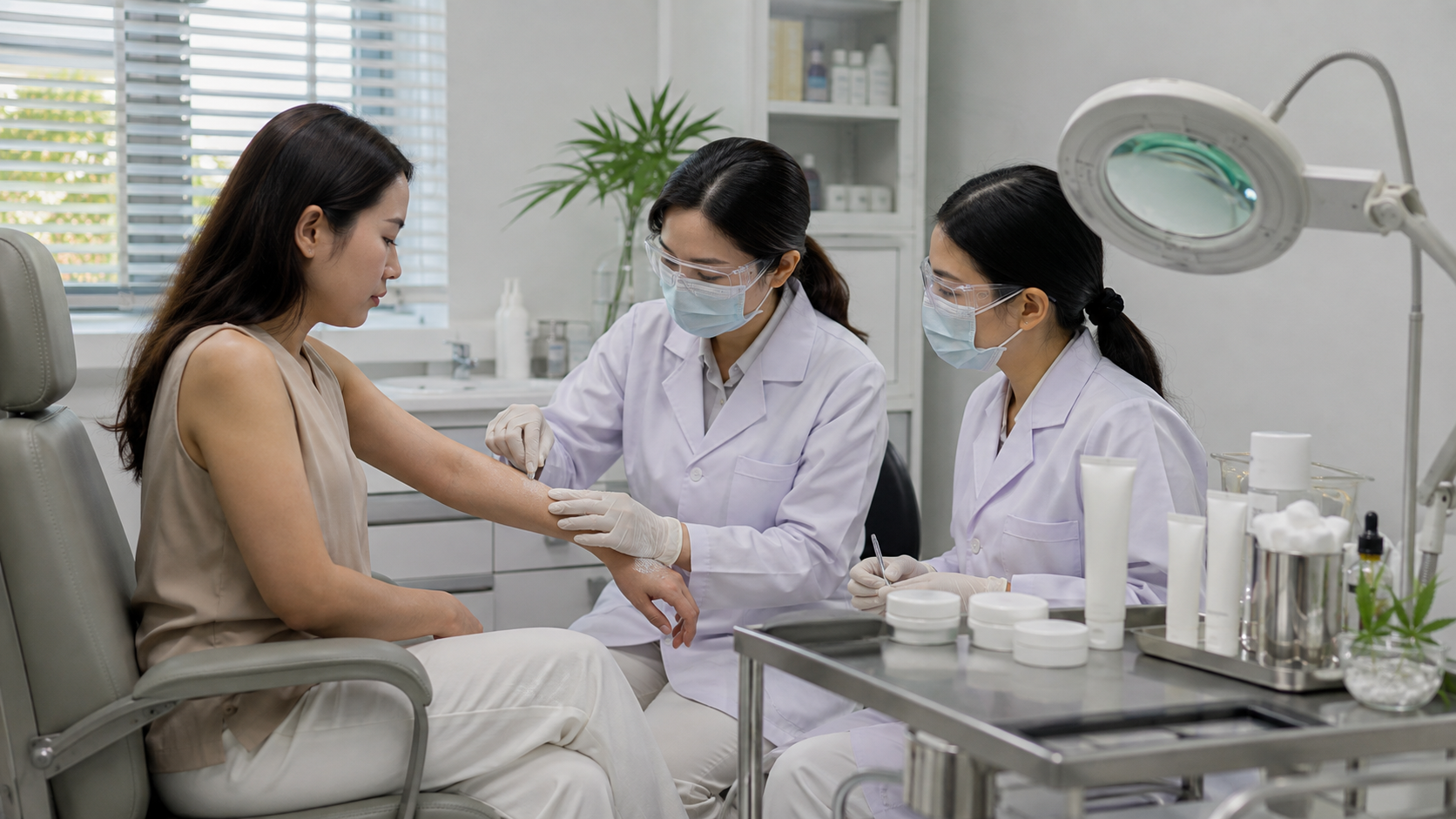
Clinicians evaluating a CBD topical skin treatment in a clinic
You might also like
SOURCES
International Cannabis Business Conference, Thailand Study Finds CBD May Be Effective At Treating Acne
https://internationalcbc.com/thailand-study-finds-cbd-may-be-effective-at-treating-acne/
Cosmetics, Cannabidiol Loaded Hyaluronic Acid Based Nanogel for Inflammatory Acne
https://www.mdpi.com/2079-9284/13/4/165
FDA, How Can I Tell If My Product Is a Cosmetic, a Drug, or Both?
https://www.fda.gov/industry/fda-basics-industry/how-can-i-tell-if-my-product-cosmetic-drug-or-both

Virginia has released draft adult use cannabis rules featuring a 350 store cap, limited large scale cultivation licenses, significant full scale licensing fees, and a lower cost microbusiness pathway. The draft gives operators their clearest look yet at how licensing, capital, property, cultivation, and market entry could work before sales begin in July 2027.