
Massachusetts cannabis distribution after $10 billion in sales.
Massachusetts adult use cannabis sales have officially passed $10 billion, reaching the milestone less than two months before voters decide whether to eliminate the regulated adult use retail market. Cannabis Control Commission data shows licensed retailers crossed $10 billion in gross sales on September 5, 2026. The industry now regularly generates more than $1.5 billion in annual sales, supports nearly 15,000 individual employees, and has generated approximately $2 billion in state and local tax revenue. Question 8 now puts much of that commercial system in front of voters on November 3.
Quick facts
• Massachusetts adult use cannabis sales passed $10 billion on September 5, 2026
• Total reported sales reached approximately $10.01 billion at the milestone
• Adult use operators generated $1.09 billion through August 2026
• June 2026 set a monthly sales record at approximately $156 million
• Massachusetts generated $1.65 billion in adult use sales during 2025
• The industry includes 782 operating businesses and nearly 15,000 individual employees
• Cannabis Control Commission reports approximately $2 billion in state and local cannabis taxes generated since legalization
• Fiscal year 2026 cannabis sales, excise, and local taxes generated approximately $336 million
• Cities and towns received more than $43 million in local option cannabis taxes during fiscal year 2026
• Adult use cannabis is subject to a 6.25 percent state sales tax and 10.75 percent state excise tax
• Host communities may impose an additional local option tax of up to 3 percent
• Question 8 on the November 3 ballot would prohibit regulated adult use retail cannabis sales while preserving the medical cannabis program
• If approved, the proposed law would take effect January 1, 2028
• The universal operator lesson is simple: even a mature legal market with billions in sales can still face political risk capable of changing licenses, property value, jobs, tax revenue, and future investment
If the Massachusetts repeal vote could affect your operation, complete our quick Puro Risk intake form so you can map licenses, property, payroll, contracts, inventory, and insurance exposure before the election changes business assumptions.
Why $10 billion matters
Massachusetts opened its first adult use cannabis retailers in November 2018.
Less than eight years later, the market has produced more than $10 billion in gross sales.
That establishes cannabis as a meaningful part of the state's regulated economy rather than an experimental market.
The Cannabis Control Commission says the industry now includes hundreds of operating businesses across retail, cultivation, manufacturing, testing, transportation, delivery, and other services.
The milestone also arrives while prices are declining and the market is becoming more competitive, showing that strong statewide consumer demand does not automatically mean every individual operator is profitable.
Why tax revenue changes the repeal conversation
Cannabis is now connected to state and municipal budgets.
Adult use purchases can carry a combined tax rate of as much as 20 percent in communities using the full 3 percent local option tax.
The Commission says cannabis generated approximately $336 million in state and local tax revenue during fiscal year 2026 alone.
Those funds support programs and government functions including substance use services, public safety, social equity programs, transportation, and municipal budgets.
That does not settle the public policy debate. Supporters of repeal continue raising health and safety concerns.
It does mean the financial consequences of changing the system are now significantly larger than they were when Massachusetts first voted on legalization in 2016.
If your business depends on Massachusetts adult use revenue, use the Puro Risk intake form to review fixed expenses, debt, lease obligations, employee costs, inventory, and contracts under both election outcomes.
Why Question 8 creates operator risk now
Question 8 is titled Prohibit Retail Sale of Adult Recreational Use Marijuana.
If voters approve it, Massachusetts would eliminate the legal framework supporting commercial adult use retail sales while retaining the medical cannabis program and limited possession rights.
The proposal would not take effect immediately after Election Day. Its scheduled effective date is January 1, 2028.
That creates time for transition, but it does not eliminate risk.
Operators may need to evaluate whether they can convert into medical operations, reduce exposure, restructure leases, manage inventory, adjust staffing, or reconsider planned investments.
Landlords and lenders should also understand how dependent property values and borrower cash flow are on adult use licenses.
Why local communities have exposure
The impact reaches beyond cannabis companies.
More than 300 Massachusetts communities either host adult use businesses or permit cannabis delivery.
Cities and towns received more than $43 million in local option taxes during fiscal year 2026.
A repeal could therefore affect municipal revenue alongside private businesses and employees.
The statewide market has become interconnected with commercial property, employment, local taxation, transportation, suppliers, professional services, and social equity funding.
If Question 8 creates material exposure for your business or property, complete the Puro Risk intake form to build a continuity file covering licenses, contracts, locations, employees, insurance, and financial obligations before November.
Conclusion
Massachusetts reaching $10 billion in cannabis sales demonstrates how large the regulated market has become.
The milestone also makes the November vote more consequential.
Voters are no longer deciding whether to launch a new industry. They are considering whether to dismantle a commercial adult use system that already generates more than $1.5 billion annually, employs thousands of people, supports hundreds of businesses, and contributes substantial state and local tax revenue.
The universal operator lesson is straightforward. Market maturity does not eliminate political risk.
Educational note: This article is for education only and is not legal, regulatory, political, tax, financial, investment, licensing, employment, real estate, or insurance advice.
What to do this week
• Model revenue and cash flow if adult use retail sales end
• Review leases, debt, vendor agreements, and property commitments
• Identify exposure to licenses that depend entirely on adult use activity
• Review inventory and production commitments extending into 2027
• Quantify payroll, taxes, and fixed expenses tied to Massachusetts adult use revenue
• Build separate operating plans for Question 8 passing and failing
FAQ
How much cannabis has Massachusetts sold?
Massachusetts adult use operators passed $10 billion in cumulative gross sales on September 5, 2026.
How much does the market generate annually?
The Cannabis Control Commission says adult use cannabis now reliably generates more than $1.5 billion in gross sales each year.
How is adult use cannabis taxed?
Sales are subject to a 6.25 percent state sales tax and a 10.75 percent cannabis excise tax. Cities and towns may add a local option tax of up to 3 percent.
How much cannabis tax revenue has Massachusetts generated?
The Cannabis Control Commission reports approximately $2 billion in state and local taxes since legalization.
What would Question 8 do?
Question 8 would eliminate regulated adult use retail cannabis sales while preserving the medical cannabis program and certain limited possession rights.
What is the biggest operator takeaway?
A $10 billion market can still face regulatory reversal. Operators should evaluate licenses, leases, debt, inventory, employees, property, and capital under both election outcomes.
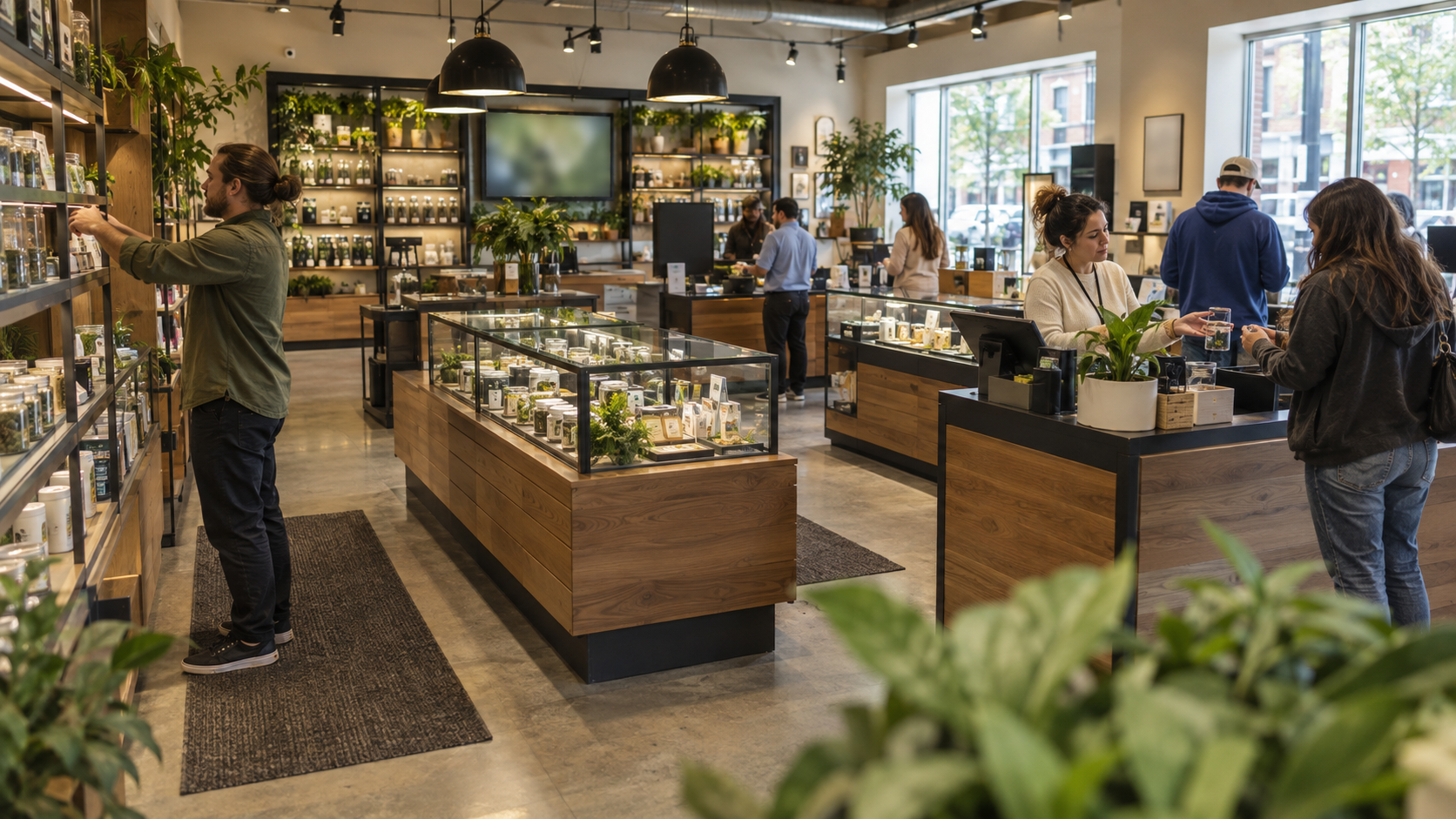
Busy Massachusetts cannabis dispensary serving customers as the adult-use market reaches $10 billion in cumulative sales.
You might also like


SOURCES
WBUR, Massachusetts Cannabis Sector Hits $10 Billion In Sales Ahead Of Repeal Vote, September 9, 2026
WBUR reports the $10 billion milestone, tax rates, approximately $2 billion in cumulative taxes, $43 million in fiscal year 2026 local option taxes, employment figures, and the approaching repeal vote.
Massachusetts Cannabis Control Commission, Massachusetts Marijuana Establishments Hit $10 Billion In Gross Sales, September 9, 2026
Cannabis Control Commission release
The Commission confirms the September 5 milestone, $10.01 billion cumulative sales, $1.09 billion in 2026 sales through August, $156 million June record, 782 operating businesses, nearly 15,000 employees, and approximately $336 million in fiscal year 2026 cannabis taxes.
Massachusetts Secretary Of The Commonwealth And Attorney General, Question 8 And Initiative Petition 25 10
Massachusetts ballot information
Official state materials confirm Question 8 will appear on the November 3, 2026 ballot and that the proposed law would repeal the adult use retail framework while preserving the medical program. The proposal would take effect January 1, 2028.

Trulieve and Cronos have each gained roughly 27 percent in 2026 while reporting stronger operating results. The broader signal is that public market attention is increasingly rewarding cash generation, improving margins, liquidity, and measurable revenue growth.