
Nebraska Medical Cannabis Moves From Ballot Win To Cultivation
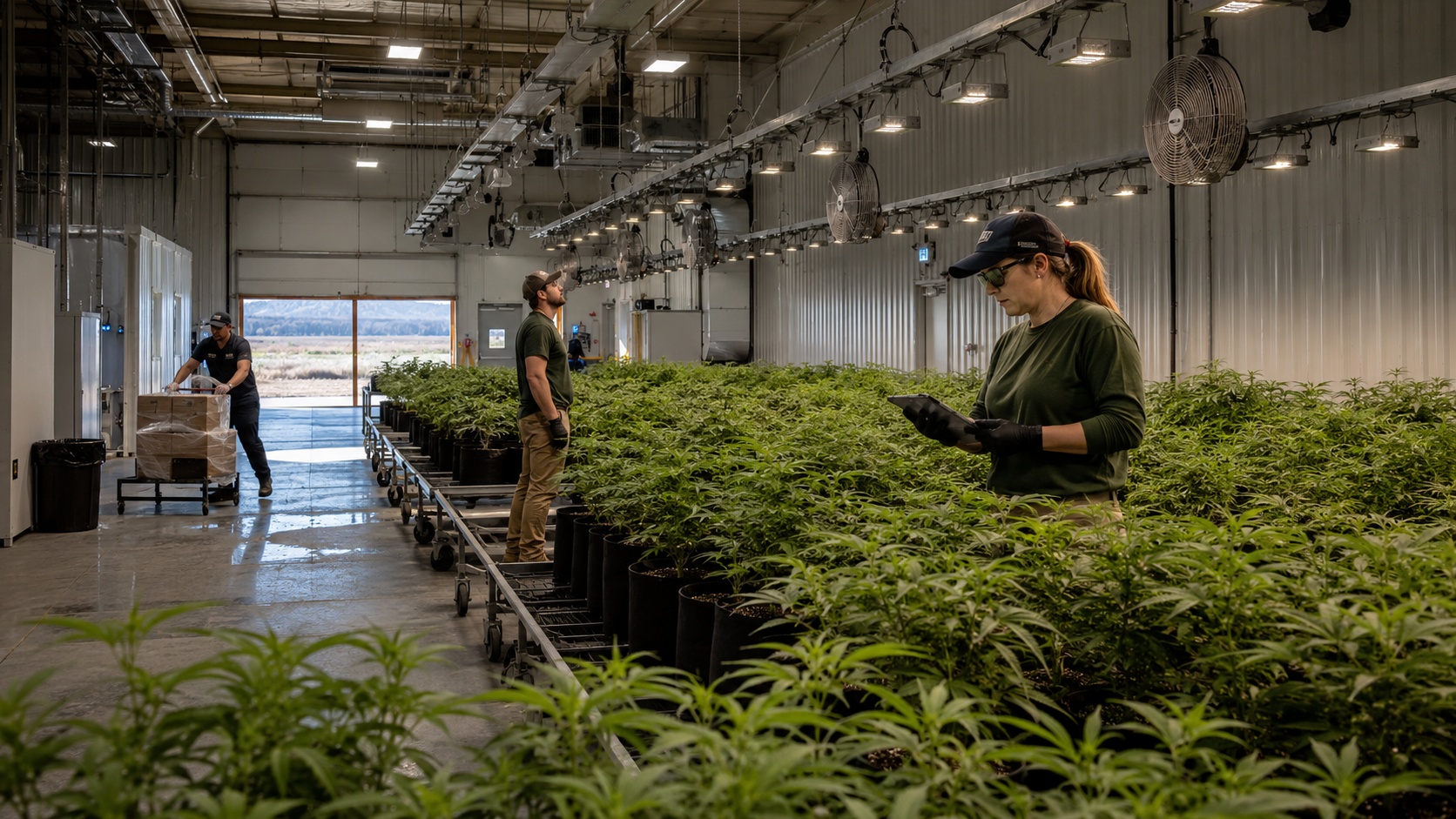
Cannabis grow facility showing scaled production and lean staffing
Nebraska medical cannabis is finally moving from voter approval into real operations. Marijuana Moment, via Nebraska Examiner, reports that Nebraska regulators approved the first state licensed medical cannabis cultivation operation, clearing MahāMotā Cultivation Company in Raymond to begin growing. The Nebraska Medical Cannabis Commission also plans to begin accepting applications for product manufacturers, with rules allowing up to four manufacturers, 12 transporters, and 12 dispensaries. For operators, cultivators, manufacturers, investors, compliance teams, and patients, this is the moment when Nebraska’s medical cannabis program starts becoming more than a legal promise.
Quick facts
• Nebraska regulators approved MahāMotā Cultivation Company in Raymond to begin medical cannabis cultivation
• The approval followed a successful inspection ratified by the Nebraska Medical Cannabis Commission
• MahāMotā is the first state licensed cultivator cleared to put plants in the ground
• The commission is preparing to accept applications for product manufacturers
• Current rules allow up to four product manufacturers
• The rules also allow up to 12 transporters and 12 dispensaries
• Other cultivators are still dealing with inspection timing, relocation, and local zoning issues
• The universal operator lesson is simple: voter approval does not create patient access until cultivation, manufacturing, transport, and dispensing all start working together
If Nebraska market timing is affecting your growth plan, complete our quick Cannashield intake form so you can map licensing, zoning, cultivation, manufacturing, and insurance exposure before the next application window creates more pressure.
Why this approval matters
This approval matters because Nebraska has been stuck between voter intent and operational reality. Voters approved medical cannabis in 2024, but patients still need a functioning supply chain before access becomes real. Cultivation is the first physical step in that chain. Without plants in the ground, there is no product for manufacturers, transporters, dispensaries, or patients.
MahāMotā’s approval gives the state its first active cultivation signal. It does not mean the whole market is ready. It means the program has moved from legal framework into early execution. That is important because emerging medical markets often lose momentum when licensing, inspections, zoning, and rules take too long to align.
Nebraska is now entering the phase where every delay has a practical impact. Patients are waiting. Operators are spending money. Investors are watching regulatory timing. Local governments are deciding how comfortable they are with cannabis facilities inside their boundaries.
Why manufacturer applications are the next pressure point
Cultivation alone cannot serve patients. The next major question is who will process plant material into approved medical cannabis products and how quickly that licensing process moves. The commission is preparing to accept applications for product manufacturers, and those applicants will need to understand that Nebraska is still a young regulatory environment.
Manufacturers should prepare for uncertainty around fees, rules, product standards, inspection requirements, transport coordination, and future amendments. The Marijuana Moment article noted that commissioners discussed accepting applications while acknowledging fees and regulations may still change. That creates opportunity, but it also creates risk for applicants that are not prepared for moving rules.
This is the universal operator lesson. In a new medical market, first movers need flexibility, cash reserves, and strong documentation because the regulatory process is still being built while businesses are trying to launch.
If uncertainty around applications, product manufacturing, or compliance documentation is affecting how you plan, complete our Cannashield questionnaire to pressure test your exposure before the state’s licensing timeline accelerates.
Why zoning could slow the market
Zoning may become one of Nebraska’s biggest early friction points. The article reports that another licensed cultivator, KRL Med LLC, has been delayed after a Washington County zoning decision affected its ability to use a property for cultivation. Midwest Cultivator Group also received approval to relocate from Omaha to Gretna after facing changing zoning requirements.
That matters because local land use can decide whether a license becomes a real operation. A state license is not enough if local zoning, permits, conditional use approvals, construction rules, or inspections create barriers. Operators need to confirm site control, zoning status, greenhouse or facility approvals, utility access, security needs, and local political risk before assuming a cultivation site is usable.
For landlords and investors, zoning is not a technical issue. It is a financing and timeline issue. A delayed facility can burn cash quickly.
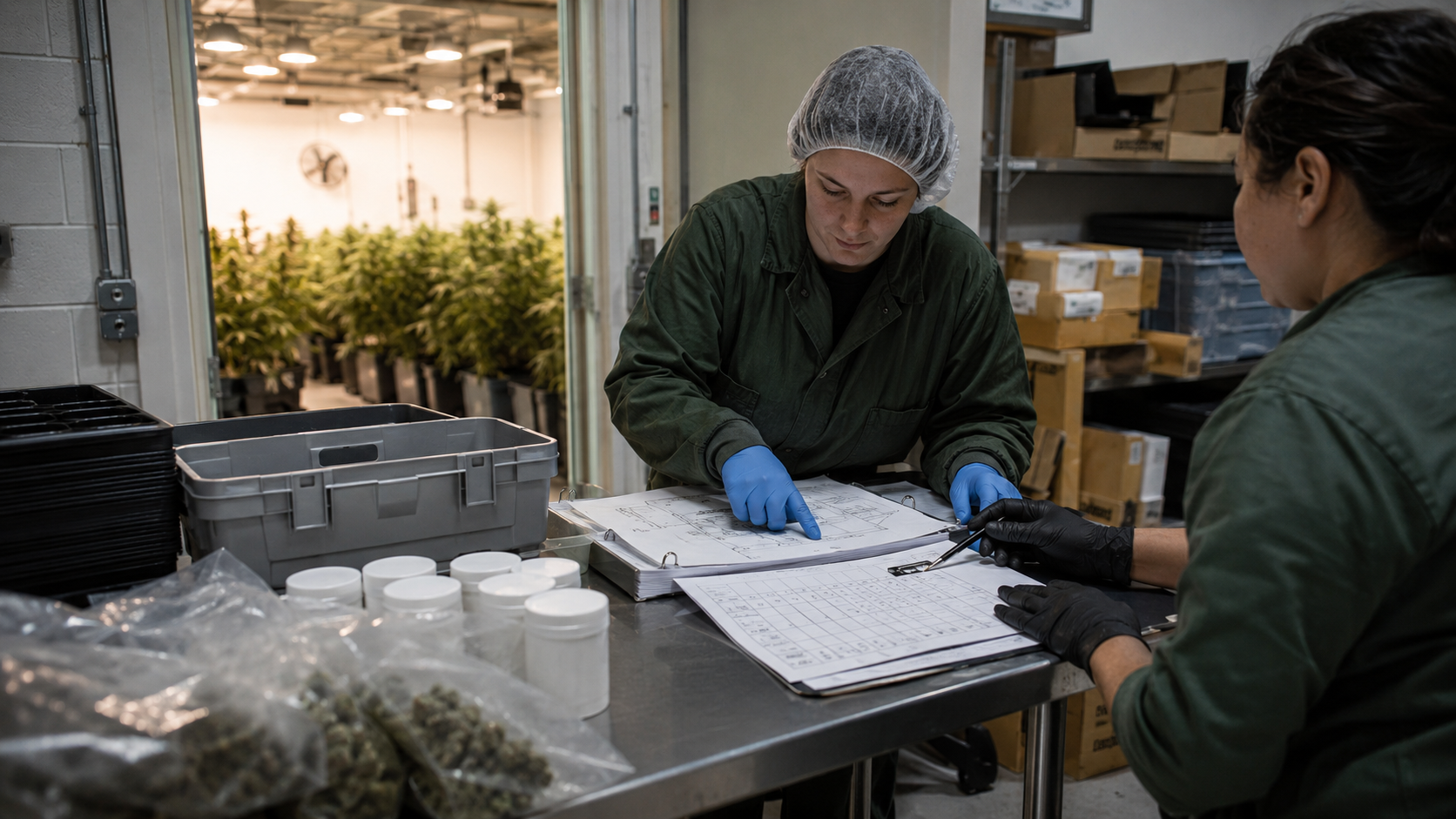
Cannabis team reviewing cultivation records and operational costs
What operators should watch next
Nebraska’s next phase will depend on four moving pieces. First, whether other cultivators clear inspections and local hurdles. Second, whether manufacturer applications attract serious and prepared applicants. Third, whether transporter and dispensary licensing follows quickly enough to build a complete patient access system. Fourth, whether final regulations move forward without more political or legal delay.
Operators should also watch the Attorney General and governor approval process for permanent regulations. Temporary rules can keep the program moving, but long term confidence usually requires more stable rules. If regulations remain uncertain, financing, contracts, buildouts, and insurance can become harder to finalize.
If you need to organize licensing, zoning, facility, and insurance records before Nebraska expands applications, use the Cannashield intake form to identify weak points and build a clearer market entry file.
You might also like


Conclusion
Nebraska’s approval of MahāMotā Cultivation Company is a real milestone. It marks the state’s first cleared medical cannabis cultivation operation and gives the program a physical starting point after voter approval, legal challenges, and regulatory delays.
For operators, cultivators, manufacturers, investors, compliance teams, and patients, the message is simple. Nebraska is moving, but it is still early. The market will only become functional when cultivation, manufacturing, transportation, dispensaries, zoning, and patient access all connect.
Educational note: This article is for education only and is not legal, regulatory, tax, financial, zoning, real estate, or insurance advice.
What To Do This Week
• Review Nebraska cultivation, manufacturing, transporter, and dispensary license limits
• Track the product manufacturer application window and any changes to fees or rules
• Confirm zoning, conditional use, building, and local approval requirements before committing to a site
• Watch whether additional cultivators clear inspections or face delays
• Review cash flow needs for a slow build medical market
• Build a short internal memo on Nebraska licensing, zoning, production timing, and patient access risk
FAQ
What did Nebraska regulators approve?
Nebraska regulators approved MahāMotā Cultivation Company in Raymond to begin medical cannabis cultivation.
Why is this important?
It is the first state licensed cultivation operation cleared to begin growing medical cannabis in Nebraska.
What license type opens next?
The Nebraska Medical Cannabis Commission is preparing to accept applications for product manufacturers.
How many manufacturers can Nebraska license?
Current rules allow up to four product manufacturers.
How many transporters and dispensaries can be licensed?
Current rules allow up to 12 transporters and 12 dispensaries.
What is the biggest operator takeaway?
Nebraska is moving from voter approval into operations, but zoning, inspections, manufacturing, transportation, and dispensary licensing still need to align before patients have real access.
SOURCES
Marijuana Moment, Nebraska Officials Approve Start Of Medical Cannabis Cultivation
https://www.marijuanamoment.net/nebraska-officials-approve-start-of-medical-cannabis-cultivation/
Nebraska Secretary of State, Medical Cannabis Patient Protection Initiative petition filing
https://sos.nebraska.gov/sites/default/files/doc/elections/Petitions/2024/Nebraska%20Medical%20Cannabis%20Patient%20Protection%20Initiative.pdf
Nebraska Secretary of State, Election Results
https://electionresults.nebraska.gov/

Trulieve and Cronos have each gained roughly 27 percent in 2026 while reporting stronger operating results. The broader signal is that public market attention is increasingly rewarding cash generation, improving margins, liquidity, and measurable revenue growth.