
DEA Medical Cannabis Registration Portal Opens a New Federal Door

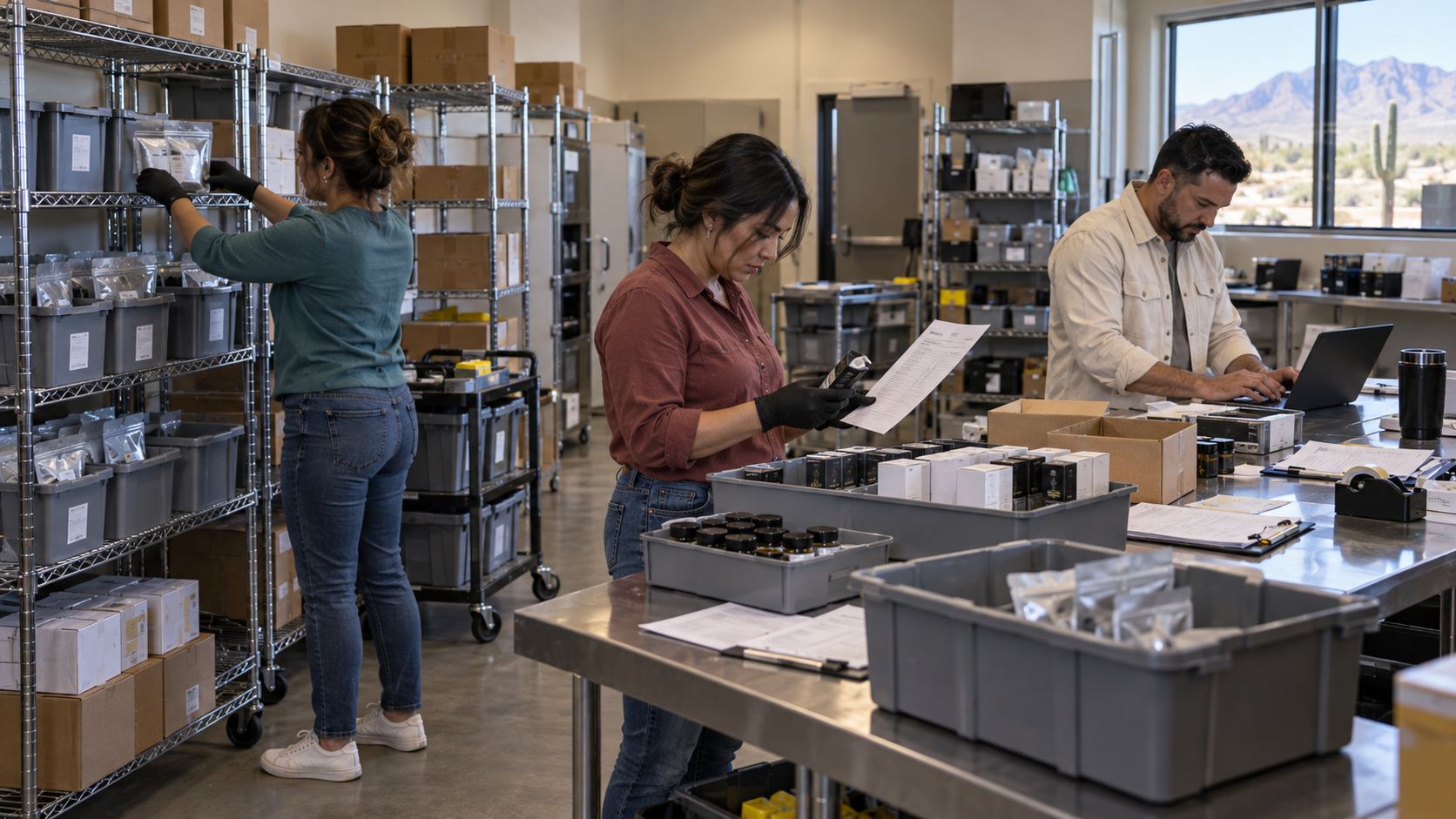
Applicant at a secure medical cannabis facility showing the DEA registration portal process for medical cannabis dispensaries.
The DEA’s new medical cannabis registration portal is one of the clearest signs yet that the federal medical lane is becoming more formalized. According to Reuters, the agency will open the portal on Wednesday at 9:00 a.m. ET, allowing companies to apply as medical cannabis dispensaries under the new federal process tied to the rescheduling move. For operators, this is bigger than a website launch. It is a signal that medical cannabis businesses now need to think more seriously about federal registration readiness, documentation quality, and how their facility security and compliance history will look under a new level of review.
Quick facts
• The DEA said it will launch a medical cannabis registration portal on Wednesday at 9:00 a.m. ET
• The portal will allow companies to apply to register as medical cannabis dispensaries under the new federal process
• Applicants must pay a $794 annual fee
• The application asks about liability issues and prior license history
• Applicants must describe security measures at the location
• The universal operator lesson is simple: once a federal door opens, paperwork quality becomes part of the business model
If federal cannabis changes are affecting your growth plan, Start with our quick Cannashield intake form so you can map compliance, operational, and insurance exposure before it turns into a scramble.
What the portal changes right now
This portal matters because it turns a policy shift into an actual operating step. Up until now, a lot of federal cannabis news has felt abstract. Hearings, announcements, and rescheduling headlines can move markets, but they do not always tell an operator what to do on Monday morning. This does. A company that wants to participate in the medical cannabis lane under the new federal process now has a concrete action point.
That makes the conversation more real. Operators are no longer just watching what Washington might do next. Some will now need to decide whether they are prepared to apply, what information they can support, and whether their internal records are strong enough to stand up to federal review.
Why this matters beyond the application
The biggest lesson here is not the fee. It is the nature of the questions. Reuters reported that applicants must answer liability and prior license history questions and describe site security measures. That tells you what the federal lens is looking for. The government is not just asking who wants to participate. It is asking whether the applicant appears organized, credible, and capable of operating within a more structured framework.
That has real implications. A messy compliance history, weak internal documentation, or vague security controls may now carry more weight than some operators are used to. The application itself becomes a kind of mirror. It shows where a business is strong and where it may not be ready for deeper scrutiny.
This is the universal operator lesson for every state, not just for businesses planning to apply right away. When regulation gets more formal, the winners are usually not the loudest companies. They are the ones that can prove what they do, explain how they do it, and support it with clean records.
If uncertainty is affecting how you plan or negotiate, Complete our quick Cannashield intake form to pressure test your compliance posture, operational controls, and documentation before federal review forces the issue.
What applicants should have ready
The smartest operators will treat this as a preparation exercise, not just a filing task. If the application asks about liability, prior license history, and security, then those are the areas worth tightening immediately. Businesses should know how they would explain prior regulatory issues, how they document corrective action, and whether their security procedures are written clearly enough for an outside reviewer to understand them.
It also means someone inside the company should own the process. A federal application can easily become fragmented when legal, operations, compliance, and leadership all assume someone else is handling it. That is how deadlines get missed and answers become inconsistent. Even a relatively simple portal can expose weak internal coordination.
The deeper point is that medical cannabis is moving into a more formal federal structure, at least in this lane. That should push operators to act less like they are waiting on policy and more like they are preparing for a regulated opportunity.
The operator lesson
The temptation will be to treat this as a narrow medical story. It is more than that. It is a preview of what happens when federal cannabis policy starts becoming operational instead of theoretical. More registration, more questions, more documentation, more scrutiny. That does not automatically mean every business should apply, and it does not remove broader federal friction. But it does mean preparation now matters more than opinion.
If you need to assess whether your operation is ready for federal style scrutiny, Complete our quick Cannashield intake form so you can identify weak points in security, documentation, and compliance before they become application problems.
You might also like

Conclusion
The DEA medical cannabis registration portal is not just another headline. It is a practical step that turns federal movement into a real process for operators. The businesses best positioned for this next phase will be the ones that take the application seriously, organize their records, and understand that federal access usually comes with a higher standard of proof. In cannabis, that standard is starting to matter more.
Educational note: This article is for education only and is not legal, regulatory, tax, or insurance advice.
What To Do This Week
• Confirm who inside your company would own a DEA registration process
• Review your prior license history and document any corrective actions clearly
• Audit physical security at the facility and make sure it is written down, not just assumed
• Gather liability and compliance records in one place
• Create a simple summary of your operations that leadership and counsel can review
• Decide whether federal medical registration fits your current strategy or a later phase
FAQ
What is the DEA launching?
A medical cannabis registration portal for companies seeking to register as medical cannabis dispensaries under the new federal process.
When does the portal open?
Reuters reported that it opens Wednesday at 9:00 a.m. ET.
How much is the annual fee?
The annual fee is $794.
What information will applicants need to provide?
Applicants must answer questions about liability, prior license history, and security measures at the location.
Why does this matter to operators?
Because it turns a federal policy change into an actual application process with real documentation and readiness requirements.
What is the biggest operator takeaway?
Federal opportunity usually comes with higher scrutiny, so documentation quality and security readiness now matter even more.
SOURCES
Reuters, U.S. DEA medical cannabis registration portal to launch Wednesday
https://www.reuters.com/legal/litigation/us-dea-medical-marijuana-registration-portal-launch-wednesday-2026-04-27/
DEA Diversion Control Division registration resources
https://www.deadiversion.usdoj.gov/
Controlled Substances Act and DEA registration background
https://www.dea.gov/drug-information/csa

The bipartisan CLAIM Act would protect insurers, brokers, and agents from federal penalties solely for serving state legal cannabis businesses. The proposal could encourage greater carrier participation while leaving underwriting decisions, state regulation, pricing, exclusions, and coverage terms in the hands of insurers.