Alabama Medical Cannabis Finally Opens, But The Market Is Still A Slow Build
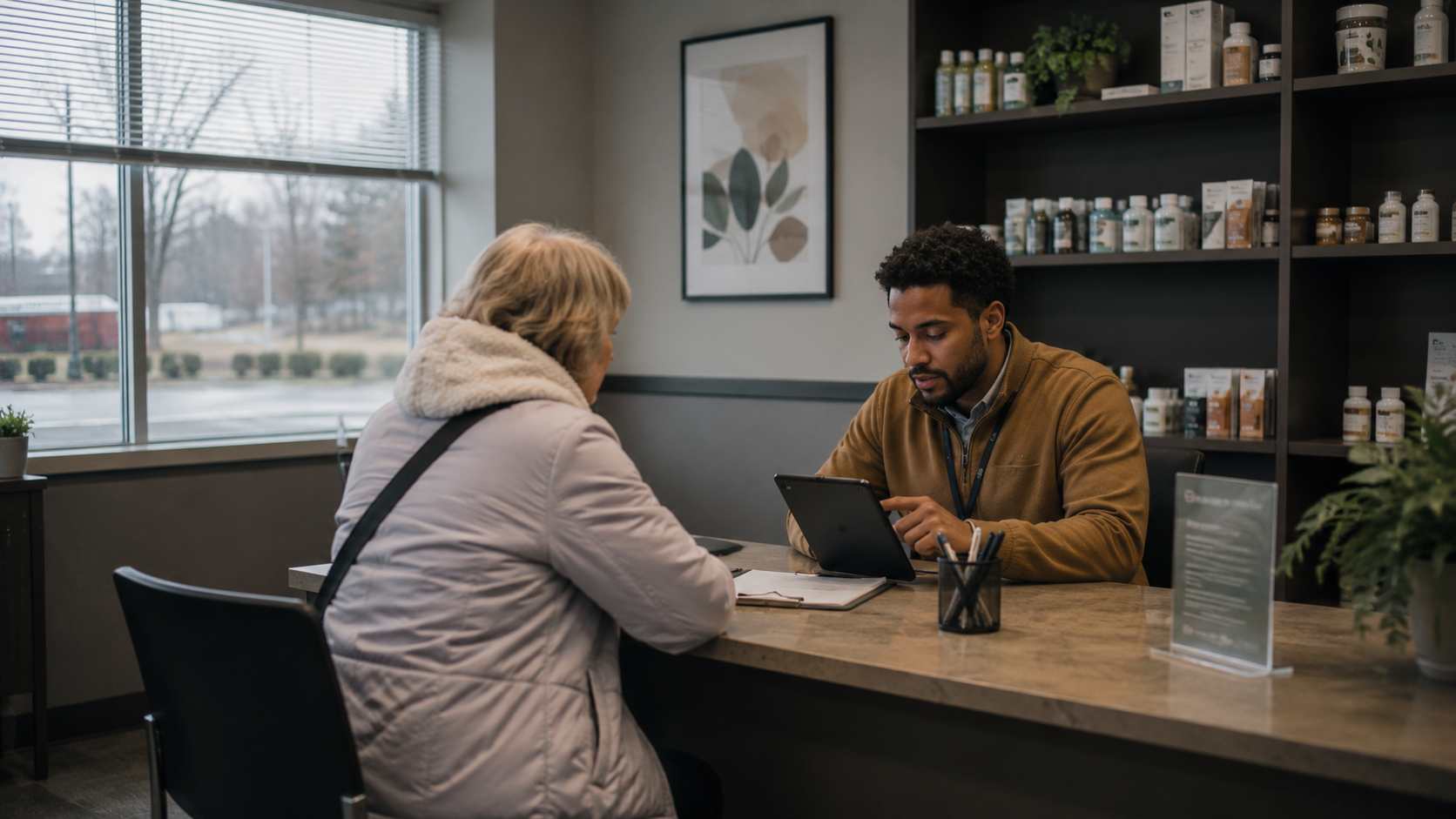
Medical cannabis consultation between staff and patient in Alabama.
Alabama’s medical cannabis market has finally moved from law on paper to a real patient sale. MJBizDaily reports that the first state sanctioned transaction took place at Callie’s Apothecary in Montgomery, making it the first legal dispensary operating in the state. For operators, investors, healthcare providers, and compliance teams, this is an important milestone. But it is also a reminder that a market launch does not erase years of licensing delays, litigation, physician bottlenecks, and slow patient onboarding.
Quick facts
• Alabama’s first legal medical cannabis sale took place at Callie’s Apothecary in Montgomery
• As of launch, it is the only operating legal dispensary in the state
• Alabama law allows four dispensary licensees, and each may operate up to three dispensing sites
• That means up to 12 dispensaries could eventually operate under the dispensary license category
• The Alabama Medical Cannabis Commission says three dispensary licenses were issued on January 8, 2026, while a fourth remains stayed pending judicial review
• MJBizDaily reports that the state had more than 300 registered patients and 52 certified physicians at launch
• Alabama still prohibits raw plant material and products that could be smoked or vaped
• The universal operator lesson is simple: a market is not truly open until patients, physicians, and retail access all start moving together
If Alabama access changes are affecting your growth plan, complete our quick Cannashield intake form so you can map licensing, patient access, and insurance exposure before the market shifts again.
Why this launch matters
The opening of Callie’s Apothecary matters because it turns Alabama’s program from a regulatory project into an actual operating market. That is a big step in a state that has spent years stuck in canceled award rounds, litigation, and audit related scrutiny. The industry can now point to a real patient access moment instead of another projected timeline.
Still, one operating store does not mean the market is fully functioning. Alabama remains in a slow build phase. Even the Alabama Medical Cannabis Commission’s patient page shows only one opening date so far, while other dispensing sites are still expected to come online later. That means access is still narrow, and patients in many parts of the state may remain far from a legal retail option for now.
Why Alabama is still a restrictive market
The Alabama opportunity is real, but it is not broad. The state allows only specific medical cannabis product forms such as tablets, capsules, tinctures, gels, patches, inhaler oils, and certain other non smoked formats. The commission’s patient guidance is clear that raw plant material is prohibited, and products that could be smoked or vaped are also not allowed.
That matters because market access and product access are not the same thing. A patient may now have a legal way to buy medical cannabis, but the program still limits what can be sold and how it can be used. For operators, that changes the revenue model, inventory mix, retail education needs, and long term store economics.
This is the universal operator lesson. Limited medical programs can create opportunity, but only when a business respects the restrictions instead of pretending it is operating in a broader market.
If uncertainty around product limits, retail buildout, or patient demand is affecting how you plan, complete our Cannashield questionnaire to pressure test your exposure before growth assumptions get ahead of the market.
Why physicians may decide the pace
One of the most important pressure points in Alabama is physician participation. MJBizDaily reports that the market launched with 52 certified physicians and more than 300 registered patients. That gives the state a real starting point, but it also shows how early the program still is.
In medical cannabis, retail expansion alone does not create demand. Patients need certified providers, providers need confidence in the process, and the registration system needs to work smoothly. If physician participation grows, patient enrollment may expand with it. If physician participation stays limited, dispensary openings alone may not deliver the kind of market growth some operators hope for.
What operators and investors should watch next
The next phase in Alabama will be about execution. Operators should watch how quickly the remaining dispensaries open, whether patient registration accelerates, whether physician certification expands, and whether litigation continues to slow the broader rollout. Investors should watch the same metrics, but with discipline. A limited medical market can take longer to mature than headlines suggest.
The commission’s business page confirms that Alabama can still add more retail access later through integrated facility licenses, which may allow even more dispensing sites if those awards move forward. That means the market structure could still evolve meaningfully from here.
If you need to organize licensing, retail, compliance, and insurance records before Alabama or another emerging medical market expands further, use the Cannashield intake form to identify weak points and build a cleaner operating plan.
You might also like


Conclusion
Alabama’s first medical cannabis sale is a real milestone, and it matters for patients who have waited years for the market to become real. But the broader business story is still one of gradual buildout, regulatory caution, and limited access.
For operators, investors, healthcare providers, and compliance teams, the message is simple. Alabama is open, but only in the narrowest sense so far. The businesses best positioned here will be the ones that treat this as a slow build medical market, not a fast growth retail race.
Educational note: This article is for education only and is not legal, regulatory, medical, financial, or insurance advice.
What To Do This Week
• Track where the next Alabama dispensing sites are expected to open
• Monitor patient enrollment and physician certification growth
• Review product plans against Alabama’s restricted medical formats
• Check whether litigation or license review changes retail timing
• Identify where rural access gaps may create future demand
• Build a short internal memo on Alabama’s slow build market risks and opportunities
FAQ
What happened in Alabama?
Alabama recorded its first legal medical cannabis sale at Callie’s Apothecary in Montgomery.
How many dispensaries are open right now?
At launch, only one legal dispensary was operating.
How many dispensaries could eventually open?
Under the dispensary license category, four companies may operate up to three dispensing sites each, for up to 12 total.
Why has the rollout taken so long?
The program was slowed by canceled award rounds, litigation, and audit related issues.
What products are allowed in Alabama?
Allowed products include formats such as tablets, capsules, tinctures, topicals, patches, nebulizers, and inhaler oils. Raw plant material and products that could be smoked or vaped are prohibited.
What is the biggest operator takeaway?
Patient access depends on more than licenses. Physicians, product rules, and real retail openings all have to move together.
SOURCES
MJBizDaily, Alabama Cannabis Market Opens With One Dispensary, 11 to Follow
https://mjbizdaily.com/news/alabama-cannabis-market-opens/616347/
Alabama Medical Cannabis Commission, Patients, Caregivers, and Physicians
https://amcc.alabama.gov/patients/
Alabama Medical Cannabis Commission, Cannabis Businesses
https://amcc.alabama.gov/cannabis-businesses/

Trulieve and Cronos have each gained roughly 27 percent in 2026 while reporting stronger operating results. The broader signal is that public market attention is increasingly rewarding cash generation, improving margins, liquidity, and measurable revenue growth.