
Emblem Cannabis Deal Shows How Distressed Assets Are Reshaping Canada
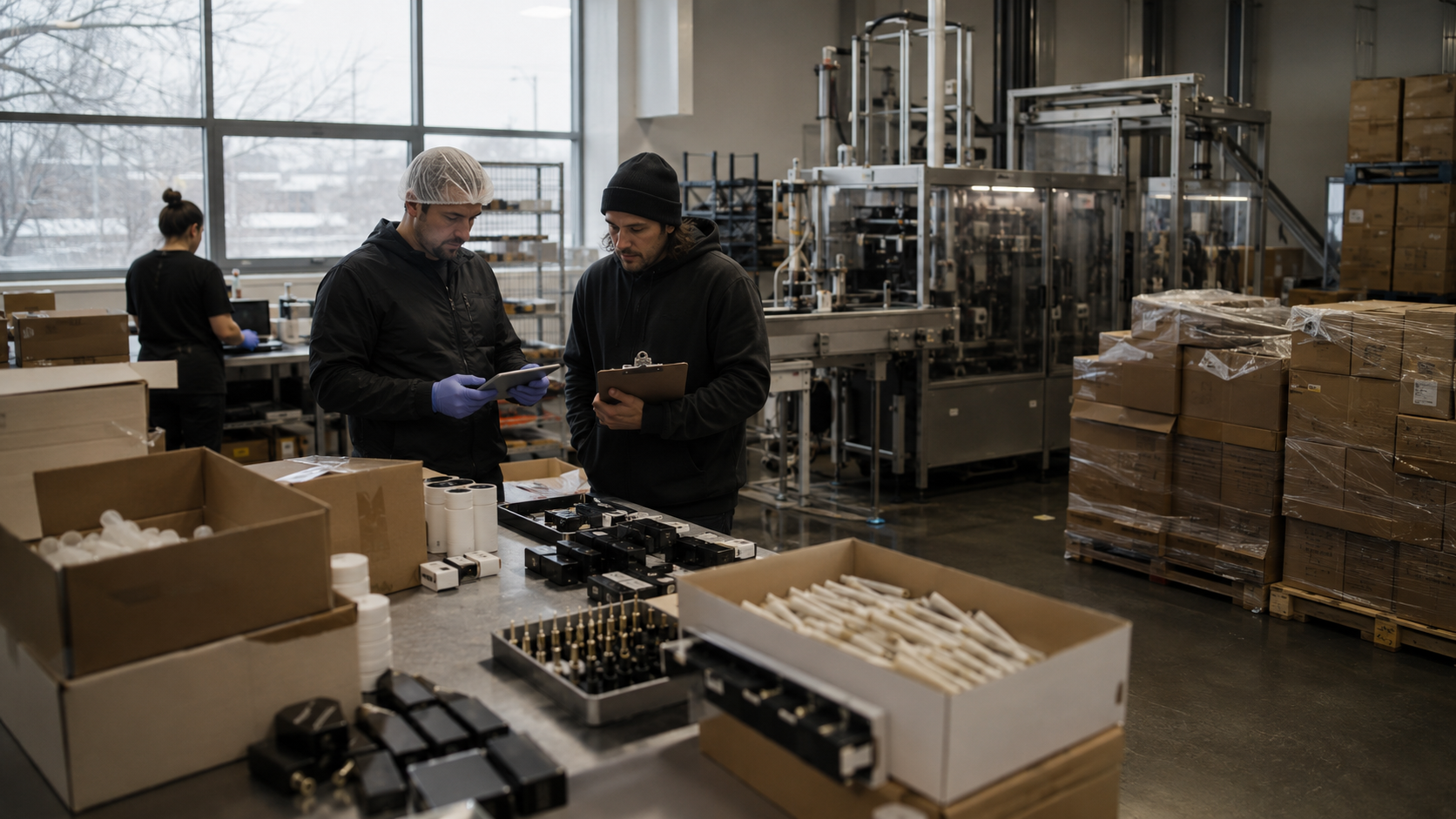
Cannabis staff reviewing manufacturing assets during acquisition due diligence.
Canadian cannabis consolidation is still being driven by debt, tax pressure, wholesale compression, and distressed assets. Business of Cannabis reports that Emblem Cannabis, a subsidiary of Red White & Bloom, is set to complete its acquisition of insolvent Canadian cannabis company Ayurcann on or about June 5, 2026. The deal includes a Health Canada licensed manufacturing facility, vape and pre roll production capabilities, product lines distributed across eight provinces, and roughly 146 SKUs across about 2,600 retail outlets.
Quick facts
• Emblem Cannabis is set to complete its acquisition of Ayurcann around June 5, 2026
• Ayurcann entered creditor protection under Canada’s CCAA process on January 30, 2026
• Court filings cited liquidity pressure and about CA$10.6 million owed to Canada’s tax authority
• The deal includes a Health Canada licensed manufacturing facility in Pickering, Ontario
• The acquired platform includes vape and pre roll manufacturing capabilities
• Business of Cannabis reports roughly 146 SKUs across about 2,600 retail outlets
• Emblem also assumed Ayurcann debtor financing and committed a new CA$3 million facility
• The universal operator lesson is simple: distressed assets can create opportunity, but only for buyers that understand debt, tax, and integration risk
If consolidation or distressed asset pressure is affecting your growth plan, complete our quick Cannashield intake form so you can map operational, property, and insurance exposure before a deal turns into a heavier burden.
Why this acquisition matters
This deal is not just about Emblem adding production capacity. It is about how cannabis companies are trying to buy scale in a market where weaker operators are being squeezed. Ayurcann had built a meaningful Canadian platform with manufacturing, product development, distribution relationships, and retail reach. But the company still entered creditor protection after liquidity pressure and unpaid tax exposure became too much to carry.
That is the hard truth in Canadian cannabis right now. Revenue, shelf presence, and product count do not automatically protect a business if taxes, pricing pressure, and operating costs are moving against it.
Why manufacturing capacity is still valuable
Ayurcann’s Pickering facility matters because licensed production infrastructure is not easy to build from scratch. Manufacturing space, equipment, compliance systems, formulation processes, packaging lines, and staff knowledge all carry value if the buyer can integrate them correctly.
For Emblem, the acquisition expands vape and pre roll capacity while adding distribution relationships across more provinces. That can help with product availability, channel control, and national reach. But buying distressed manufacturing assets is not the same as buying instant profitability. The buyer still has to control costs, stabilize operations, retain important relationships, and keep the facility aligned with demand.
This is the universal operator lesson. Capacity only matters if it can be used profitably.
If uncertainty around manufacturing, distribution, or post acquisition integration is affecting how you plan, complete our Cannashield questionnaire to pressure test your exposure before scale becomes a cash drain.
Why tax pressure is the warning sign
The CA$10.6 million owed to Canada’s tax authority is the part operators should not ignore. Tax pressure continues to be one of the clearest warning signs in cannabis. A company may look active in the market while still falling behind on obligations that eventually force restructuring.
That matters for investors, lenders, landlords, and suppliers. If a cannabis company is growing sales but not keeping up with taxes, rent, debt, payroll, or vendor payments, the business may be weaker than it looks. Distress does not always announce itself through empty shelves. Sometimes it shows up in court filings.
What operators should learn from this
Distressed acquisitions can be smart. They can give stronger operators access to facilities, product lines, equipment, retail relationships, and market share at prices that may be lower than building from zero. But they also come with hidden work.
Buyers need to study creditor exposure, inventory quality, regulatory license status, employee needs, supplier relationships, lease obligations, insurance gaps, and whether the acquired operation can actually be made profitable after closing. A discounted asset can still be expensive if the buyer inherits operational chaos.
If you need to organize facility, supplier, licensing, and insurance records before a sale, acquisition, or restructuring conversation, use the Cannashield intake form to identify weak points and build a clearer operating file.
You might also like


Conclusion
Emblem’s acquisition of Ayurcann assets shows how Canadian cannabis consolidation is moving into a sharper phase. Stronger operators are looking for manufacturing capacity and distribution reach, while distressed companies are being forced into sale processes by debt, tax pressure, and margin compression.
For operators and investors, the message is simple. Do not confuse scale with strength. The winners in this next phase will be the ones that buy carefully, integrate cleanly, and understand that distressed assets need discipline, not just ambition.
Educational note: This article is for education only and is not legal, regulatory, financial, tax, or insurance advice.
What To Do This Week
• Review whether your growth plan depends on buying assets or building internally
• Check tax exposure, creditor pressure, and unpaid obligations before any acquisition
• Review facility licenses, equipment, leases, and insurance records during diligence
• Confirm whether acquired production capacity matches actual market demand
• Build an integration plan for staff, suppliers, distribution, and compliance files
• Prepare a short memo on distressed asset risks before signing any deal
FAQ
What is Emblem Cannabis acquiring?
Emblem is acquiring Ayurcann’s operating business, including manufacturing operations, product lines, licenses, intellectual property, and distribution relationships.
Why did Ayurcann enter creditor protection?
Business of Cannabis reported that Ayurcann faced liquidity pressure and owed about CA$10.6 million to Canada’s tax authority.
What products are central to the deal?
The deal is focused heavily on vape and pre roll manufacturing capacity.
Where is the facility located?
The acquired manufacturing operation is based in Pickering, Ontario.
Why does this matter to operators?
It shows how debt, taxes, and wholesale price pressure are pushing distressed assets into consolidation.
What is the biggest operator takeaway?
Distressed assets can create growth, but buyers need discipline around taxes, creditors, licenses, operations, and integration.
SOURCES
Business of Cannabis, Emblem Cannabis Set to Complete Acquisition of Ayurcann Assets, Adding Vape and Pre Roll Manufacturing to Portfolio
https://businessofcannabis.com/emblem-cannabis-set-to-complete-acquisition-of-ayurcann-assets-adding-vape-and-pre-roll-manufacturing-to-portfolio/
Red White & Bloom, Emblem Cannabis Assumes Debtor In Possession Financing for Ayurcann
https://www.globenewswire.com/news-release/2026/06/03/3306379/0/en/Red-White-Bloom-Brands-Subsidiary-Emblem-Cannabis-Corporation-Assumes-Debtor-In-Possession-Financing-for-Ayurcann-Following-Assignment-From-Auxly-Cannabis-Group.html
Red White & Bloom, Emblem Selected as Successful Bidder to Acquire Ayurcann Operations
https://www.globenewswire.com/news-release/2026/04/13/3272881/0/en/Red-White-Bloom-Brands-Subsidiary-Emblem-Cannabis-Selected-as-Successful-Bidder-to-Acquire-Health-Canada-Licensed-Manufacturing-Operations-Leading-Vape-Pre-Roll-Brands-and-Expanded.html

Trulieve and Cronos have each gained roughly 27 percent in 2026 while reporting stronger operating results. The broader signal is that public market attention is increasingly rewarding cash generation, improving margins, liquidity, and measurable revenue growth.