
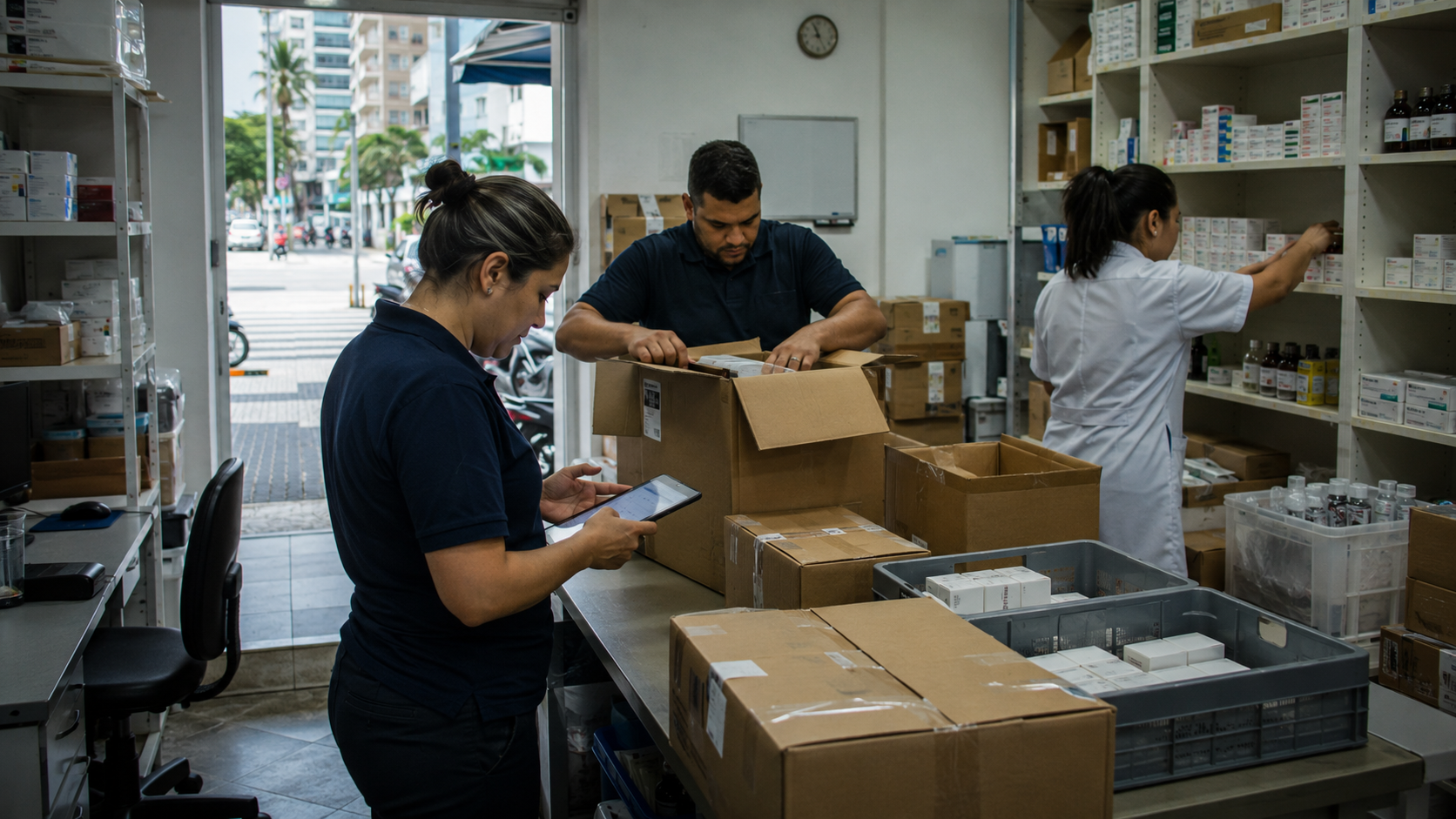
Pharmacy staff processing medical cannabis inventory in Brazil.
Brazil medical cannabis growth is getting harder to ignore. International Cannabis Business Conference reports that Brazil set a new record for medical cannabis imports, with medicinal cannabis imports rising 60 percent in March 2026. The article says Anvisa granted more than 61,000 import authorizations in the first quarter of 2026, including 23,199 in March alone, while Brazil’s medical cannabis market is expected to generate around R$1 billion in 2026. For operators, exporters, manufacturers, investors, and compliance teams, this is a strong signal that Brazil is becoming one of the more important international medical cannabis growth markets.
Quick facts
• Brazil recorded a new high for medical cannabis imports in March 2026
• International Cannabis Business Conference reports import activity grew 60 percent in March 2026
• Anvisa reportedly granted more than 61,000 import authorizations in the first quarter of 2026
• That total included 23,199 authorizations in March alone
• Brazil’s medical cannabis market is expected to generate around R$1 billion in 2026
• Brazil remains heavily dependent on imported medical cannabis products
• The universal operator lesson is simple: strong demand does not guarantee easy market entry when patient authorization and import rules still control access
If international expansion into Brazil is affecting your growth plan, complete our quick Cannashield intake form so you can map compliance, supply chain, and insurance exposure before import demand turns into execution pressure.
Why this record matters
Brazil’s import record matters because it shows real patient demand, not just policy discussion. Some emerging medical markets look attractive on paper but move slowly in practice. Brazil is showing something different. Patients are already using the import pathway at a scale that is becoming commercially meaningful.
That makes Brazil important for companies watching international growth. A market built on import authorizations can create real opportunity for exporters, manufacturers, pharmacy channel participants, and medical cannabis companies with the right compliance structure. But it also creates a narrow gate. If the pathway depends on authorization, documentation, and regulatory discipline, then only prepared businesses are likely to benefit.
Why import dependence cuts both ways
Import dependence is both the opportunity and the risk. On one hand, it creates room for foreign products and outside suppliers. On the other hand, it means the market can be shaped by paperwork, shipping times, currency pressure, patient authorization rules, and pharmacy access rather than simple consumer demand.
That matters because a fast growing market can still be operationally difficult. A company may see strong import numbers and assume the opportunity is wide open. In reality, success may depend on physician alignment, regulatory documentation, product registration strategy, distributor selection, and the ability to keep product flowing consistently.
This is the universal operator lesson. In medical cannabis, demand alone does not build a market. Distribution discipline does.
If uncertainty around export readiness, distributor structure, or market entry is affecting how you plan, complete our Cannashield questionnaire to pressure test your exposure before growth expectations get ahead of operations.
Why pharmacy access and patient authorization matter
Brazil’s market structure is a big part of this story. Patient access does not happen the same way it does in a typical adult use retail model. Authorization rules, prescription pathways, and regulated channels all play a role in who actually gets product and how often.
That means operators should watch more than headline import numbers. They should watch whether patient authorization becomes easier or harder, whether prescribing infrastructure expands, whether pharmacy participation improves, and whether domestic production rules evolve in ways that reduce long term reliance on imports.
A market can grow quickly while still keeping important bottlenecks in place. That is why Brazil looks promising but not simple.
What exporters and investors should watch now
The biggest opportunity in Brazil may be for businesses that treat the country as a serious medical market, not a speculative one. That means understanding product formats, import documentation, quality expectations, local partners, and reimbursement or affordability pressure where relevant.
Investors should also watch whether import growth turns into durable market structure. Rising authorizations are encouraging, but long term value depends on repeat patient demand, channel stability, regulatory clarity, and whether import dependence remains the dominant model or gradually gives way to a more local supply framework.
Brazil is also worth watching because larger medical markets often attract more competition over time. The early advantage may go to companies that move carefully now instead of rushing in later with weak local strategy.
If you need to organize international compliance, product, and insurance records before entering a medical cannabis market like Brazil, use the Cannashield intake form to identify weak points and build a clearer expansion plan.
You might also like


Conclusion
Brazil’s record medical cannabis import totals show a market that is no longer just emerging in theory. The demand signal is real, and the pace is increasing. But the businesses that benefit most are likely to be the ones that understand the structure behind the numbers.
For operators, exporters, manufacturers, and investors, the message is simple. Brazil looks like a serious growth market, but import dependence, patient authorization rules, and regulatory discipline will still decide who captures the opportunity.
Educational note: This article is for education only and is not legal, regulatory, medical, financial, or insurance advice.
What To Do This Week
• Review whether your products fit a pharmacy and patient authorization driven medical market
• Check import documentation, product quality files, and exporter readiness for Brazil
• Identify local partners that can support distribution and regulatory navigation
• Monitor whether Brazil keeps relying on imports or moves toward broader domestic supply
• Review currency, shipping, and inventory timing risks tied to international fulfillment
• Build a short internal memo on Brazil market entry, compliance exposure, and demand assumptions
FAQ
What happened in Brazil?
Brazil reached a record high for medical cannabis imports, with import activity rising sharply in March 2026.
How many import authorizations were granted?
International Cannabis Business Conference reports that Anvisa granted more than 61,000 import authorizations in the first quarter of 2026, including 23,199 in March.
Why does this matter to operators?
It shows strong medical cannabis demand in a large international market that still depends heavily on imported products.
Is Brazil an easy market to enter?
Not necessarily. Import rules, patient authorization, pharmacy access, and regulatory structure still create meaningful barriers.
What is the market size signal?
The article says Brazil’s medical cannabis market is expected to generate around R$1 billion in 2026.
What is the biggest operator takeaway?
Brazil offers real growth potential, but market access will depend on compliance, distribution discipline, and the ability to operate inside a regulated medical framework.
SOURCES
International Cannabis Business Conference, Medical Cannabis Import Total Reaches Record High In Brazil
https://internationalcbc.com/medical-cannabis-import-total-reaches-record-high-in-brazil/
Reuters, Brazil’s agricultural research agency gets cannabis research greenlight
https://www.reuters.com/business/healthcare-pharmaceuticals/brazils-agricultural-research-agency-gets-cannabis-research-greenlight-2025-11-21/
Anvisa, Agência Nacional de Vigilância Sanitária
https://www.gov.br/anvisa/

Trulieve and Cronos have each gained roughly 27 percent in 2026 while reporting stronger operating results. The broader signal is that public market attention is increasingly rewarding cash generation, improving margins, liquidity, and measurable revenue growth.