
Louisiana Medical Cannabis Retail Expansion Shows A Tight Market Still Has Room To Grow
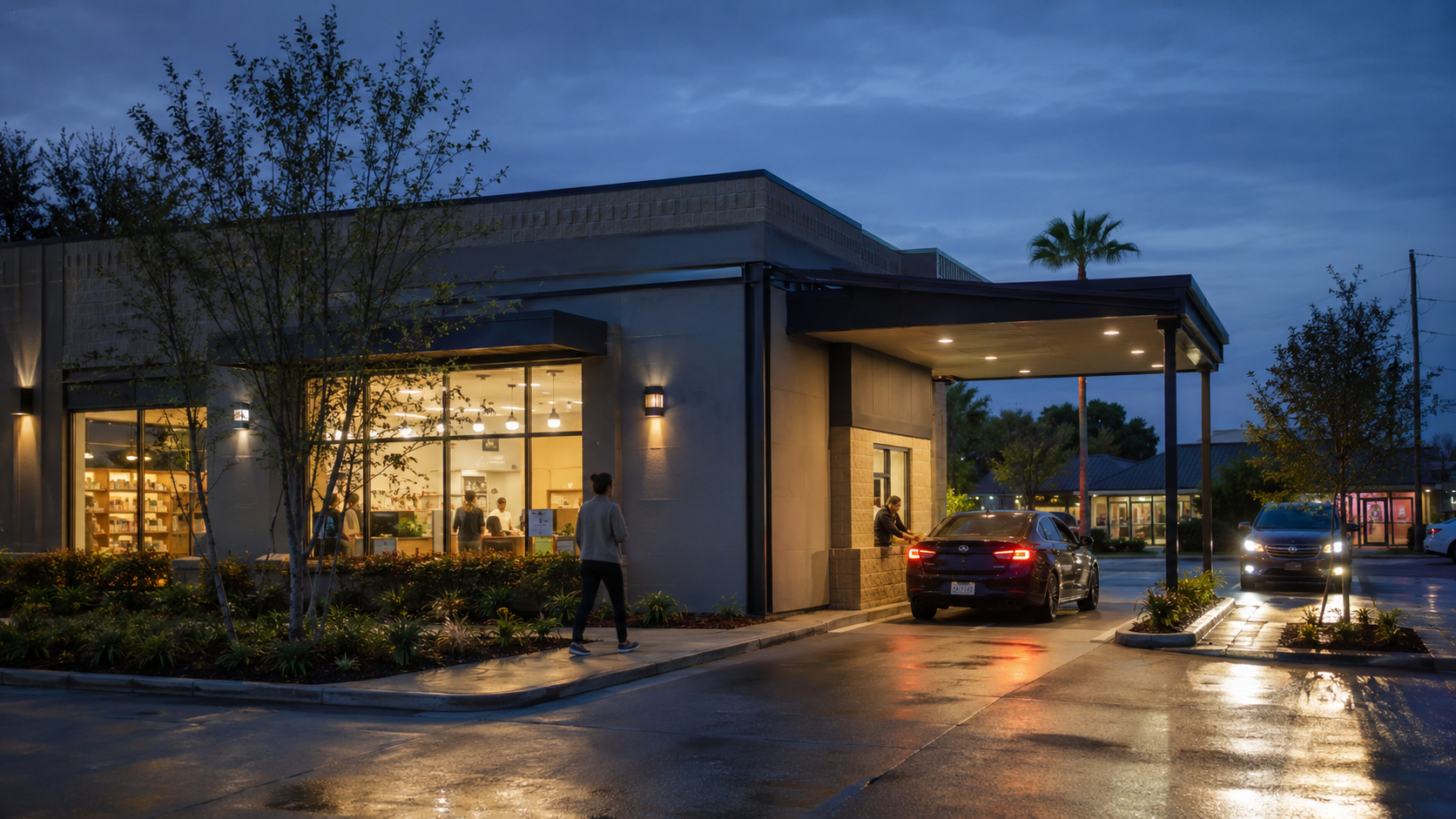
Medical cannabis dispensary with a drive thru lane in Louisiana.
Louisiana medical cannabis dispensary expansion is becoming one of the clearest signs that this limited license market is still growing. Hemp Gazette reports that NOLA Cannabis Co. opened a new Harvey location, giving the New Orleans metro area its fifth medical cannabis dispensary, with another location reportedly planned on Bourbon Street. For operators, investors, landlords, lenders, compliance teams, and consumers, the story is bigger than one store opening. It is a reminder that patient access, retail geography, and license control still shape how Louisiana’s medical cannabis market develops.
Quick facts
• NOLA Cannabis Co. opened a new medical cannabis dispensary in Harvey
• The new store gives the New Orleans metro area its fifth dispensary
• Another location is reportedly in development on Bourbon Street
• Louisiana’s 2022 framework allowed 10 medical cannabis retail licenses
• Each operator is permitted up to three locations
• Patient enrollment has more than doubled over the past two years to nearly 150,000 residents
• The universal operator lesson is simple: limited license markets can still grow meaningfully when access points expand in the right places
If Louisiana market growth is affecting your expansion plan, Start with our quick Cannashield intake form so you can map licensing, retail, and insurance exposure before access shifts create new competition.
What this new dispensary really signals
At first glance, this looks like a simple store opening story. It is more than that. In a limited license medical cannabis market, every new retail location says something about demand, operator confidence, and state level market structure.
Louisiana is not an open market where anyone can enter and compete. Access is still controlled, and that means retail expansion has more weight. When a company adds a new dispensary in a metro area like New Orleans, it is not just placing another store. It is improving patient reach, tightening its local footprint, and making a statement about where it believes future demand will keep building.
That matters because convenience changes access. A medical market grows faster when patients can reach a location more easily, order online, use delivery, or move through a drive thru without extra friction. In cannabis, patient participation often follows convenience more than operators want to admit.
Why patient growth matters more than headlines
The strongest part of this story may be the patient growth. Hemp Gazette reports that Louisiana’s medical cannabis enrollment has more than doubled over the past two years to nearly 150,000 residents. That is a meaningful number in a state that still operates under a controlled framework.
Growth like that signals several things at once. It suggests the recommendation process is becoming more familiar. It shows telemedicine and other patient pathways are helping more people access the system. It also tells operators and investors that the medical market is not standing still, even if it remains tightly structured.
This is the universal operator lesson. A limited license market does not need unlimited stores to create opportunity. It needs enough patient growth, enough access points, and enough operational consistency to keep the system moving.
If uncertainty around patient growth, retail placement, or limited license strategy is affecting how you plan, Complete our quick Cannashield intake form to pressure test your exposure before the market gets more competitive.
Why location strategy still matters in Louisiana
Louisiana’s structure makes geography important. A license is one thing. The right location is something else. A well placed dispensary can improve market share, reduce patient travel time, and build stronger local loyalty. A poorly placed location can still struggle, even in a market with limited access.
That is why the Harvey opening matters. It strengthens service on the West Bank and gives the operator another point of access in the metro area. The reported Bourbon Street development is interesting for a different reason. It suggests operators are thinking carefully about density, visibility, and high traffic corridors, even in a medical only framework.
For landlords and lenders, this story is a reminder that location quality still matters in cannabis. A limited license structure may reduce competition, but it does not erase the importance of traffic flow, patient convenience, and operational fit.
The operator lesson
The temptation is to treat Louisiana as a smaller medical market with slower growth. That misses the real opportunity. Louisiana remains concentrated, but concentration can work in an operator’s favor when patient enrollment rises and retail access becomes easier.
Operators should watch license control, patient enrollment, delivery access, drive thru service, telemedicine pathways, and product mix. Investors should watch how a few operators continue building local dominance inside a market that still limits broader entry.
If you need to organize your retail, compliance, and insurance records before Louisiana market growth changes the local competitive picture, Complete our quick Cannashield intake form to identify weak points and build a clearer strategy.
You might also like


Conclusion
Louisiana’s new NOLA Cannabis Co. location is another signal that this medical cannabis market is still building, even within a limited license structure. More access points, rising patient enrollment, and better convenience are gradually turning a controlled market into a more active one.
For operators and investors, the message is simple. Do not mistake limited access for limited opportunity. In Louisiana, smart retail buildout and patient convenience still have room to move the market.
Educational note: This article is for education only and is not legal, regulatory, medical, financial, or insurance advice.
What To Do This Week
• Review how Louisiana’s limited license structure affects your growth assumptions
• Track patient enrollment trends and how they compare with store expansion
• Study retail geography and patient convenience in key metro areas
• Review delivery, drive thru, and online ordering as access drivers
• Organize licensing, lease, and compliance documents in one place
• Build a short internal memo on where future dispensary demand may be strongest
FAQ
What happened in Louisiana?
NOLA Cannabis Co. opened a new medical cannabis dispensary in Harvey, expanding access in the New Orleans metro area.
How many dispensaries does the New Orleans metro area now have?
Hemp Gazette reports that the Harvey opening brings the area to five dispensaries.
Is Louisiana still a limited license market?
Yes. The state operates as a limited license medical cannabis market with controlled retail access.
How many retail licenses were allowed under the 2022 framework?
The reported framework allowed 10 medical cannabis retail licenses, with each operator permitted up to three locations.
Why does patient enrollment matter so much?
Because rising enrollment is one of the clearest indicators of market demand and future retail viability in a medical only system.
What is the biggest operator takeaway?
Limited license markets still reward smart retail expansion, patient convenience, and disciplined local positioning.
SOURCES
Hemp Gazette, Louisiana Sees Further Medical Cannabis Dispensary Expansion with New NOLA Cannabis Co. Location
https://hempgazette.com/news/louisiana-medical-cannabis-dispensary-expansion-nola-cannabis-co/
Louisiana Legislature
https://legis.la.gov/
Louisiana Board of Pharmacy
https://www.labp.com/

Trulieve and Cronos have each gained roughly 27 percent in 2026 while reporting stronger operating results. The broader signal is that public market attention is increasingly rewarding cash generation, improving margins, liquidity, and measurable revenue growth.