

Virginia Cannabis Budget Fight Could Finally Open Adult Use Sales
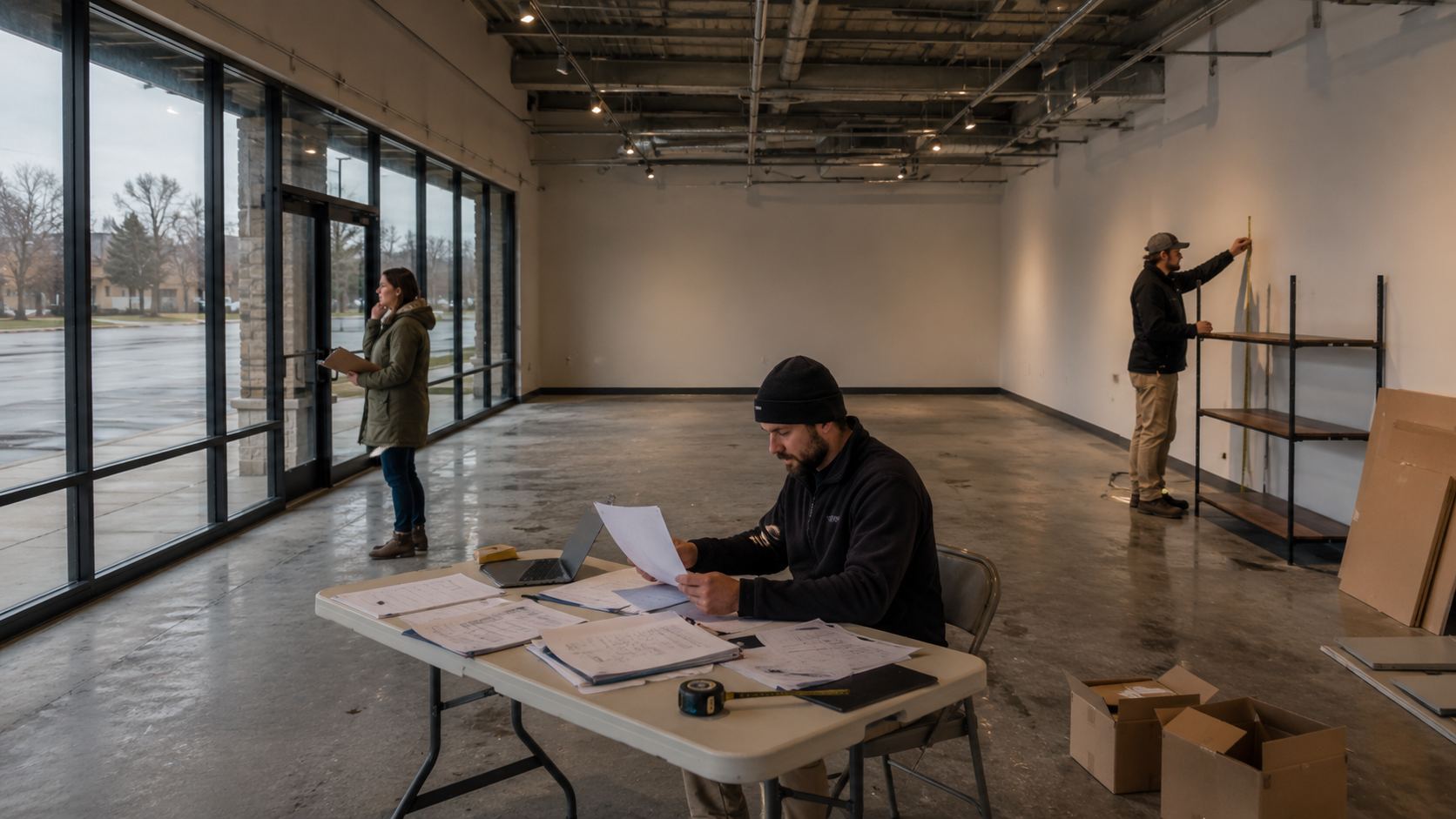
Professionals reviewing Virginia cannabis licensing plans in an empty storefront.
Virginia cannabis retail sales are still blocked, but budget politics may reopen the door. MJBizDaily reports that Virginia lawmakers are considering adult use cannabis legislation as part of a broader budget negotiation after Gov. Abigail Spanberger vetoed a standalone retail sales bill in May. The article notes that Spanberger may support folding a regulated retail framework into the budget, with prior proposals involving store caps, tax rates, medical operator conversion fees, cultivation limits, and a potential 2027 launch timeline. For operators, investors, landlords, lenders, and compliance teams, Virginia remains one of the most important cannabis market access stories in the country.
Quick facts
• Virginia legalized adult possession in 2021, but licensed adult use retail sales remain blocked
• Gov. Abigail Spanberger vetoed a standalone adult use retail sales bill in May 2026
• Lawmakers are now considering whether cannabis retail language could be included in budget negotiations
• Prior retail proposals involved store caps, tax rates, medical operator conversion fees, cultivation limits, and a possible 2027 launch
• The Virginia Cannabis Control Authority previously said retail applications could begin in fall 2026 if legislation was enacted as written
• Current Virginia law allows medical cannabis sales through licensed processors and dispensing facilities
• Buying or selling adult use cannabis remains illegal outside the medical program
• The universal operator lesson is simple: possession without retail sales creates demand, but not a fully legal market
If Virginia market timing is affecting your growth plan, complete our quick Cannashield intake form so you can map licensing, real estate, tax, and insurance exposure before budget politics creates a faster opening.
Why Virginia matters
Virginia is not a small policy story. It is a major East Coast and Southern market access question. The state already legalized adult possession, but it never completed the retail framework needed for licensed adult use sales. That gap has created years of uncertainty for consumers, operators, landlords, lenders, and local governments.
The result is a strange market. Adults may legally possess limited amounts of cannabis, but they cannot legally buy adult use cannabis from licensed recreational stores. The Virginia Cannabis Control Authority’s public guidance still says buying or selling adult use cannabis is illegal, while medical cannabis remains available through licensed medical channels.
Why the budget route matters
The budget route matters because it changes the political leverage. A standalone cannabis bill can be vetoed, delayed, or separated from broader negotiations. A budget package is different. If cannabis language becomes part of a larger deal, retail sales could move forward as one piece of a bigger compromise.
That does not make passage automatic. Budget negotiations are messy, and cannabis can become a bargaining chip. Lawmakers may argue over taxes, store caps, cultivation limits, medical operator conversion fees, social equity, enforcement, and timing. But the fact that cannabis is being discussed inside the budget conversation shows how important the issue has become.
This is the universal operator lesson. In high impact states, market access can depend as much on budget politics as cannabis policy.
If uncertainty around Virginia licensing, retail timing, or real estate planning is affecting how you plan, complete our Cannashield questionnaire to pressure test your exposure before a possible 2027 launch window tightens.
Why operators should not overbuild too early
Virginia is tempting because the demand story is obvious. Possession is legal, neighboring markets are active, and the medical program already has infrastructure. But operators should be careful. Until a final retail framework is signed into law, store counts, license categories, taxes, conversion rules, cultivation limits, local authority, and timing can still change.
That matters for real estate. A lease signed too early can become expensive if the license map changes. A buildout started too soon can burn cash if the launch date moves. A lender underwriting a cannabis tenant may need to model political delay, not just market demand. Landlords should also avoid assuming every prospective operator will qualify for a license.
The medical operator question
The medical operator conversion fee issue is important because existing medical operators may have a faster route into adult use sales if the state creates a conversion framework. That could help launch the market quickly, but it could also raise fairness and competition questions if newer applicants feel locked out or delayed.
Operators and investors should watch whether Virginia creates a phased rollout, whether medical operators receive early access, whether independent retailers receive enough opportunity, and whether cultivation limits shape product availability. A market can open and still be difficult if access is concentrated or supply is constrained.
If you need to organize licensing, lease, financing, and insurance records before Virginia moves again, use the Cannashield intake form to identify weak points and build a clearer market entry file.
You might also like

Conclusion
Virginia cannabis legislation could become part of a larger budget deal, and that makes the state one of the most important market access stories to watch right now. Possession is legal, demand exists, and the regulatory authority is already in place, but retail sales remain blocked until lawmakers and the governor agree on a framework.
For operators, investors, lenders, and landlords, the message is simple. Virginia could move, but it may not move cleanly. The businesses best positioned for this market will be the ones that plan for licensing uncertainty, political delay, tax pressure, real estate risk, and a possible 2027 launch without overcommitting too early.
Educational note: This article is for education only and is not legal, regulatory, tax, financial, real estate, or insurance advice.
What To Do This Week
• Track whether cannabis retail language appears in Virginia budget negotiations
• Review prior proposals for store caps, taxes, conversion fees, and cultivation limits
• Avoid signing long term real estate obligations before license rules are final
• Watch whether medical operators receive an early conversion pathway
• Model launch timing around a possible 2027 retail sales window
• Build a short internal memo on Virginia licensing, political risk, and market entry exposure
FAQ
What is happening in Virginia?
Lawmakers are considering whether adult use cannabis retail language could be included in broader budget negotiations.
Why did this become a budget issue?
Gov. Abigail Spanberger vetoed a standalone retail sales bill in May, and lawmakers are looking for another path to a regulated market.
Is adult use cannabis legal in Virginia?
Adult possession is legal within limits, but buying or selling adult use cannabis outside the medical program remains illegal.
When could retail sales launch?
Prior proposals pointed toward a possible 2027 launch, but final timing depends on legislation being enacted.
Why does this matter to operators?
Virginia could become a major new market, but licensing rules, taxes, store caps, and political timing are still uncertain.
What is the biggest operator takeaway?
Do not treat Virginia as open until the retail framework is final, signed, and operational.
SOURCES
MJBizDaily, Cannabis Legislation Could Break Virginia’s Budget Impasse
https://mjbizdaily.com/news/cannabis-legislation-virginia-budget/616406/
Virginia Cannabis Control Authority, Future of Cannabis in Virginia
https://cca.virginia.gov/news/future-of-cannabis-in-virginia
Virginia Cannabis Control Authority, Cannabis Laws in Virginia Overview
https://cca.virginia.gov/laws

San Francisco has proposed cannabis cafe rules allowing approved businesses to combine onsite cannabis consumption with food, nonalcoholic drinks, and live entertainment. The hospitality opportunity also creates new pressure around permits, food service, employee safety, security, inventory, medical patient access, and neighborhood compliance.